


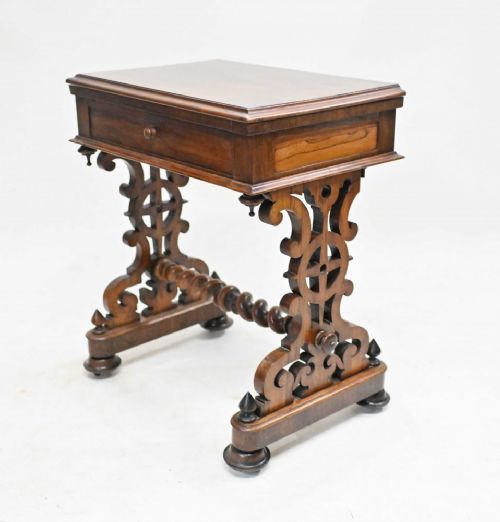


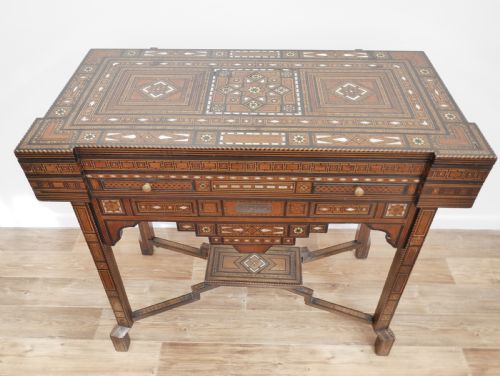
Walnut Backgammon Table
A walnut backgammon table brings tactile depth and rich timber figure into a room, serving as both a functional surface and a traditional board for play.
Walnut Backgammon Table
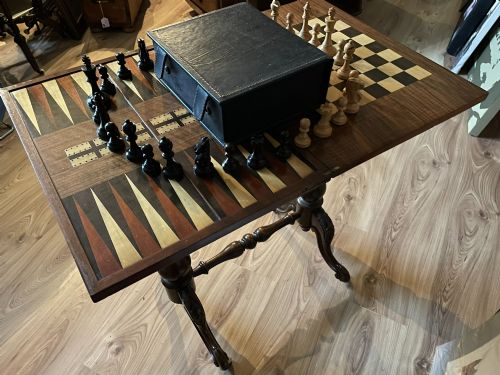
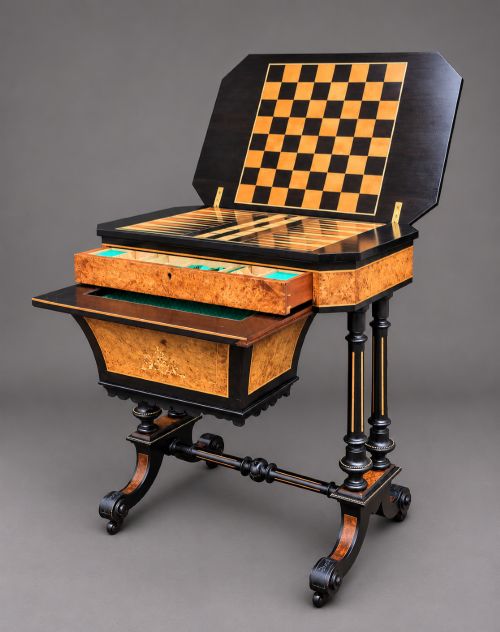
A walnut backgammon table provides a dedicated piece of furniture designed for traditional board games alongside everyday utility. The examples found here span the nineteenth century and the early twentieth century, showing a strong representation of Victorian craftsmanship, Aesthetic Movement design, and Levantine or Syrian Ottoman decorative traditions.
Most pieces on this page appear as multi-functional games tables, often combining backgammon with chess, card playing, or integrated sewing and work compartments. These furnishings reflect the Victorian appetite for versatile parlour furniture that could transform easily according to the evening's entertainment.
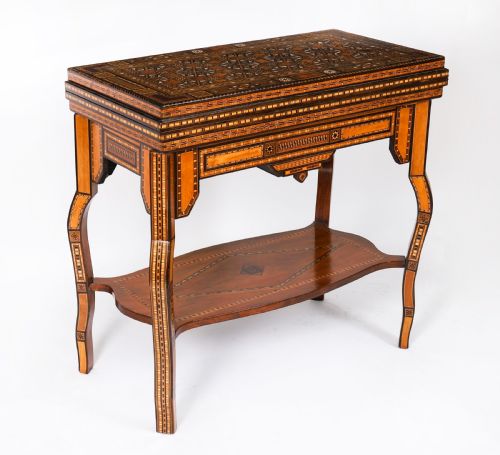
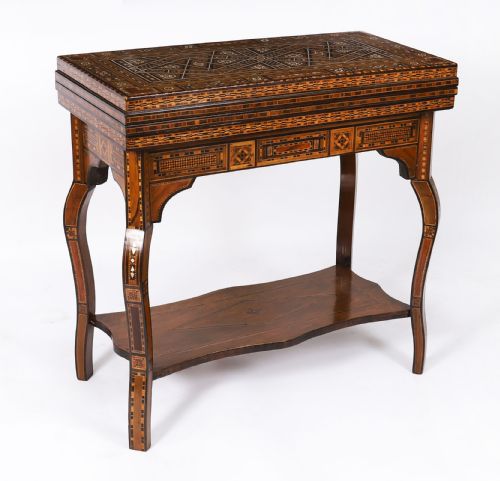
The origins vary from English Victorian workshops employing domestic timbers to intricate Levantine and Syrian Ottoman imports featuring complex geometric work. Buyers encounter folding tops, rotating surfaces, and fitted interiors designed to house counters, dice, and playing pieces securely.
How they were made
The primary construction relies upon walnut and burr walnut veneers selected for their swirling grain patterns, laid over stable secondary woods. Cabinet makers utilised elaborate wood inlay and floral marquetry to ornament the exterior surfaces of Victorian pieces.
Levantine and Syrian workshops introduced contrasting materials such as bone, mother-of-pearl, and fruitwood to create dense geometric mosaics across the surfaces. Ebonised wood accents and subtle brass fittings frequently complete the structural detailing of these complex folding tables.
Walnut Backgammon Table Retail Price Guide 2026
Typical asking prices for walnut backgammon table among the pieces listed under this phrase on Sellingantiques today, from the lower quarter to the upper quarter. They describe what is for sale here now, not the wider market.
Listings feature nineteenth-century and Victorian walnut, burr walnut, and ebonised wood alongside Levantine and Syrian Ottoman inlaid games tables.
What varies in quality
The standard of execution in the marquetry and inlaid geometric banding largely determines the distinction between ordinary and exceptional pieces. Crispness in the cutting of bone and fruitwood tesserae, alongside the seamless integration of folding hinges, separates standard production furniture from masterwork examples.
The choice of burr walnut veneer impacts the visual presence of the table significantly, with dense, unblemished figuring commanding greater visual authority. Furthermore, the retention of original interior fitments, such as integrated work bags or dedicated compartments for gaming pieces, preserves the integrity of the design.
The Walnut Backgammon Table Glossary
- Burr walnut
- A specialised timber cut from the abnormal growths of walnut trees, yielding highly figured, swirling grain patterns prized in fine cabinet making.
- Marquetry
- The art of applying decorative veneer pieces to a structure to form intricate pictorial or geometric designs.
- Levantine
- Pertaining to the eastern Mediterranean region, denoting furniture styles characterised by dense geometric inlays of bone, mother-of-pearl, and contrasting woods.
- Ebonised wood
- Timber treated with a dark stain or finish to simulate the appearance of solid ebony.
- Compactum
- A nineteenth-century term for a multi-functional piece of furniture designed to maximise utility within a compact footprint.
Walnut Backgammon Table: Frequently Asked Questions
How do I use a walnut backgammon table today?
These tables function naturally as side tables or console surfaces in a living room or study when not in use for gaming. Folding tops open easily to reveal the playing board for an evening of backgammon or chess.
Many pieces also include internal compartments or sewing wells, offering practical storage for small household items while retaining their historical character.
How do I date a Victorian games table?
Dating relies on examining the timber selection, construction methods, and stylistic cues present in the marquetry and turning. Mid-nineteenth-century examples often feature rich burr walnut veneers paired with robust, serpentine pedestals.
Later Victorian and Aesthetic Movement pieces introduce more stylised floral motifs or ebonised accents, reflecting shifting tastes towards the end of the century.
What is the difference between English and Levantine games tables?
English walnut games tables typically focus on figured wood veneers, floral marquetry, and polished French polish surfaces tailored for Victorian parlours. They often combine card playing surfaces with sewing drawers.
Levantine and Syrian Ottoman tables utilise mosaic-like inlay work incorporating bone and mother-of-pearl to create intricate geometric patterns across the entire structure.
How should I care for burr walnut furniture?
Protect antique walnut surfaces by keeping them away from direct sunlight and extreme fluctuations in temperature or humidity. Regular dusting with a soft, dry cloth maintains the sheen of the polish without harming the underlying timber.
Avoid placing damp items directly onto the wood, and use protective pads under objects placed on the top surface during daily use.