




Walnut and Oak Chest
A walnut and oak chest combines sturdy structural timber with rich decorative surface timber, offering practical storage with considerable visual depth.
Walnut and Oak Chest
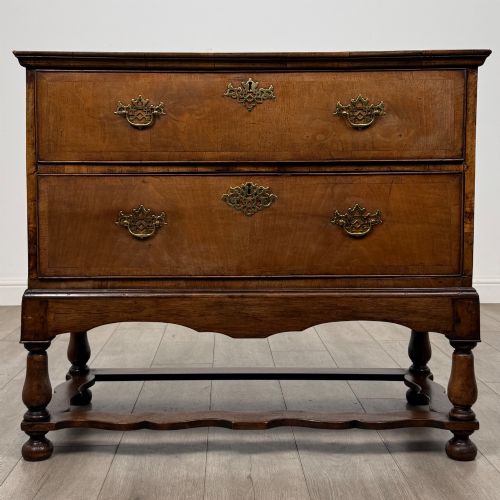
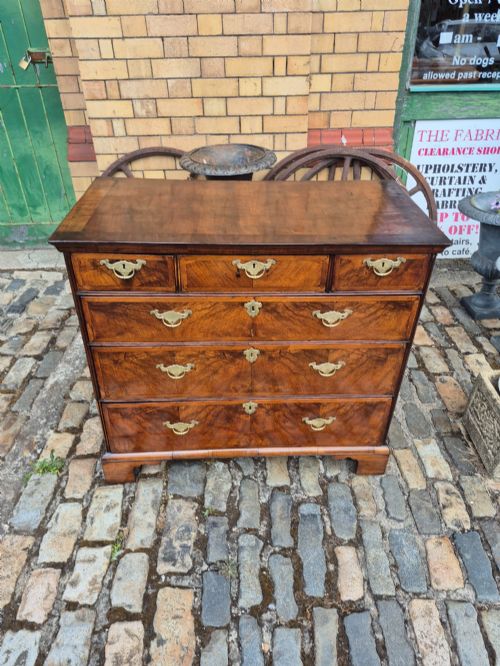
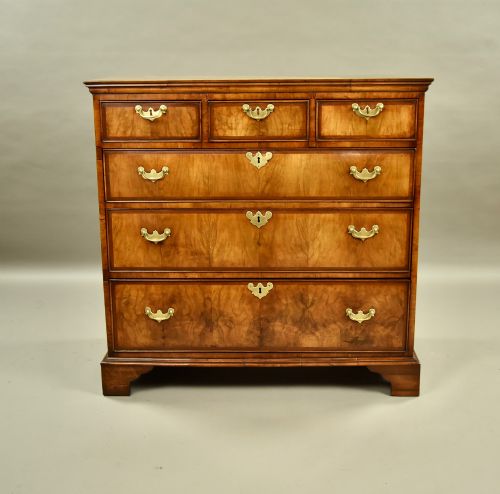
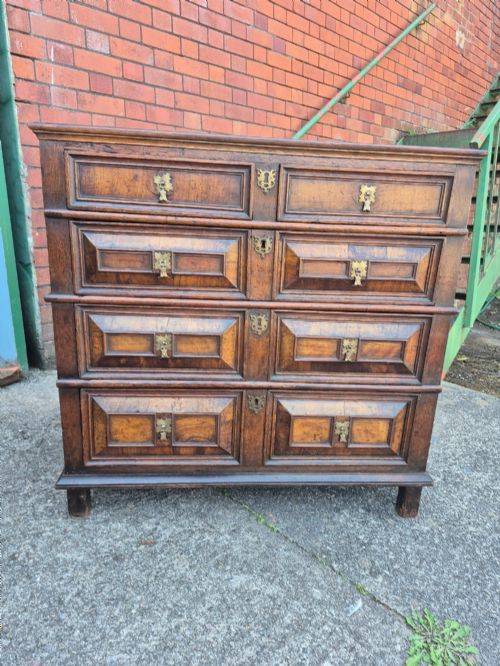
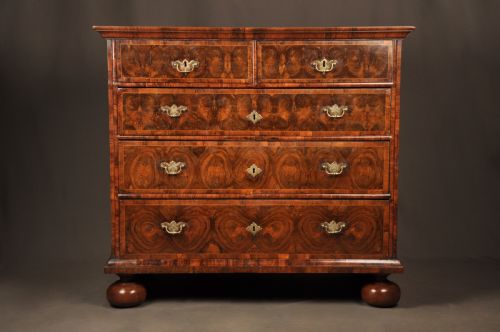
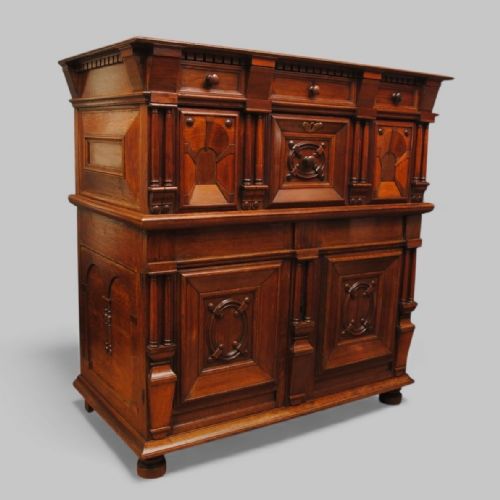
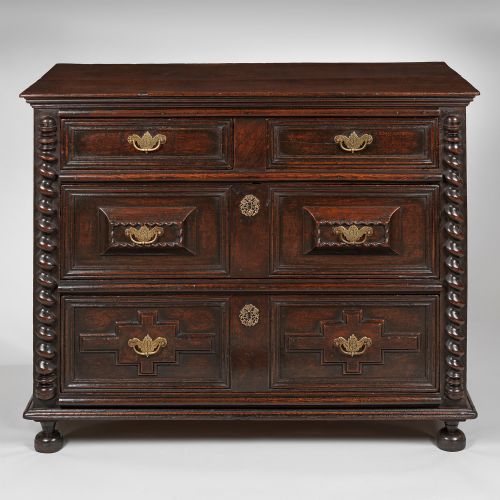
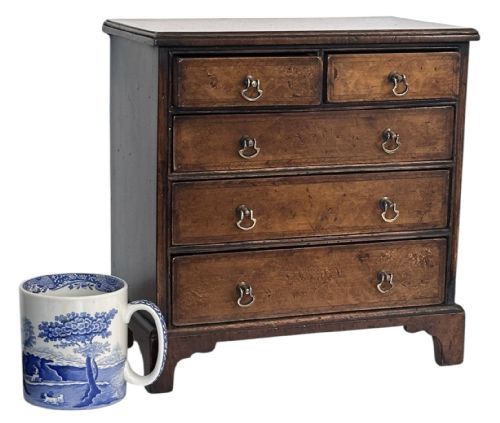
A walnut and oak chest typically manifests as a multisuite chest of drawers, a two-part construction, or a chest on stand originating predominantly from the seventeenth and eighteenth centuries. These pieces balance the structural resilience of native oak carcases with the refined decorative potential of walnut drawer fronts and top panels.
Buyers will encounter seventeenth-century Charles II and William and Mary examples alongside eighteenth-century Georgian variations, reflecting a sustained British tradition of dual-timber cabinet making. Later nineteenth-century interpretations also appear, continuing the practice of pairing these dependable woods.
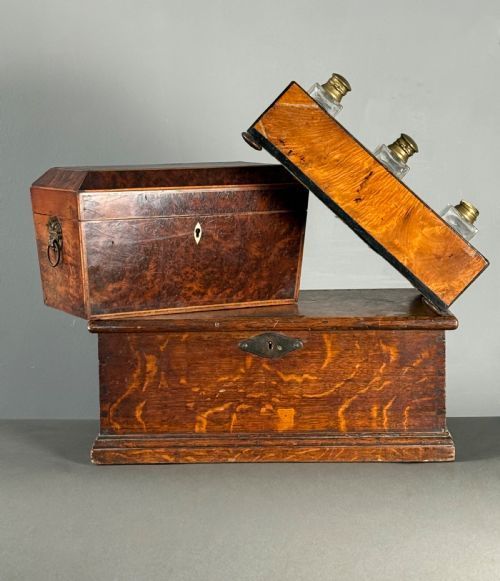
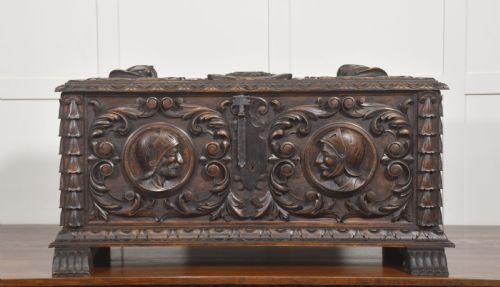
The phrase encompasses related domestic furniture such as chests on chest, dressing chests, and occasional coffers where walnut veneers meet oak linings and drawer frames.
Assessing quality
Quality rests heavily on the selection and matching of the timber veneers, where symmetrical grain patterns and intact crossbanding demonstrate superior cabinet making. The integrity of the secondary timbers, such as clean oak drawer linings with hand-cut dovetails, distinguishes high-grade workshop production from utility pieces.
Proportion and the retention of original surface patination dictate the desirability of a piece, separating examples that maintain their historical integrity from those altered by aggressive modern intervention or heavy restoration.
Some seventeenth-century drawers are lined with fragments of discarded medieval manuscripts because parchment was cheaper than paper.
Whytock and Reid of Edinburgh
The Walnut and Oak Chest Glossary
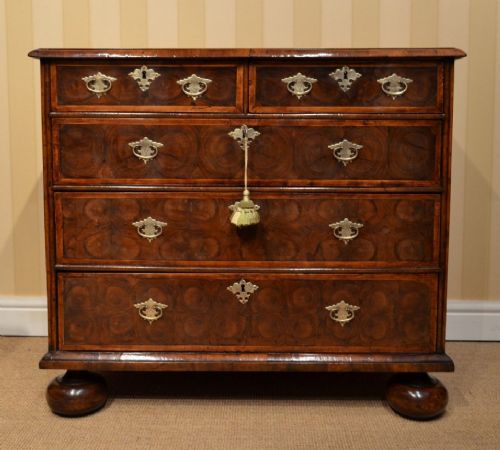
- Oyster veneer
- Slices cut transversely from small branches or roots to produce circular or oval patterns resembling oyster shells. This technique flourished during the late seventeenth century.
- Crossbanding
- A narrow strip of veneer laid around the border of a drawer front or top panel with the grain running perpendicular to the surrounding surface.
- Chest on stand
- A tall case of drawers elevated upon a separate frame with legs, often featuring shaped stretchers characteristic of the William and Mary period.
- Geometric moulding
- Raised wooden mouldings applied to drawer fronts in rectilinear or octagonal patterns, typical of seventeenth-century English cabinet work.
- Dovetail
- An interlocking woodworking joint formed by interlocking wedge-shaped fingers, used primarily to join drawer sides to drawer fronts and backs.
Walnut and Oak Chest: Frequently Asked Questions
How do I date a walnut and oak chest?
Dating relies on observing construction methods, handle hardware styles, and the configuration of the drawers. Earlier seventeenth-century pieces often feature geometric mouldings and two-part carcases, while eighteenth-century examples display cleaner lines and sophisticated veneering techniques.
Secondary woods and dovetail construction also provide chronological clues. Hand-cut, irregular dovetails and oak linings point towards earlier periods, whereas uniformity suggests later nineteenth-century production.
Why were two different woods used?
Cabinet makers combined oak and walnut to balance structural strength with decorative elegance. Oak provided a tough, stable frame capable of supporting heavy loads and resisting warping over centuries.
Walnut offered a softer, highly figured surface timber that took a fine polish and accepted intricate veneering. This pairing maximised both the durability and the visual appeal of domestic furniture.
Where should I place these chests at home?
These chests function effectively in hallways, bedrooms, or living spaces where their deep brown tones complement both traditional and contemporary interiors. Their robust construction makes them suitable for daily storage use.
Positioning them away from direct sunlight and heat sources prevents the walnut veneers from drying out or lifting over time. Maintaining stable room humidity preserves the integrity of both the oak carcase and the delicate surface timbers.