



Wall Mounted Candles
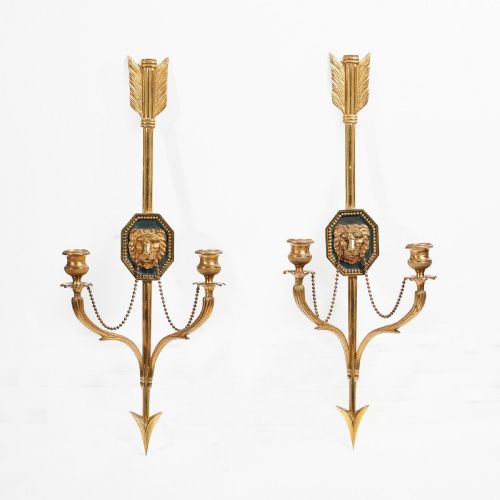
These wall mounted candles bring period illumination to a room, offering cast bronze sconces and velvet mirrors that catch the flicker.
Wall Mounted Candles
When you search for wall mounted candles, you encounter a range of lighting fixtures designed to project warmth and ambient light from vertical surfaces. The items gathered here span from the eighteenth to the twentieth century, bringing together functional ironwork and decorative sconces.
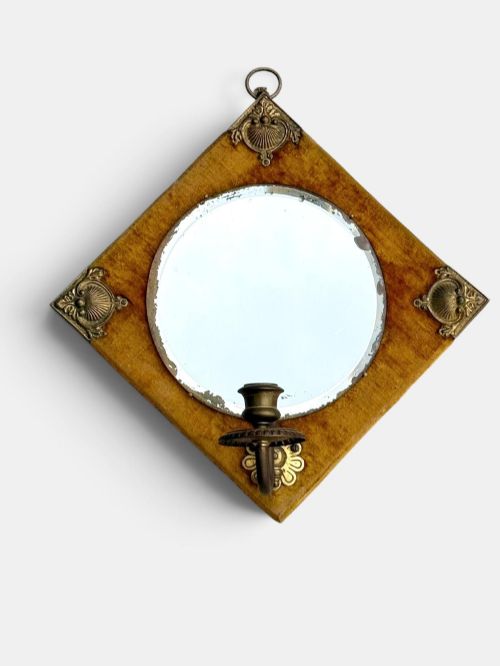
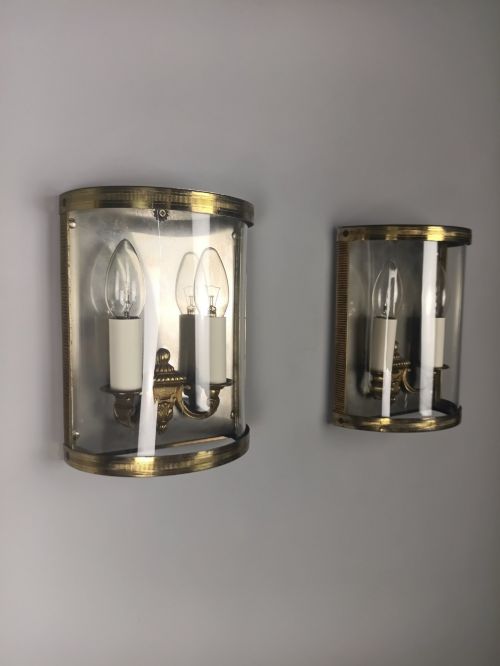
You are most likely to meet French and British examples fashioned as twin light fixtures, single arm lights, or convex half lanterns. These pieces incorporate mirrors and decorative mounts designed to reflect and amplify the flame.
The selection encompasses diverse stylistic movements, including Arts and Crafts, Art Nouveau, and French Empire. Makers utilised oak, porcelain, and silver plate to create fixtures that served both domestic utility and formal display.
How they were made
Metals form the structural backbone of these fixtures, with cast bronze, gilt brass, and ormolu shaping the arms and backplates. Artisans employed casting and chasing techniques to achieve intricate detail on mounts and sconces.
Wood and textiles appear alongside metalwork in specific pieces, notably carved oak and velvet panels used as backing for brass mounts. Silver plating and enamel finishes provided decorative variation on brass and bronze foundations.
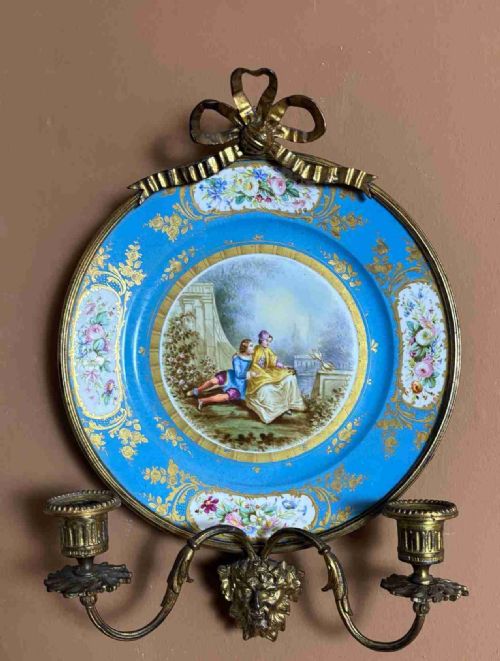
Porcelain elements, such as Sevres components, integrate with metal mounts through precise fitting. Glass components, including convex lanterns, complement the metallic frames to distribute light evenly.
Wall Mounted Candles Retail Price Guide 2026
Typical asking prices for wall mounted candles among the pieces listed under this phrase on Sellingantiques today, from the lower quarter to the upper quarter. They describe what is for sale here now, not the wider market.
Mermaids hold candles on Edwardian silver walls.
What varies in quality
The sophistication of the casting and the crispness of the chased detail separate standard production from superior examples. Finer pieces display sharply defined ornamentation on bronze and ormolu mounts without soft edges.
Material selection dictates the grade of the fixture, with heavy gauge bronze and solid carved oak commanding greater visual weight than lighter silver-plated alternatives. The integration of porcelain or fitted glass elements further distinguishes more ambitious commissions.
Stylistic coherence within a pair indicates the care taken during manufacture. Matching patination and balanced proportions across twin light arms demonstrate higher workshop standards.
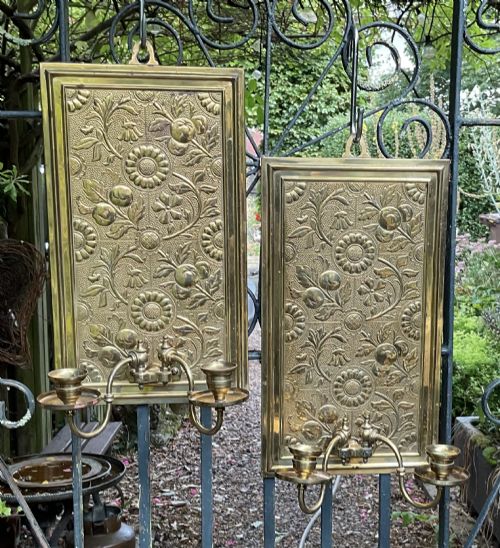
Bruce Talbert·Liberty·Sevres
The Wall Mounted Candles Glossary
- Ormolu
- Gilded bronze. This decorative technique involves applying finely ground high-carat gold to a bronze object.
- Pricket
- A sharp spike on a candle holder. This metal point secures large candles in place during burning.
- Applique
- A wall-mounted light fitting. The term often describes French fixtures designed to hold candles or lamps.
- Patina
- The surface ageing of a material. Years of handling and exposure alter the tone of brass, bronze, and wood.
Wall Mounted Candles: Frequently Asked Questions
What are wall mounted candles?
These fixtures are decorative lighting units designed to attach to vertical surfaces and hold candles safely. They use backplates to protect the wall and often incorporate mirrors to amplify the flame.
The selection includes sconces, pricket lights, and lanterns from various European traditions. They combine practical illumination with ornamental metalwork and carving.
How do I live with wall mounted candles?
Integrating these pieces into modern spaces involves securing them firmly to wall studs to support their weight safely. Traditional fixings should be checked to ensure stability before use.
When burning candles in antique sconces, choose appropriate drip-free tapers to protect historic surfaces. Regular dusting maintains the finish of the bronze, brass, or carved wood.
How do I tell periods apart?
Stylistic motifs offer the clearest indication of date, moving from the heavy carving of eighteenth-century oak to the organic curves of Art Nouveau. Neoclassical and Empire pieces favour formal symmetry and classical ornamentation.
Victorian and Edwardian items often revive earlier styles or incorporate specific movement aesthetics like Arts and Crafts. Examining the construction methods and material finishes confirms these stylistic assignations.