



Volkstedt Porcelain Figurine
These volkstedt porcelain figurine examples bring German salon porcelain and rococo revival styling straight to your cabinet with finely modelled forms.
Volkstedt Porcelain Figurine
When you search for volkstedt porcelain figurine, you encounter ornamental figures and groups made in Thuringia. These pieces span the nineteenth century and into the early decades of the twentieth century, including Victorian periods.
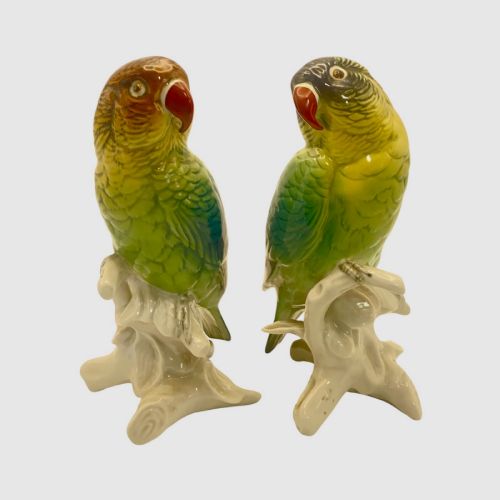
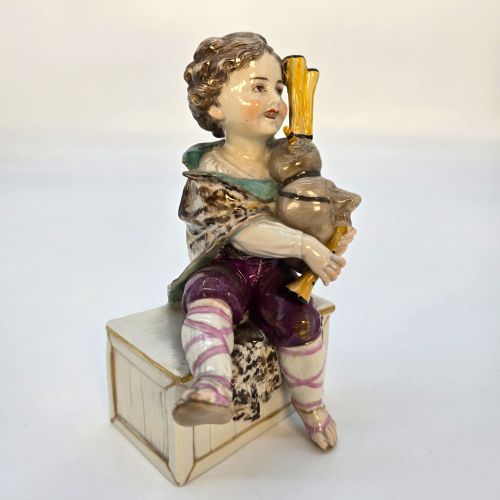
The objects take the form of decorative figurines, sweetmeat dishes, pairs of parrots, and table lamps. You find gallant youths, musicians, allegorical subjects, and couples rendered in hard-paste porcelain and Parian biscuit.
Stylistically, the selection leans towards rococo revival, neo-rococo, and German art porcelain alongside occasional art deco accents. These figures served as ornamental table centrepieces and cabinet displays in domestic interiors.
What varies in quality
The distinction in quality rests on the crispness of the moulding and the delicacy of the hand-painted enamels. Finer examples retain sharp details in lace, foliage, and facial expressions without blurring.
The application of gold leaf and gilt work differs across pieces, where superior hands achieved precise accents on garments and bases. The complexity of the figural grouping also influences the character of the object.
Volkstedt Porcelain Figurine Retail Price Guide 2026
Typical asking prices for volkstedt porcelain figurine among the pieces listed under this phrase on Sellingantiques today, from the lower quarter to the upper quarter. They describe what is for sale here now, not the wider market.
Village clerks and youthful gallants stand shoulder to shoulder with porcelain parrots in the lineup.
Karl Ens·Volkstedt Rudolstadt Factory·Triebner Ens & Eckert·Richard Eckert·Anton Buschelberger·Triebner Ens & Co·Ackermann & Fritze
The Volkstedt Porcelain Figurine Glossary
- Hard-paste porcelain
- A durable ceramic material fired at high temperatures using kaolin and petuntse. It provides a dense, white body that accepts glaze and enamel securely.
- Parian biscuit
- An unglazed, fine-grained porcelain body developed to imitate carved marble. It possesses a smooth, matte surface texture.
- Sweetmeat dish
- An ornamental vessel designed for small confectionery or dried fruits. These often incorporate figural supports at the base.
- Rococo revival
- A nineteenth-century design style reviving the asymmetrical scrolls, C-curves, and naturalistic motifs of the eighteenth century. It dominates many nineteenth-century German figures.
- Enamel
- Vitreous pigments applied over or under the glaze to add colour to porcelain surfaces. These are fixed by subsequent firing.
Volkstedt Porcelain Figurine: Frequently Asked Questions
What is a volkstedt porcelain figurine?
These are decorative ceramic figures and groups produced in the Thuringian region of Germany. They depict human figures, animals, and allegorical scenes.
They reflect historical revival styles and were intended for display in domestic salons and parlours.
How were these figures used?
Owners placed them on mantelpieces, tables, and cabinets as decorative ornaments. Some dual-purpose pieces functioned as table lamps or sweetmeat dishes for serving small treats.
Their purpose was purely decorative and conversational within a formal interior setting.
How do I identify the period?
Nineteenth-century examples frequently employ rococo revival styling with gilt and enamel detailing. Pieces from the early twentieth century introduce art deco or German art porcelain characteristics.
Examining the modelling style and materials helps place the object within its production era.
What materials are used?
The primary material is hard-paste porcelain, often glazed to a high shine. Some pieces utilise Parian biscuit porcelain for a matte, unglazed finish.
Enamel colours, gold leaf, and occasionally brass elements complete the construction.