





Virgin Mary Canvas Art
When you search for virgin mary canvas art, you enter a tradition of devotional oil paintings spanning centuries from the Renaissance to the Victorian era.
Virgin Mary Canvas Art
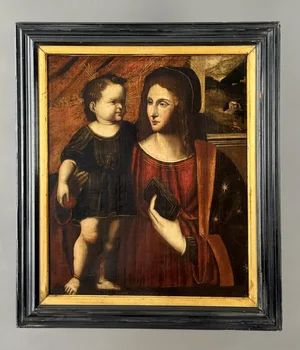
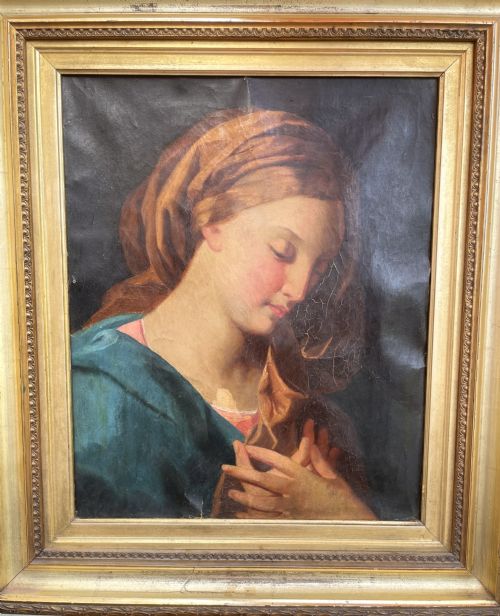
When you search for virgin mary canvas art, you are looking at oil paintings on canvas that depict the Madonna, often alongside the Christ Child or other religious figures. These works range from the sixteenth century through to the nineteenth century, encompassing various regional schools.
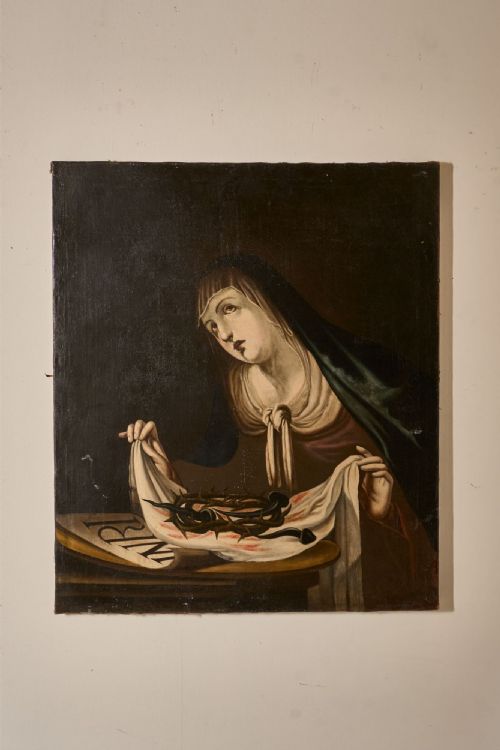
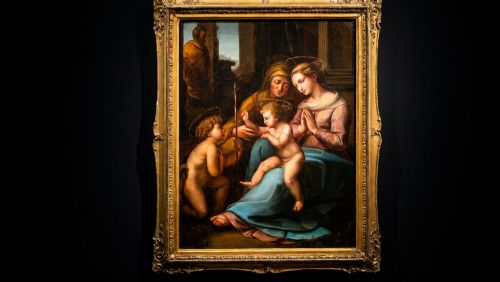
You are most likely to meet pieces produced in the eighteenth and nineteenth centuries, including works executed in the manner of Raphael and other old masters. Many of these paintings take the form of devotional portraits, such as representations of Our Lady of Sorrow or the Divine Shepherdess.
The selection includes Italian, Spanish, and French school paintings, reflecting diverse stylistic traditions from Renaissance Revival to Baroque. These canvases carry the devotional history of European religious art into domestic spaces.
How they were made
These works are executed in oil paint upon woven canvas supports, stretched over wooden frames. Painters built up the compositions using traditional pigment mixtures, sometimes incorporating gold leaf or gilt details.
Many surviving examples are housed within giltwood frames that complement the religious subject matter. The physical construction combines standard stretched canvas techniques with period framing methods.
Listings feature oil paintings on canvas from the sixteenth to the twentieth century, encompassing Italian, Spanish, and French regional schools.
What varies in quality
The distinction between a standard studio copy and a work by a close follower of a master lies in the handling of brushwork and facial expression. Finer examples display a subtle command of light and shadow, particularly in the modelling of drapery and flesh tones.
The integrity of the canvas and the preservation of the original paint layer determine the visual impact of each piece. Works that retain their early surface character without heavy overpainting command greater attention from collectors.
Bernardino Luini·Benvenuto Tisi·Costantino Frixione·Raffaello Sanzio Da Urbino·Juan Ruiz Soriano·G.F. Penni·Orsola Maddalena Caccia·Pompeo Batoni·Bartolomé Murillo
The Virgin Mary Canvas Art Glossary
- Oil on Canvas
- A painting medium where pigments are bound with drying oils and applied to a stretched woven fabric support. This method became the dominant technique for European easel paintings from the Renaissance onwards.
- Giltwood
- Wood that has been treated with a thin layer of gold leaf or gold paint. This material is commonly found on the ornate frames enclosing religious paintings.
- Circle of
- A term used to describe an artist working during the same period and in a similar style to a named master, often within the same workshop or locality.
- Ex-Voto
- A votive offering presented to a saint or divinity, often taking the form of a painted portrait commissioned in gratitude for a vow fulfilled or a grace received.
- Baroque
- An artistic style originating in Italy around sixteen hundred, characterised by dramatic movement, deep colour, and intense emotional expressions in religious subjects.
Virgin Mary Canvas Art: Frequently Asked Questions
How old is this canvas?
Dating relies on the style of the brushwork, the preparation of the canvas, and the characteristics of the wooden stretcher frame. Examining the reverse often reveals historical labels, stamps, or the natural ageing of the fabric.
Comparative analysis with known works from specific centuries helps narrow down the period of execution.
Are these original master paintings?
Most works associated with famous names are created by followers, studio assistants, or later artists working after a known composition. These pieces reflect the enduring influence of masters rather than being the primary hand of the artist.
Attributions usually place the work within the circle or school of the original creator.
How should I clean the canvas?
Surface dust should be removed gently with a soft, dry brush without applying pressure to the paint layer. Any intervention involving moisture or solvents requires professional conservation expertise to avoid damaging the pigment.
Keeping the painting away from direct sunlight and stable humidity protects the oil and canvas over time.
What does after Raphael mean?
This phrase indicates that the painting is a later rendition of a famous composition originally created by Raphael. Such works were commonly produced for study, devotion, or collection.
They demonstrate how celebrated imagery was replicated and reinterpreted across subsequent centuries.