







Vintage Wool Oriental Carpet
A vintage wool oriental carpet brings centuries of textile tradition into a room through rich hand-knotted patterns.
Vintage Wool Oriental Carpet
A vintage wool oriental carpet encompasses hand-knotted floor coverings originating from traditions across Persia, Anatolia, the Caucasus, Central Asia, and Tibet. These textiles arrive in various formats including large carpets, smaller area rugs, hearth sizes, and long hallway runners suited for specific domestic spaces.
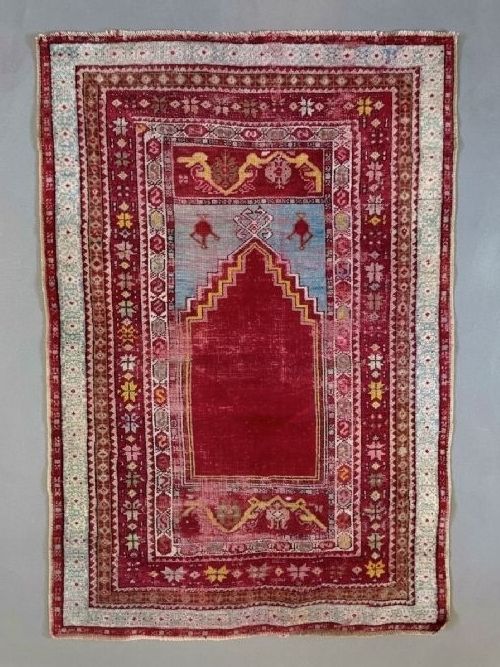
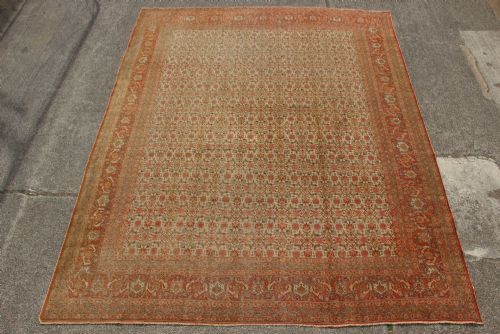
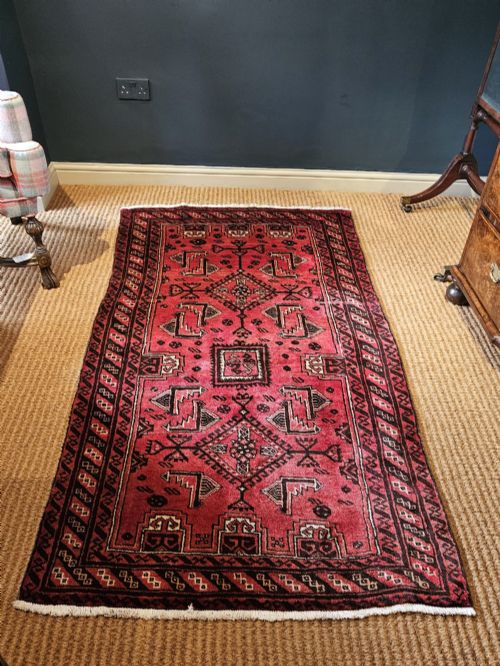
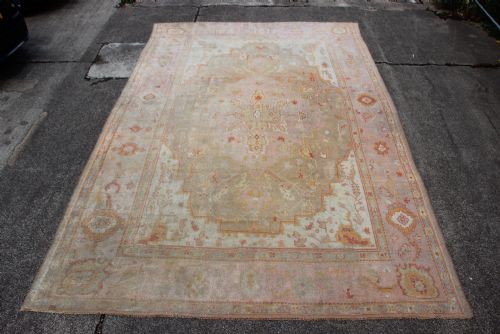
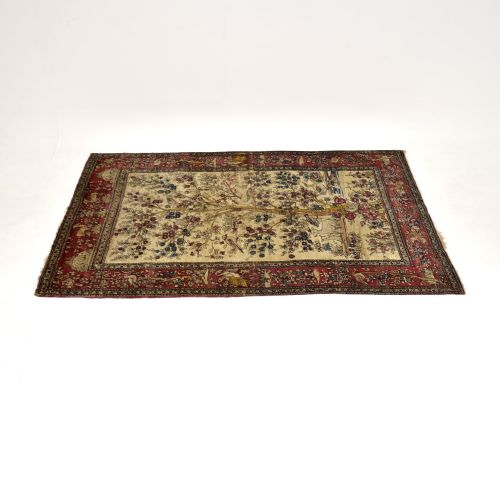
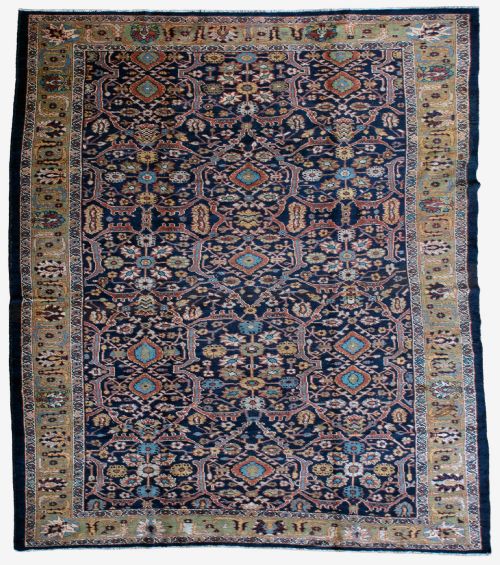
The selections span production periods from the nineteenth century through the 1930s, capturing tribal village weaving alongside workshop output from notable centres. Buyers encounter pieces bearing traditional regional patterns, such as prayer designs, geometric tribal motifs, and large-scale floral medallion compositions.
Persian and Turkish village and tribal types dominate the available forms, reflecting the historical breadth of weaving traditions. Pieces range from compact tribal rugs to expansive carpets designed for country house proportions.
What Varies in Quality
Knot density and the precision of the underlying structure separate standard village production from finer workshop carpets. Higher knot counts permit crisper rendering of intricate geometric and floral patterns across the surface.
The quality of materials, particularly the use of hand-spun wool and stable natural dyes, determines how gracefully a carpet ages and retains its visual depth. Consistency in weave and edge finishing indicates the level of care taken during the original construction.
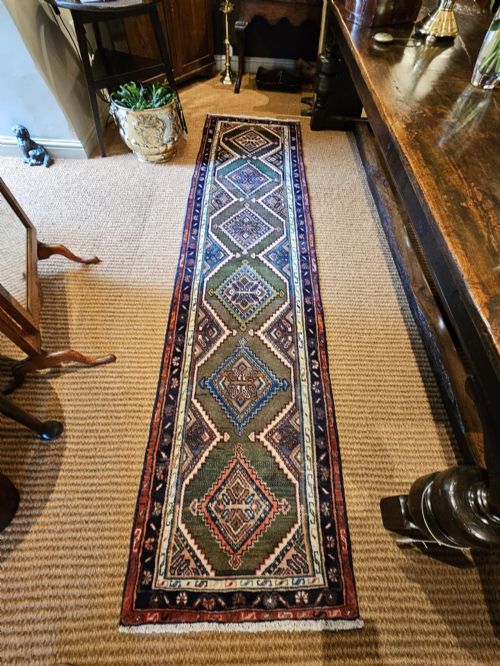
Several runners stretch over five metres in length, ready for exceptionally long hallways.
The Vintage Wool Oriental Carpet Glossary
- Prayer Rug
- A rug featuring a mihrab or niche design historically oriented towards Mecca during daily prayers. These pieces often serve as focused decorative accents.
- Runner
- A long and narrow carpet format specifically proportioned for corridors, hallways, and staircases. They accommodate narrow spatial dimensions while displaying continuous border and field patterns.
- Medallion
- A central decorative motif placed in the middle of the carpet field, frequently surrounded by floral or geometric fills. This design element anchors the visual symmetry of the piece.
- Warp
- The vertical foundation threads stretched lengthwise on the loom before knotting begins. The visible fringe at either end of a carpet consists of these extended warp threads.
- Pile
- The cut or uncut loop surface of a carpet formed by the knotted yarn. Pile thickness and material composition dictate the tactile feel underfoot.
Vintage Wool Oriental Carpet: Frequently Asked Questions
How do I clean an old wool rug?
Regular gentle vacuuming without a beater bar removes loose dirt from the wool pile without damaging the hand-knotted structure.
Professional specialist cleaning is recommended for deep washing to protect natural dyes and fragile cotton or wool foundations.
Where should I place a long runner?
Runners fit well in hallways, entryways, and narrow corridors where foot traffic benefits from a durable textile layer.
They also function effectively alongside beds or in galley kitchens to introduce texture and warmth to transitional spaces.
How can I tell tribal rugs apart?
Tribal rugs typically display geometric motifs, bold primary colours, and asymmetrical designs rooted in specific regional weaving groups.
Workshop carpets, by contrast, often feature refined floral medallions, balanced symmetry, and finer knot densities associated with urban production centres.
Are these carpets made with natural dyes?
Many older pieces utilise natural dye sources derived from plants and minerals, which yield stable, harmonious secondary shades.
These traditional colour agents develop a softer, mellow patina over time as light and usage gently alter the wool fibres.