

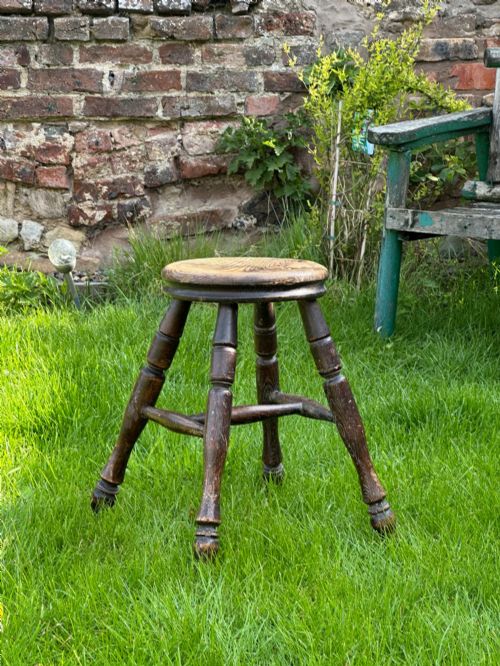


Vintage Wooden Tripod Stool
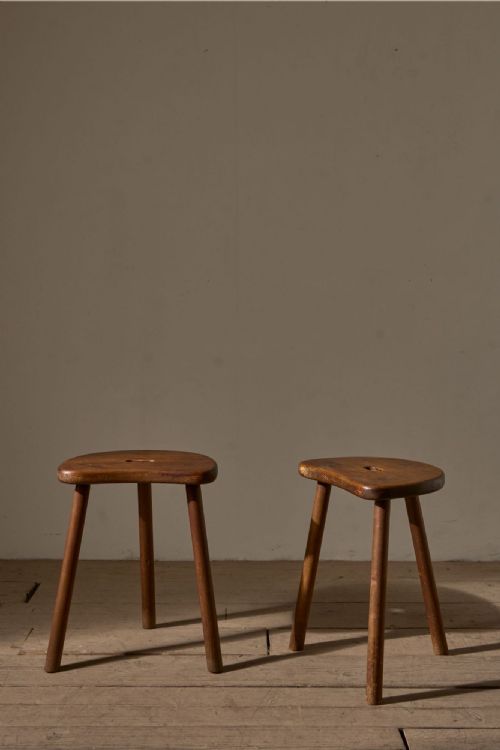
These vintage wooden tripod stools are honest vernacular seats shaped by country life and sturdy craft.
Vintage Wooden Tripod Stool
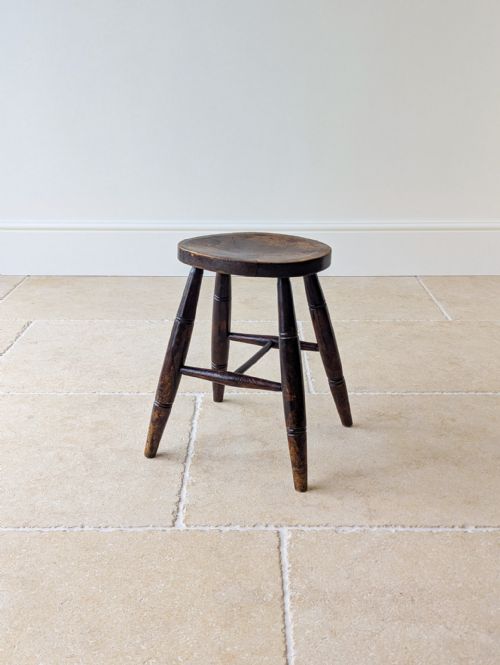
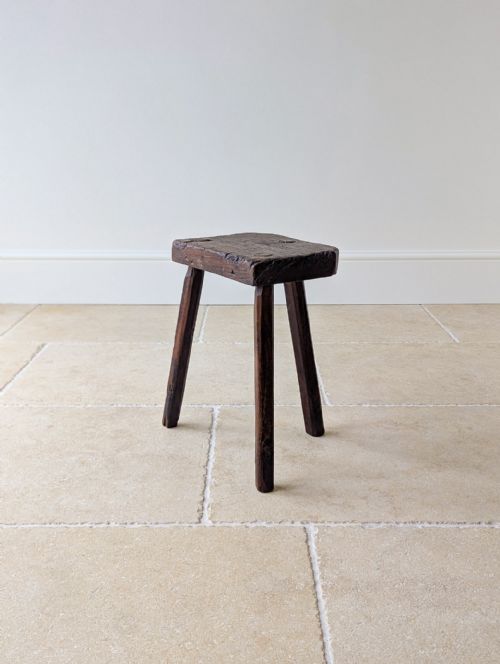
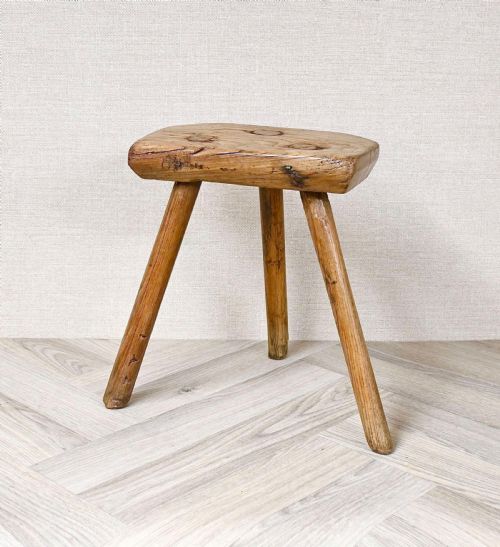
A vintage wooden tripod stool is a practical three-legged seat rooted in the rural traditions of the eighteenth, nineteenth, and early twentieth centuries. These pieces encompass dairy stools, milking stools, and vernacular farmhouse designs intended for utilitarian work rather than formal display.
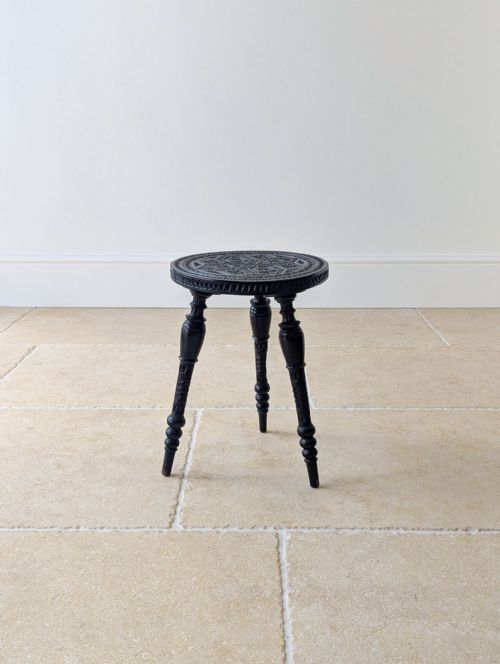
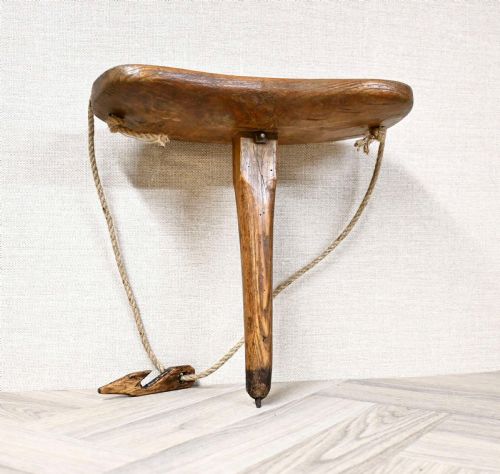
Most examples encountered here belong to the Victorian period or the wider nineteenth century, drawing on English, French, and vernacular regional styles. Their forms range from simple round tops on three splayed legs to swivel mechanisms, bobbin turnings, and low rustic seats.
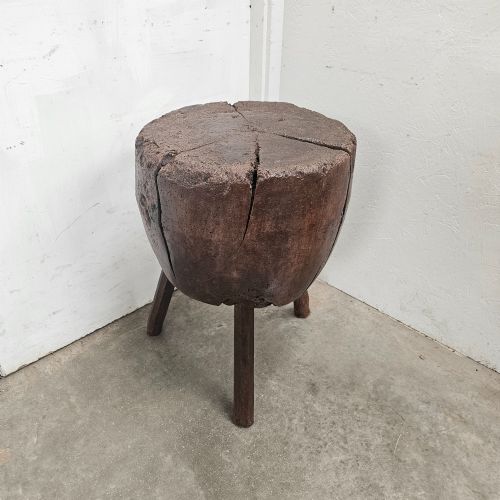
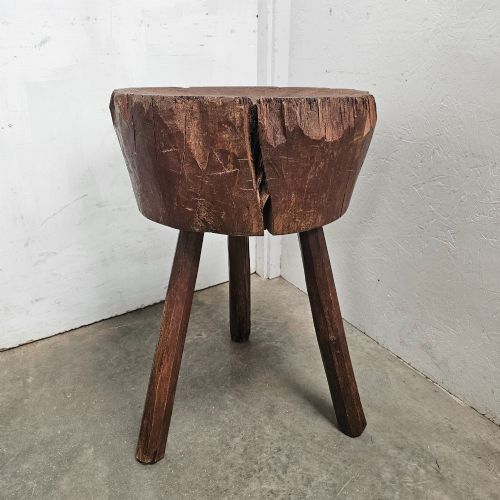
Alongside conventional seating, the selection includes related timber forms like chopping blocks, game blocks, and occasional tables that share the same robust construction. These domestic items reflect the straightforward needs of past rural workshops, dairies, and farmhouses.
How vintage wooden tripod stools were made
Maker-craftsmen built these stools using solid native hardwoods such as elm, oak, beech, ash, and pine, often combining two timbers for the seat and legs. Elm served particularly well for solid circular or live edge tops due to its interlocking grain, which resisted splitting under heavy use.
Legs were typically tapered and joined to the underside of the seat using through-tenons or wedged mortise joints for stability on uneven farmhouse floors. Some pieces incorporated iron bracing or simple turned supports, while others relied on unadorned timber vernacular framing.
One Scottish nineteenth-century stool even speaks up directly via pokerwork, demanding that you touch it if you dare.
What varies in quality in vintage wooden tripod stools
Quality in these vernacular pieces rests on the integrity of the timber selection and the tightness of the three-legged joinery. Seats carved from a single thick slice of elm or ash display a durability superior to thinner, patched boards.
The character of the surface wear and patination distinguishes superior examples, where decades of daily handling have polished the wood naturally. Pieces retaining original surface treatments, early paint, or distinct regional turnings command greater interest than heavily restored or structurally compromised items.
The Vintage Wooden Tripod Stool Glossary
- Vernacular
- Everyday objects built by local craftspeople for domestic or agricultural use rather than following high-style academic designs. These pieces prioritize function and local material availability above all else.
- Milking stool
- A low three-legged seat designed for farm workers to sit close to an animal during milking. The three-legged format ensures the stool sits firmly on uneven earthen or stone floors.
- Elm
- A durable hardwood prized for its resistance to splitting, frequently selected by country makers for stool tops and seats. Its twisted grain makes it exceptionally tough under daily strain.
- Mortise and tenon
- A traditional woodworking joint where a projecting tongue fits snugly into a corresponding cavity and is often secured with a wedge. This method provides the rigid frame essential for tripod seating.
- Patina
- The deep surface sheen and coloration developed by timber through years of handling, waxing, and exposure to light. A rich patina signals age and honest domestic service.
Vintage Wooden Tripod Stool: Frequently Asked Questions
Are three-legged stools stable on flat floors?
Three legs naturally adjust to uneven surfaces without rocking, which explains their historical use in barns, dairies, and farmhouses.
While this tripod design prevents wobbling on flagstones or uneven floorboards, users should check that the leg joints remain tight within the seat socket.
What is the difference between a dairy stool and a milking stool?
Both terms describe low, utilitarian seating used in agricultural settings, though dairy stools often served multiple purposes in farm processing rooms.
Milking stools specifically featured a low profile to keep the worker balanced close to the ground while tending livestock.
How do I care for an antique wooden stool?
Keep these timber pieces away from direct heat sources and sudden temperature swings to prevent the solid elm, oak, or pine from splitting.
Apply a traditional beeswax occasionally to nourish the dry wood and maintain the natural surface sheen without creating a synthetic buildup.
Can I use a vintage tripod stool as a side table?
These sturdy wooden stools function very well as small bedside tables, plant stands, or occasional surfaces for books and lamps.
Their compact footprint and varied seat heights make them adaptable for modern living spaces while retaining their distinct historic character.