





Vintage Wooden Tier
These vintage wooden tier pieces combine practical stacking and display space across periods from the eighteenth century to the mid-twentieth century.
Vintage Wooden Tier
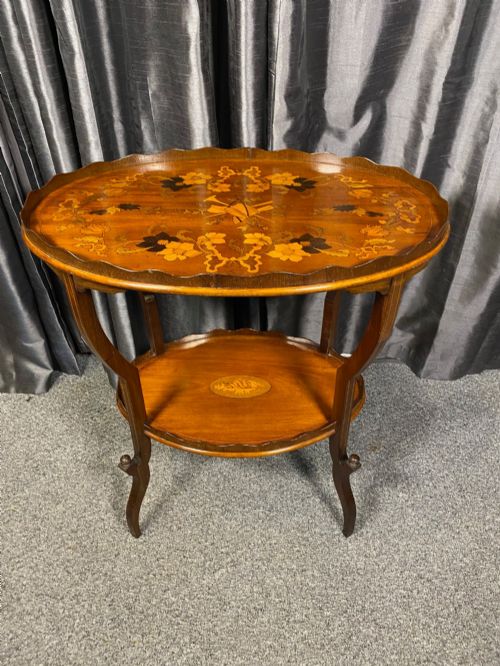
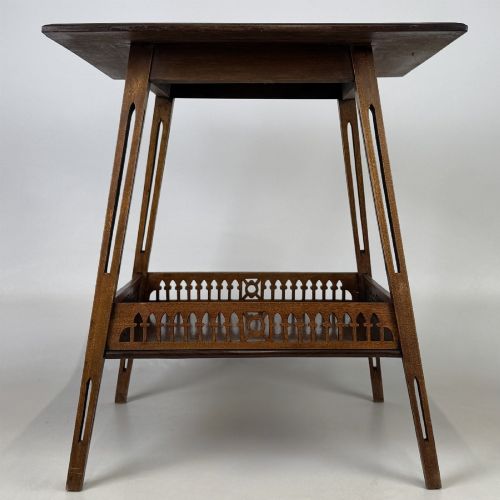
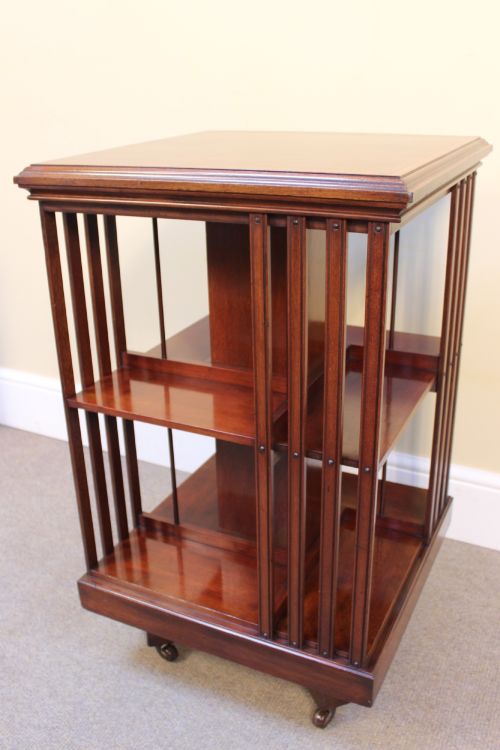
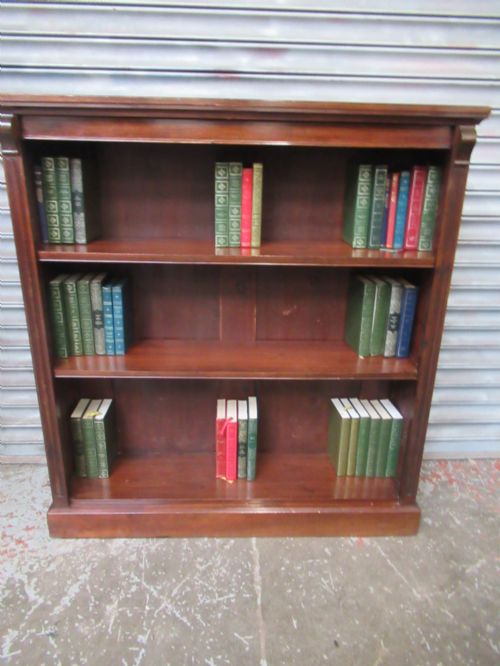
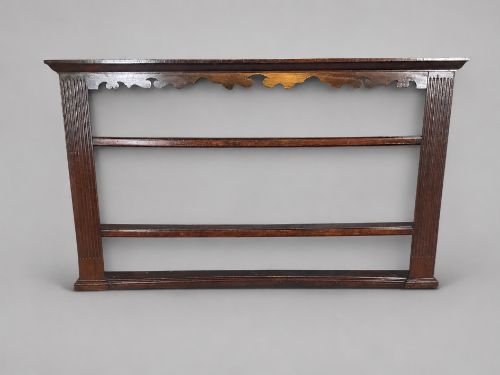
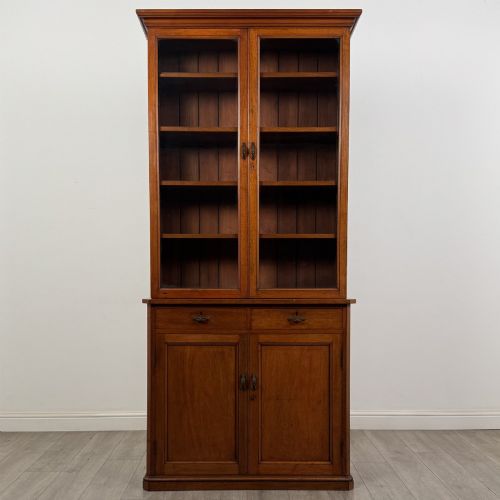
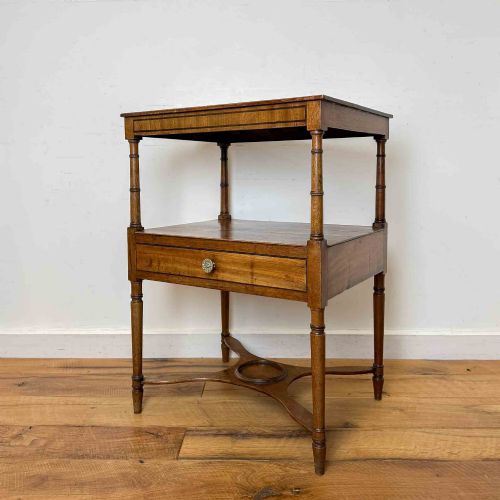
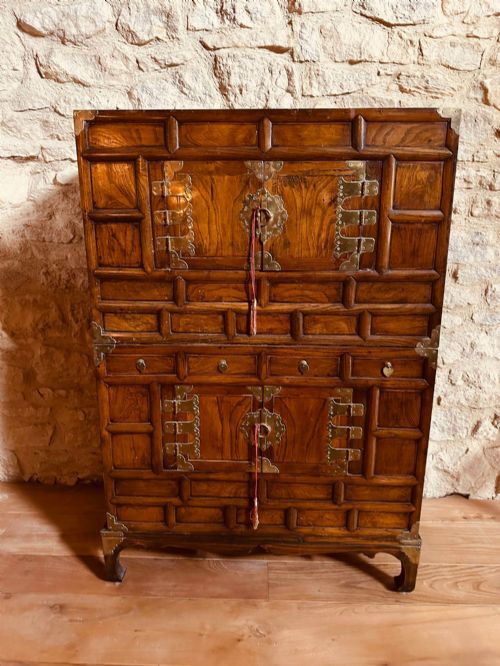
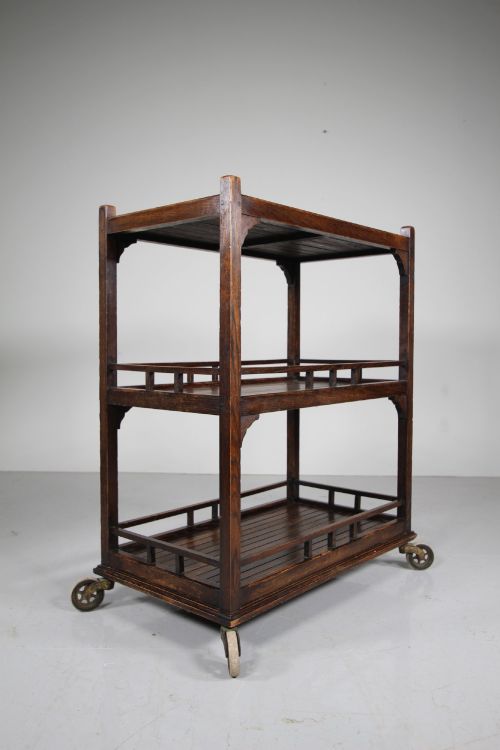
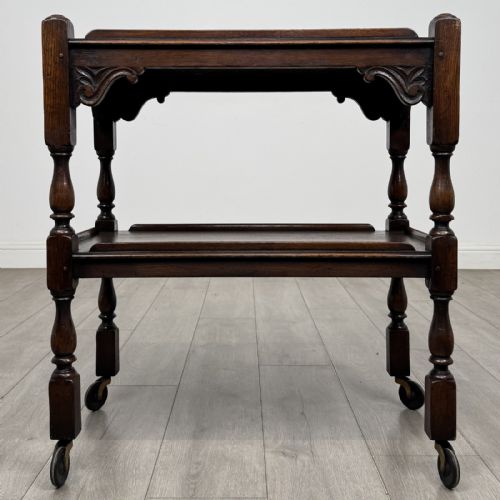
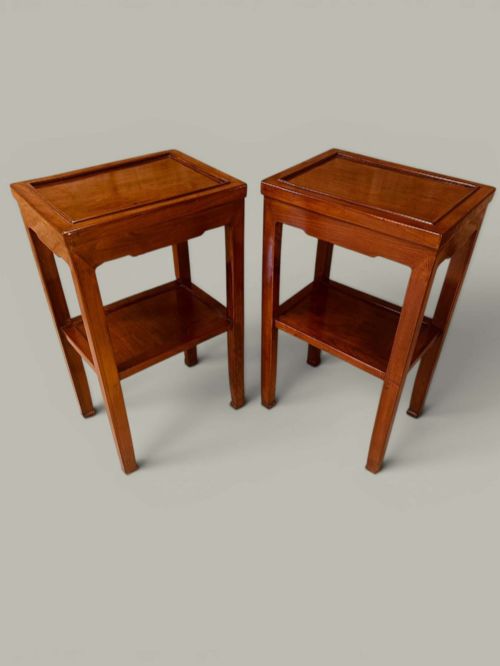
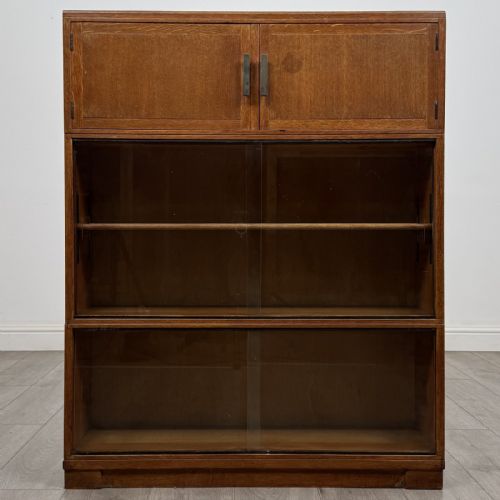
A vintage wooden tier groups multiple horizontal surfaces together for storage or display, spanning bookcases, tea trolleys, side tables, and étagères. You will frequently encounter Edwardian and 1920s oak or mahogany iterations featuring two or more distinct levels.
The selection extends from late eighteenth-century mahogany corner washstands and hanging shelves to early twentieth-century stacking bookcases and walnut side tables. Form follows utility closely, whether configured as a mobile tea trolley on castors or a stationary open bookcase with a raised gallery.
Materials and Construction
Cabinetmakers utilised durable hardwoods such as oak, mahogany, walnut, and kingwood, frequently incorporating brass castors, handles, or glass panels. Grain patterns remain prominent, particularly on figured walnut surfaces and quarter-sawn oak sections.
Construction methods range from traditional joinery on nineteenth-century bookcases to the functional wheeled framing of twentieth-century tea trolleys. Secondary materials like iron, metal, and lacquer appear on specific items like red and black lacquer rice baskets or industrial haberdashery displays.
Vintage Wooden Tier Retail Price Guide 2026
Typical asking prices for vintage wooden tier among the pieces listed under this phrase on Sellingantiques today, from the lower quarter to the upper quarter. They describe what is for sale here now, not the wider market.
Some multi-tiered pieces double as rolling refreshment stations, proving that nineteenth-century hosts took tea mobility quite seriously.
Gradation of Workmanship
Quality rests in the selection of timber veneers, the crispness of carved elements like Jacobean-style detailing, and the integration of functional elements such as sliding glass doors or removable carrying trays. Superior examples maintain stability across multiple tiers without relying on excessive secondary bracing.
The finish and retention of original surface patination distinguish finer items from simpler utility pieces. Attention to minor details, including beaded edges, inlaid stringing, and slender turned pillars, marks the difference between standard production and elevated craftsmanship.
Clark’s Anchor·Heals of London·Minty of Oxford
The Vintage Wooden Tier Glossary
- Étagère
- A piece of furniture consisting of a set of open shelves for displaying small ornaments or books. French origin marks many elegant multi-tiered examples.
- Whatnot
- A multi-shelved piece of furniture used for displaying ornaments or holding books and small items. Often fitted with slender upright supports.
- Tea trolley
- A small table on wheels designed for serving tea or transporting drinks and food across multiple tiers. Frequently includes a removable carrying tray.
- Gallery
- A raised ornamental border running along the edge of a shelf or tabletop. It prevents items from sliding off upper tiers.
- Barley twist
- A type of turned wooden column resembling a twisted rope. This decorative support appears frequently on Victorian and Edwardian stands.
Vintage Wooden Tier: Frequently Asked Questions
What are vintage wooden tier pieces used for?
These items serve primarily for display and storage, functioning as bookcases, lamp tables, tea trolleys, and plant stands across domestic interiors.
Their multiple levels allow you to organise books, ceramics, and daily items efficiently within limited floor space.
How do I identify an Edwardian wooden tier?
Edwardian examples often feature light mahogany or oak construction with subtle inlaid details, slender pillars, and raised galleries.
They frequently take the form of open bookcases, occasional tables, or cake stands dating from the early twentieth century.
Can I use a tea trolley as a side table?
A tea trolley functions well as a static side or lamp table, especially versions equipped with removable trays and lower storage shelves.
The presence of castors also permits easy movement when rearranging furniture layouts.
What is the difference between an étagère and a whatnot?
An étagère generally references lighter, often French-influenced multi-tiered display pieces, whereas a whatnot is a traditional British term for open shelving units.
Both types utilise vertical tiers to maximise display capacity without enlarging the furniture footprint.