
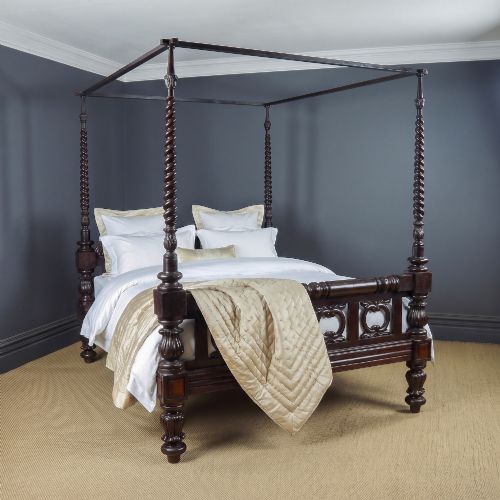
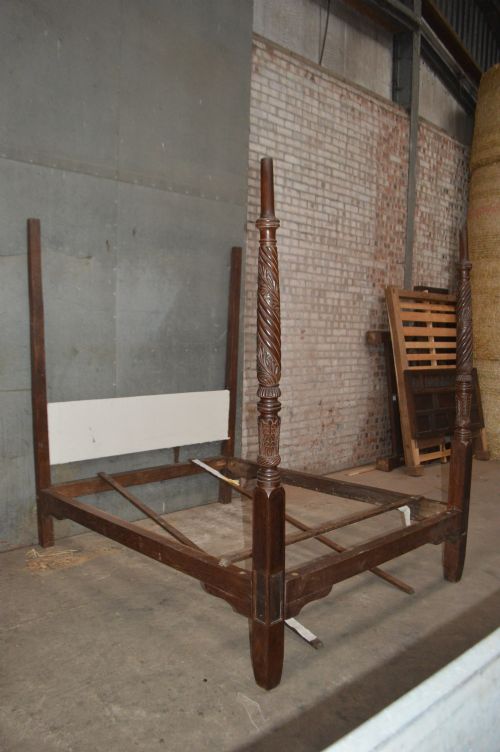
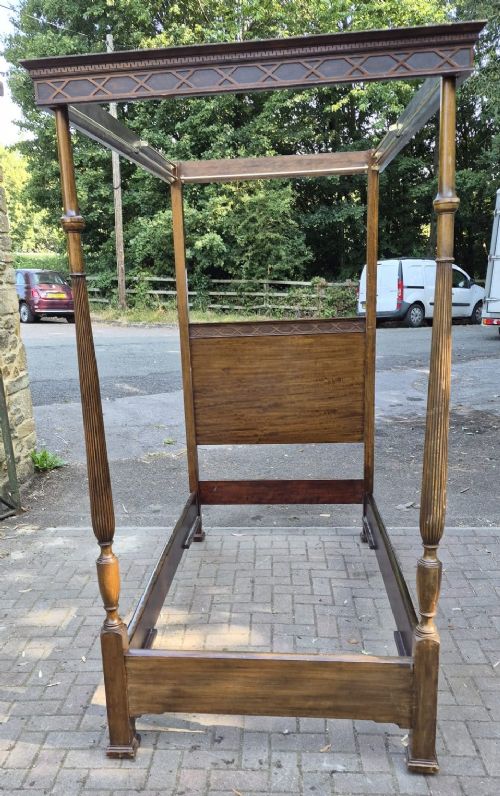


Vintage Wooden Tester Bed
A vintage wooden tester bed anchors a room with architectural presence, offering traditional warmth and structural craftsmanship.
Vintage Wooden Tester Bed
A vintage wooden tester bed provides a commanding focal point in a bedroom through its upright posts and overhead canopy frame. Buyers searching this phrase encounter substantial furniture pieces designed to create an intimate sleeping space within a larger room.
The selections on this page span the nineteenth century through the Edwardian era, encompassing both full tester frames and half tester variants. Mahogany forms the dominant timber across these examples, supported by oak, burr walnut, pine, and painted wood.
Stylistic diversity ranges from restrained Regency lines to elaborate Georgian Revival interpretations and solid Arts and Crafts construction. British colonial influences and Edwardian Chinoiserie revival pieces also appear among the listed wooden bedsteads.
Materials and construction
Cabinetmakers utilised dense hardwoods such as mahogany and oak to support the significant vertical weight of the four posts and overhead tester canopy. Grain selection determined the visual impact of the headboards and footboards, often enhanced with burr walnut veneers or painted finishes.
Structural joinery relied on substantial tenons and bolted rails to ensure stability across the expansive framework. Metal elements like brass fixtures appeared alongside carved wood details and gilt decoration to finish the tester structures.
Early testers kept midnight ghosts at bay, though today they mostly contend with low bedroom ceilings.
Distinctions in quality
The standard of a vintage wooden tester bed rests on the crispness of its carved ornamentation and the architectural proportion of the posts. Finely turned columns and balanced cornices demonstrate a maker's adherence to classical design principles seen in Georgian and Regency styles.
Timber selection and surface finish dictate the overall character, where aged patination and carefully matched wood grains elevate simpler forms. The integrity of the original joints and the proportion of the canopy structure differentiate standard production from superior cabinetwork.
The Vintage Wooden Tester Bed Glossary
- Tester
- The overhead canopy frame supported by the posts of a bed. This structural element traditionally held curtains to keep drafts away from the sleeper.
- Bedstead
- The complete wooden framework of a bed, including headboard, footboard, and rails. It excludes the mattress and modern bedding.
- Chinoiserie
- A decorative style reflecting European interpretations of Chinese artistic traditions. It appears on revival pieces through painted motifs and themed woodwork.
Vintage Wooden Tester Bed: Frequently Asked Questions
How do I fit a mattress?
Vintage wooden tester beds were built to historical dimensions rather than standard modern mattress sizes. Custom mattress solutions are often required for older frames.
Bed rails and interior supports may need minor adaptation to securely hold contemporary bases. Consulting the internal dimensions of each specific bedstead ensures a correct fit.
Are these beds easy to assemble?
These sizeable wooden structures require careful handling and typically need two people for assembly. The heavy posts, headboards, and side rails connect using traditional bolts and joints.
Professional installation is recommended to ensure the canopy and upright posts remain plumb and secure. Correct assembly protects the antique joinery from undue stress.
How do I date these beds?
Dating relies on identifying stylistic markers, timber types, and construction methods associated with specific periods. Victorian and Edwardian examples show distinct revival traits.
Details such as turned mahogany posts, applied burr walnut veneers, or Arts and Crafts framing provide chronological clues. Comparing the hardware and joinery helps confirm the era of manufacture.