


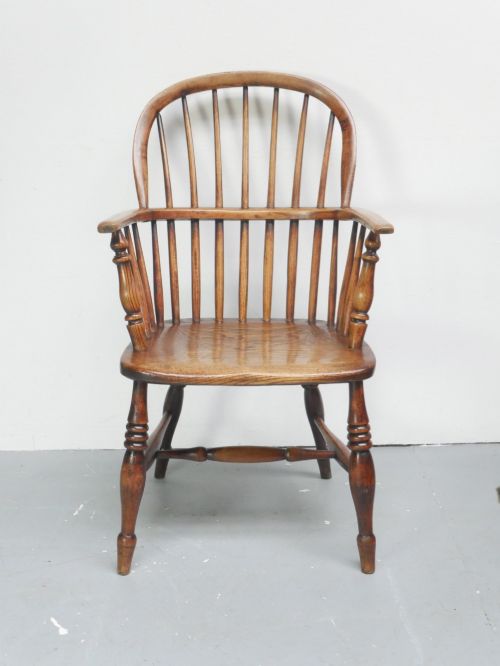
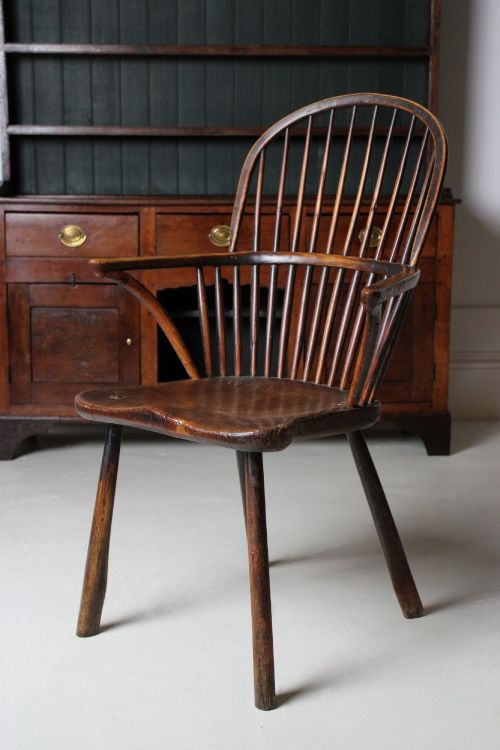


Vintage Wooden Stick Armchair
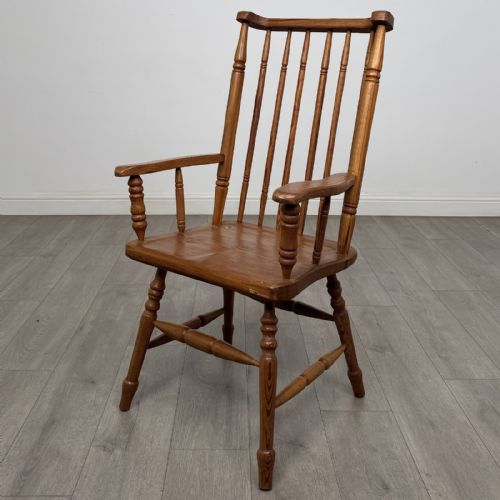
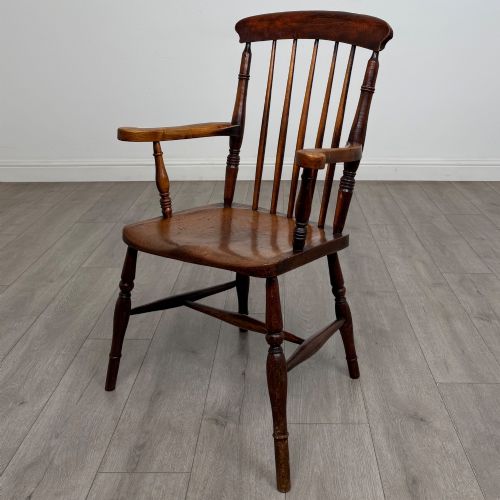
A vintage wooden stick armchair brings unpretentious regional character to a room, built by country makers who prioritised sturdy function.
Vintage Wooden Stick Armchair
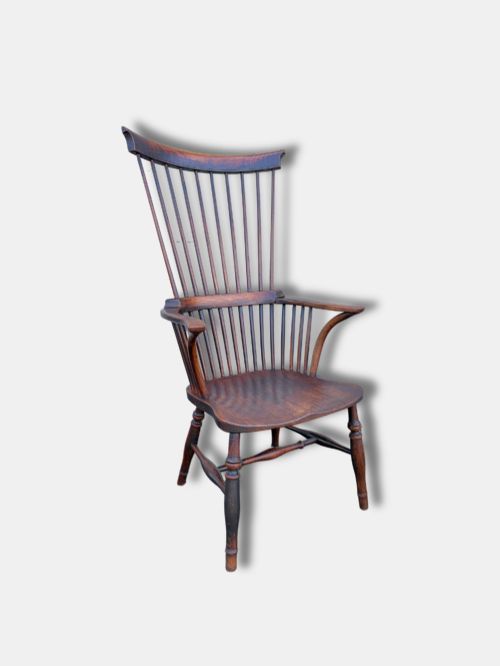
A vintage wooden stick armchair encompasses regional vernacular seating from the eighteenth, nineteenth, and early twentieth centuries. These chairs range from simple ash and elm stick backs to high comb back Windsor forms originating across English, Welsh, and Scottish workshops.
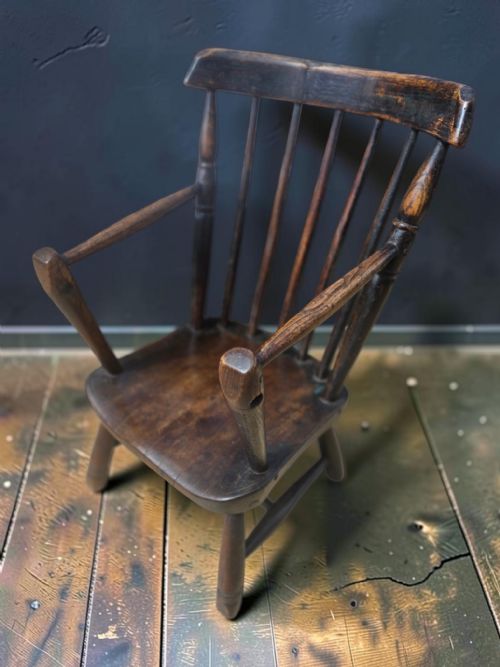
Buyers will most frequently encounter nineteenth-century examples, including Victorian country vernacular pieces and smaller children's armchairs. Forms vary from low kitchen armchairs to high back Windsor chairs featuring distinct stick back construction.
How they were made
Local craftsmen shaped these chairs using a combination of native timbers, predominantly pairing elm for solid seats with ash or beech for turned spindles and legs. Yew wood also appears in select Windsor chairs, offering distinct grain patterns alongside occasional painted finishes or simulated rosewood treatments.
The construction relies on traditional joinery where individual sticks and spindles are tenoned directly into carved wooden seats. Steam-bending techniques formed the characteristic curved hoop backs and comb backs that define the vernacular style.
Vintage Wooden Stick Armchair Retail Price Guide 2026
Typical asking prices for vintage wooden stick armchair among the pieces listed under this phrase on Sellingantiques today, from the lower quarter to the upper quarter. They describe what is for sale here now, not the wider market.
What varies in quality
Quality rests upon the harmony of the timber selection and the retention of original surface patination. Chairs that combine contrasting woods like yew and elm with clean turnings stand apart from simpler utility pieces.
Structural integrity and the subtlety of the spindle tapering dictate the refinement of the piece. Untouched vernacular surfaces with signs of genuine age command greater appreciation than heavily restored examples.
Scottish Darvil
The Vintage Wooden Stick Armchair Glossary
- Vernacular
- Everyday objects made by regional craftsmen following local traditions rather than formal academic designs. These pieces utilise accessible local materials and prioritise practical utility.
- Comb back
- A Windsor chair variation where the vertical sticks extend upward through a top rail resembling the teeth of a comb. This style offers pronounced head support.
- Hoop back
- A continuous curved wooden bow steam-bent to form the backrest and arm support in one sweeping line. It represents a cornerstone of traditional Windsor chair construction.
- Windsor chair
- A chair built with a solid wooden seat into which the legs and back sticks are independently inserted. Regional variations span English, Welsh, and Scottish traditions.
Vintage Wooden Stick Armchair: Frequently Asked Questions
How do I date a stick armchair?
Dating relies on examining tool marks, timber shrinkage, and structural evolution from eighteenth-century vernacular forms through to late Victorian production. Regional construction quirks also point toward specific decades.
Simpler stick backs often precede more complex Windsor forms, though primitive regional pieces continued alongside refined urban styles well into the nineteenth century.
Were these chairs used outdoors?
These chairs served primarily as functional indoor seating for kitchens, farmhouses, and cottages. Elm and ash construction provided the durability needed for daily domestic life.
While robust, their traditional hide glue and wedge joinery suit indoor environments rather than exposure to changing weather conditions.
How do I care for a vintage wooden armchair?
Maintenance involves applying occasional natural wax to nourish dry timber and preserve the historic surface patination. Keeping chairs away from direct heat sources prevents wood splitting.
Allowing the timber to adapt naturally to indoor humidity ensures the original pegged joints remain stable over time.