

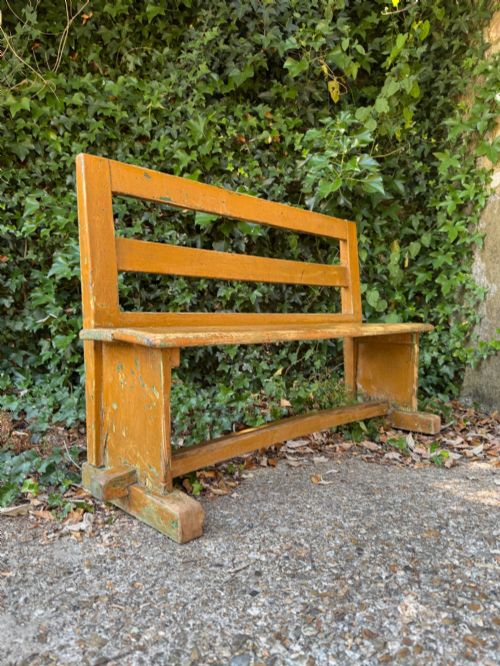
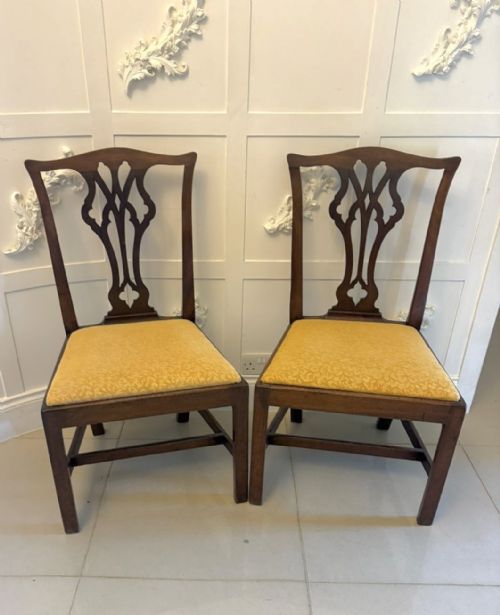

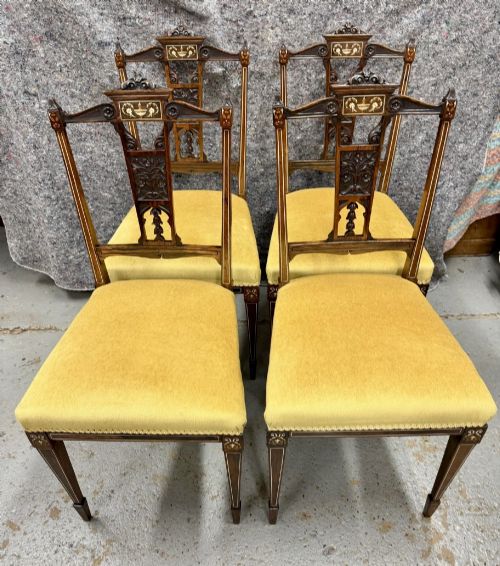
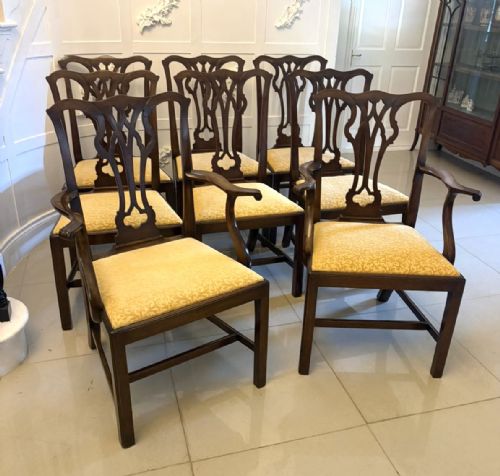


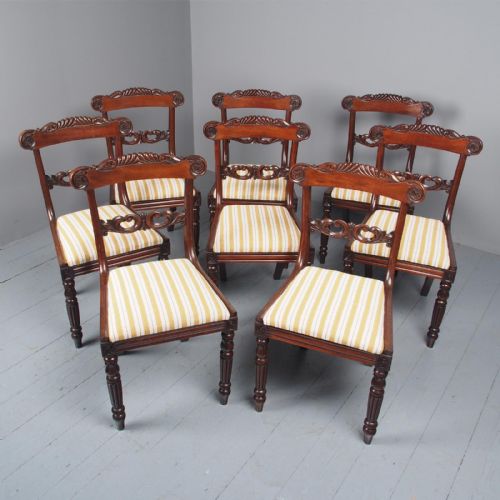

Yellow Wooden Dining Chair
A yellow wooden dining chair brings warmth to a room, offering practical seating shaped by centuries of cabinet making.
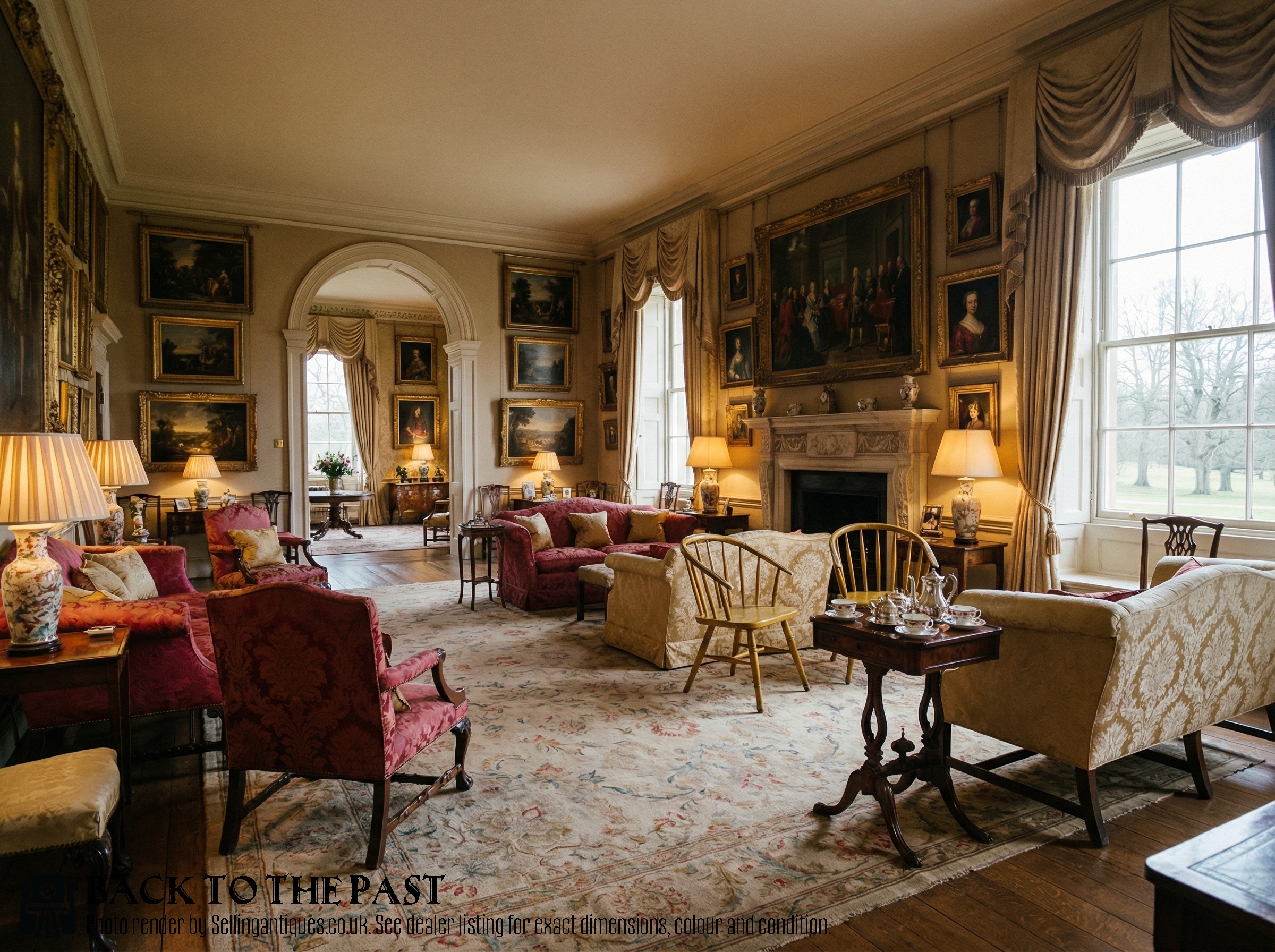
Yellow Wooden Dining Chair
When you search for a yellow wooden dining chair, you are looking at painted and decorated seating that spans periods from the Georgian era through to the twentieth century. These pieces include single side chairs, carvers, and larger matched sets created in styles ranging from Regency and Victorian to Arts and Crafts and rustic country.
The selection on this page draws together wooden frames finished with paint or simulated grain alongside natural timbers. Forms vary from simple stick back Windsor designs to elaborately carved revival dining chairs and inlaid rosewood or mahogany frames given a decorative yellow or gilt surface.
How they were made
Carpenters and joiners built these frames using traditional timbers such as mahogany, oak, walnut, and pine, often employing sturdy mortise and tenon joints to withstand daily use around the dining table. Turning, carving, and steam bending shaped the uprights, legs, and rails into supportive structures.
Surfaces were finished with paint, faux graining techniques like simulated rosewood or birds eye maple, and clear polishes. Drop-in or upholstered seats covered in fabric and textiles provided comfort.
Yellow Wooden Dining Chair Retail Price Guide 2026
Typical asking prices for yellow wooden dining chair among the pieces listed under this phrase on Sellingantiques today, from the lower quarter to the upper quarter. They describe what is for sale here now, not the wider market.
Object types span dining chairs, armchairs, side chairs, benches, and hall chairs executed in Regency, Victorian, Arts and Crafts, and Georgian styles.
What varies in quality
The distinction between ordinary and superior pieces rests on the crispness of the carving, the balance of the proportions, and the integrity of the timber frame. Sets that retain their original matched appearance and cohesive finish command greater attention than assembled groups.
Detailing such as fine inlay, well-executed painted decoration, and robust joinery elevate a chair from basic utility to high craftsmanship.
James Shoolbred
The Yellow Wooden Dining Chair Glossary
- Carver
- An armchair designed with armrests, traditionally placed at the head of a dining table. These match the smaller side chairs in a set.
- Side chair
- An upright chair without armrests, made to fit neatly alongside a dining table. These form the majority of standard seating sets.
- Regency
- A style period spanning the early nineteenth century, noted for classical revival motifs and elegant, restrained lines. Pieces from this era often feature slender turned legs and sabre supports.
- Inlay
- A decorative technique where contrasting pieces of wood or other materials are fitted flush into the surface of the primary timber. This adds visual complexity to backs and rails.
Yellow Wooden Dining Chair: Frequently Asked Questions
How do I clean a painted wooden chair?
Wipe surfaces gently with a soft, dry cloth to remove dust. Avoid harsh chemical cleaners that might strip the painted or polished finish.
Test any mild cleaning solution on an inconspicuous spot before applying it to the rest of the frame.
Can I mix different chair styles together?
Mixing single side chairs and carvers from similar periods creates an eclectic dining arrangement. Ensure the seat heights align comfortably with your table.
Matching timber tones or painted finishes helps disparate chairs look deliberate rather than accidental.
What is a carver chair used for?
A carver provides arm support and typically sits at the head or foot of a dining table. Historically, these were reserved for the head of the household.
Today they function equally well as standalone desk chairs or accent seating in a living room.
How do I date an antique dining chair?
Examine the construction methods, tool marks, and wood species used in the frame. Hand-cut joints and native timbers often point to earlier centuries.
Stylistic details like Regency curves or Victorian proportions offer further clues to the decade of manufacture.