


Vintage Wooden Pub Stools
These vintage wooden pub stools bring honest utility and robust character to modern rooms, offering practical seating forged from decades of heavy public house use.
Vintage Wooden Pub Stools
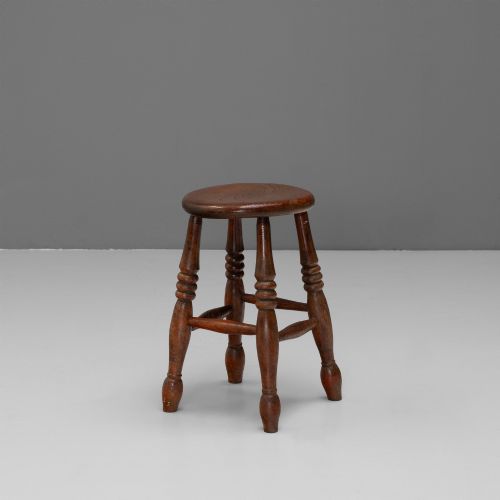
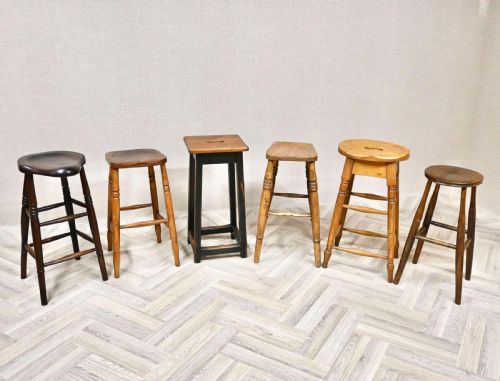
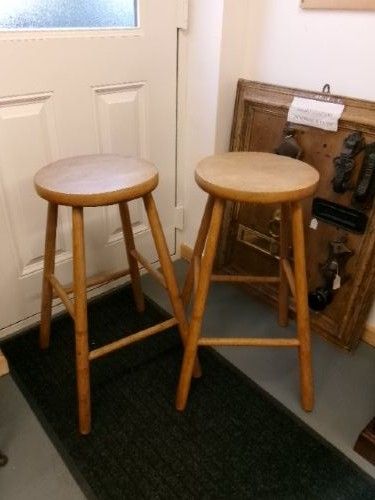
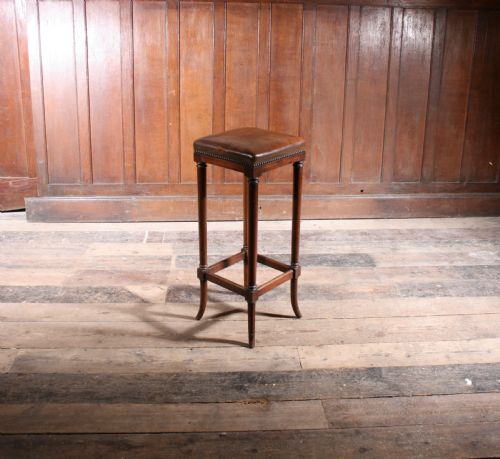
Vintage wooden pub stools encompass low tavern seats, tall bar variations, and utilitarian forms originating from the nineteenth and early twentieth centuries. These pieces reflect the functional demands of Victorian and Edwardian public houses, alehouses, and rural establishments where sturdy seating was paramount.
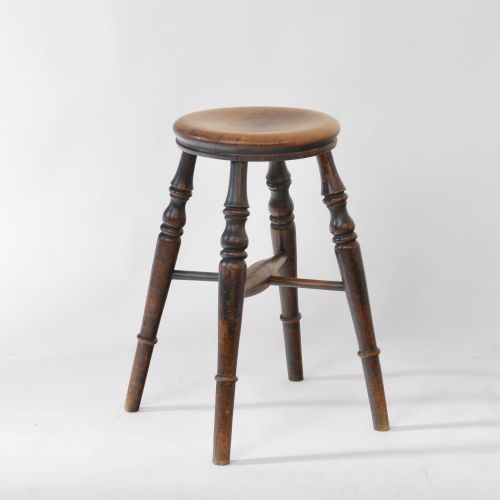
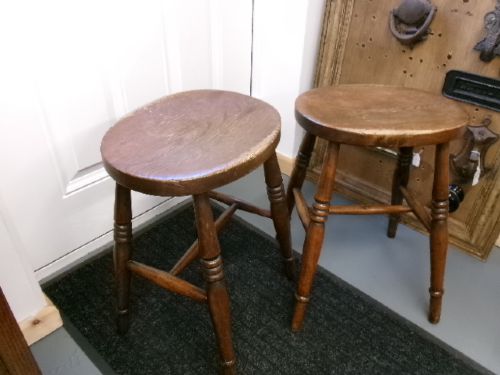
Forms range from simple round tops and oval dished seats to tall bar variants and clerk chairs. Many pieces show direct lineage to tavern, alehouse, and mill worker environments.
How they were made
Maker construction relies on traditional solid hardwoods including elm, oak, beech, sycamore, and pine. Elm and sycamore frequently form the solid seats, chosen for their resilience against splitting under constant use.
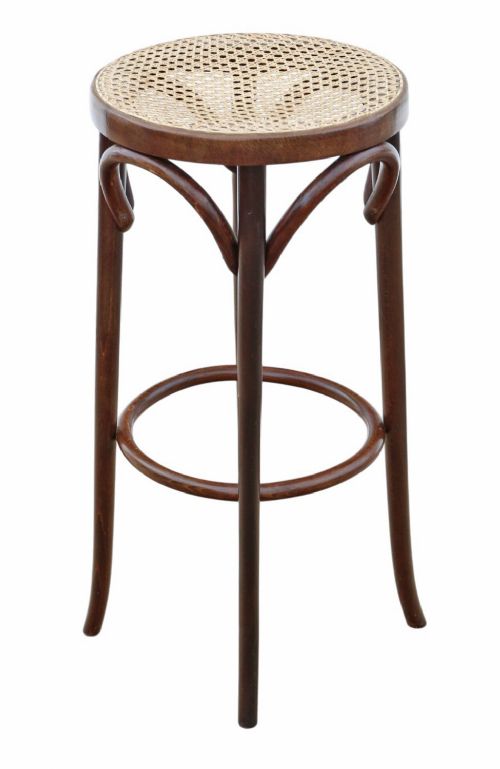
Turned beech and birchwood often provide the structural integrity for legs and spindles, whilst bentwood techniques appear in later twentieth-century iterations. Joinery prioritises straightforward utilitarian strength, frequently employing wedged tenons and sturdy stretcher frames to withstand heavy daily leaning.
Listings span periods from the nineteenth century through the 1940s, featuring solid elm, oak, beech, and pine construction.
What varies in quality
Quality rests primarily in the timber selection and the degree of honest wear accumulated over decades of service. Fine examples display deep patination on solid elm or sycamore tops, coupled with robust, uncompromised turned stretchers.
Construction methods also dictate grade, distinguishing standard utilitarian workshop output from finely turned bentwood or matched sets of multiple stools. The balance between original structural soundness and authentic domestic or commercial weathering defines the better specimens.
The Vintage Wooden Pub Stools Glossary
- Dished top
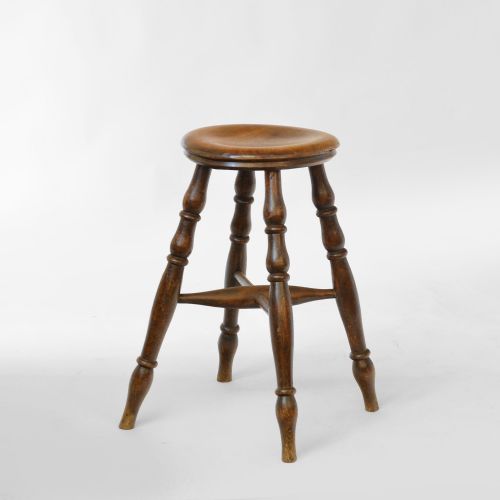
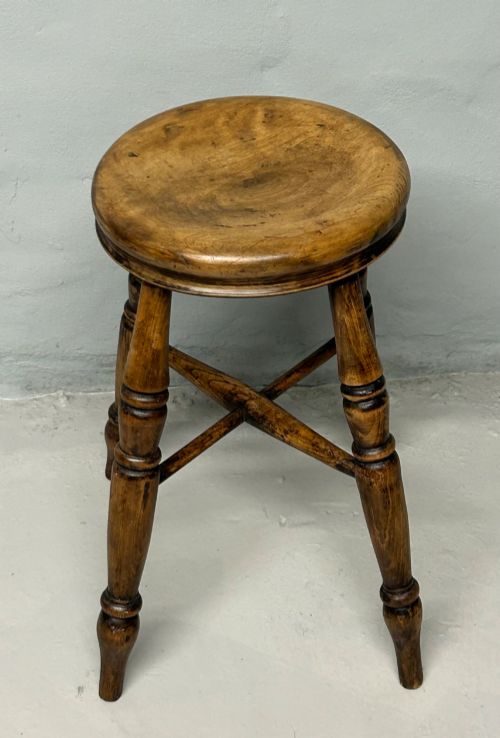
- A seat carved with a shallow circular or oval depression to improve sitting comfort. This ergonomic shaping prevents slipping and indicates careful manual timber work.
- Bentwood
- Wood softened by steam and subsequently bent into curved shapes. This technique defines specific twentieth-century seating forms found within these listings.
- Turned leg
- A pillar shaped on a lathe to create decorative profiles and structural tapering. It provides both aesthetic refinement and sturdy support for heavy commercial seating.
- Stretcher
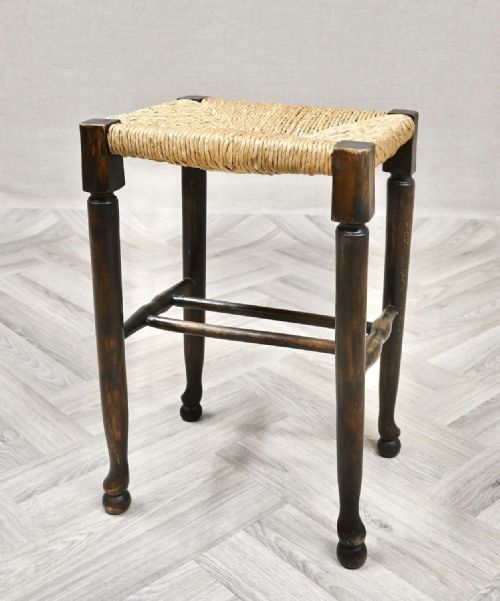
- A horizontal support connecting the legs of a stool to increase stability. These components endure the greatest physical stress in busy tavern environments.
Vintage Wooden Pub Stools: Frequently Asked Questions
How do I care for antique wooden seats?
Maintain the dry timber by applying occasional natural wax to nourish the grain and preserve the historic surface patination.
Avoid placing these pieces near direct heat sources or in damp conditions to prevent timber movement and joint shrinkage.
Can I find matching sets of tavern stools?
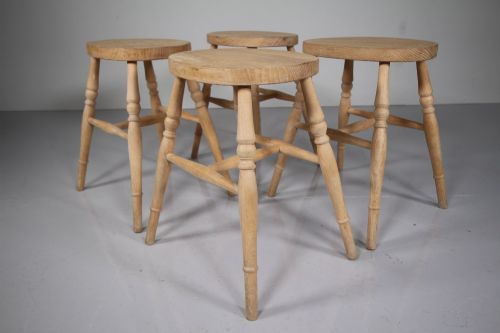
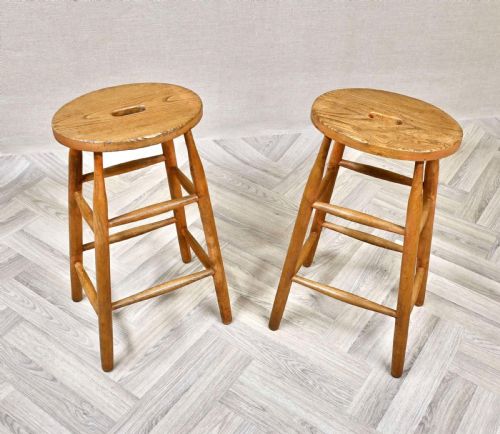
Multi-item sets appear periodically, ranging from pairs to larger groups originating from domestic or commercial dining spaces.
Single pieces dominate the selection, requiring buyers to embrace assembled groupings for larger seating arrangements around farmhouse tables.
What wood types are most common?
Elm, beech, and sycamore predominate across the seat tops and structural frames due to their inherent toughness and availability during the nineteenth and early twentieth centuries.
Pine and oak also appear regularly, reflecting regional timber preferences amongst vernacular furniture makers.