
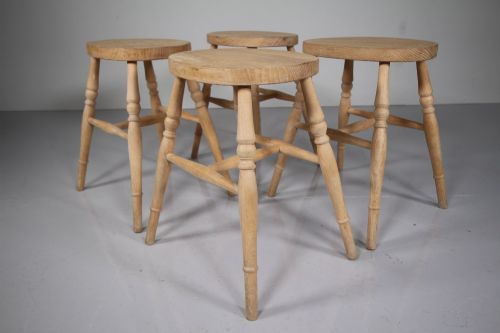
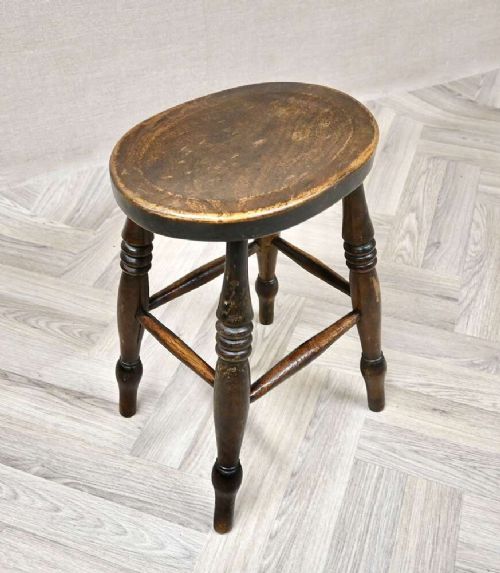
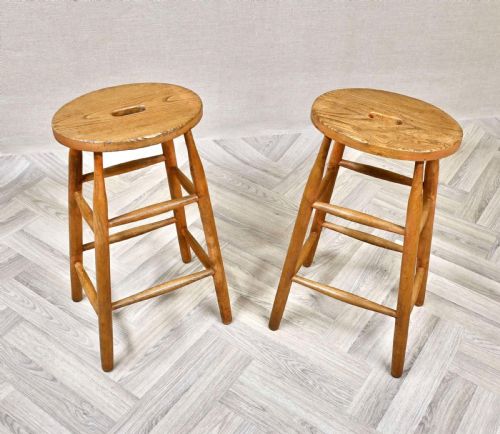
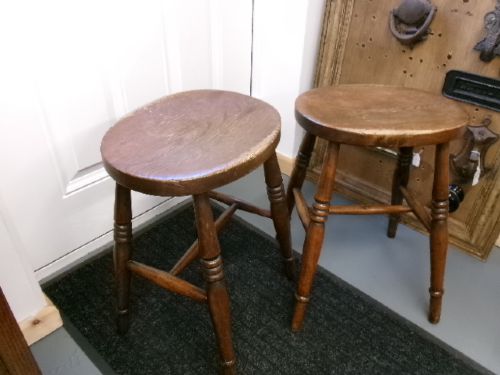
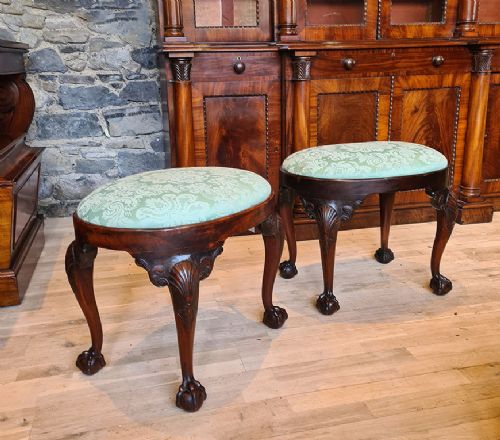

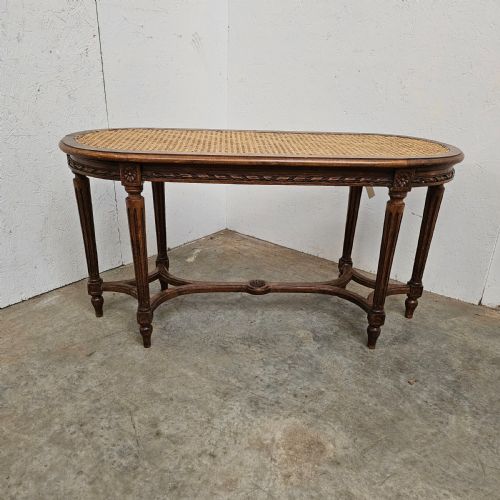

Oval Seat Wooden Stools
These oval seat wooden stools bring centuries of honest craftsmanship into a room, offering versatile seating shaped by regional traditions and resilient timbers.
Oval Seat Wooden Stools
When you search for oval seat wooden stools, you encounter seating solutions that range from rustic country examples to formal revival pieces. These objects serve as dining stools, bar stools, window seats, and tavern seating depending on their height and build.
The most common versions met here include country styles from the nineteenth and early twentieth centuries, alongside earlier Georgian or Queen Anne revival pieces. They feature distinct shapes such as dished tops and carved edges, utilising traditional forms that have endured for generations.
How They Were Made
Craftsmen built these pieces using durable timbers such as oak, walnut, elm, beech, and solid pine. These hardwoods provided the structural integrity needed for daily use in domestic and commercial settings.
Makers employed traditional joinery techniques, shaping seats into dished or flat ovals and supporting them with sturdy legs. Additional elements like cane work and upholstery fabric appear on specific refined examples.
Some tavern stools retain generations of pub seating history within their dished wooden tops.
What Varies in Quality
The distinction between standard utility seating and finer examples rests in the selection of timber and the sophistication of the woodwork. Walnut and figured hardwoods command attention for their grain depth, whereas utilitarian pine or beech serves a purely functional role.
Execution of detail defines the upper tier, seen in carved beech frames, shaped tavern tops, and balanced proportions. Finer examples display a harmonious relationship between the oval seat and the turnings or joinery of the underframe.
The Oval Seat Wooden Stools Glossary
- Dished top
- A seat surface hollowed into a shallow concave oval shape for comfort. This technique requires skilled adzing or turning by the maker.
- Joint stool
- A rigid wooden stool constructed with mortise and tenon joints held together by pegs rather than glue. These sturdy pieces date back to the seventeenth and eighteenth centuries.
- Banquette
- An upholstered long seat or bench designed for seating multiple people. Examples often incorporate carved wooden frames supporting cane or fabric panels.
- Queen Anne style
- A design movement characterised by cabriole legs and curved lines that emerged in the early eighteenth century. Revival pieces later emulated these graceful proportions.
- Windsor
- A traditional chair or stool construction method where legs and spindles are fitted directly into holes bored into a solid wooden seat.
Oval Seat Wooden Stools: Frequently Asked Questions
Where do I put an oval seat wooden stool?
These pieces fit naturally beside a dining table, beneath a bar counter, or placed near a window as a low seat. Their compact footprint allows them to move easily between rooms as extra seating.
In larger spaces, they function well as standalone display surfaces or bedside supports. Their varied heights accommodate different domestic functions without dominating the floor plan.
How do I clean wooden stool tops?
Dust the timber regularly with a soft, dry cloth to prevent dirt accumulation on the grain. Avoid excessive moisture, which can damage antique polish and dry out historic woods.
Apply a traditional beeswax conditioner periodically to nourish the timber and maintain its natural sheen. Buff gently after application to protect the surface from everyday wear.
Are these stools comfortable for daily dining?
Many examples feature ergonomically shaped dished tops that provide a surprising degree of comfort without padding. Their solid wooden construction offers firm support during extended seating.
For softer seating, variations upholstered in fabric or fitted with cane provide a gentler surface. Pairing them with the correct table height ensures proper posture during meals.
How can I tell a tavern stool from a dining stool?
Tavern stools typically feature heavy, robust construction designed to withstand commercial use in public houses. Their dished tops and sturdy frames reflect a utilitarian purpose distinct from domestic furniture.
Dining stools often display finer decorative details, such as turned legs or stylistic influences like the Queen Anne or Edwardian country traditions. Their heights align specifically with standard dining table clearances.