



Pair High Wooden Seating
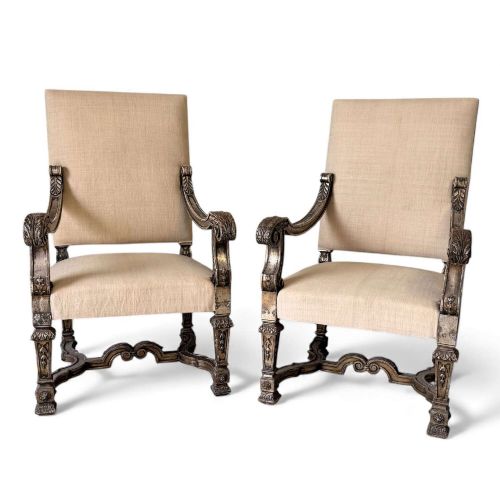
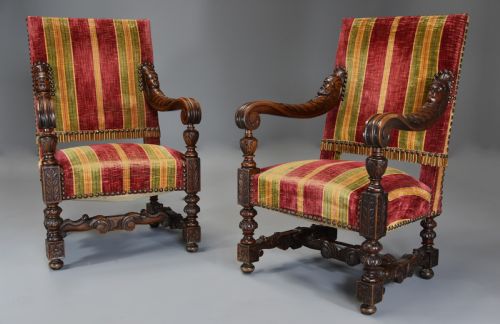
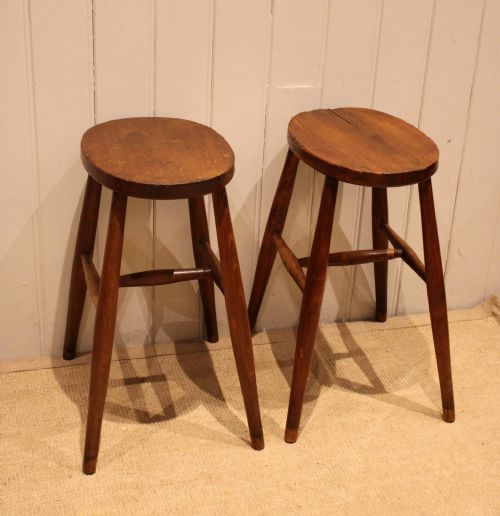
Pair high wooden seating gathers sturdy armchairs and bar stools crafted from elm, oak and walnut across the centuries.
Pair High Wooden Seating
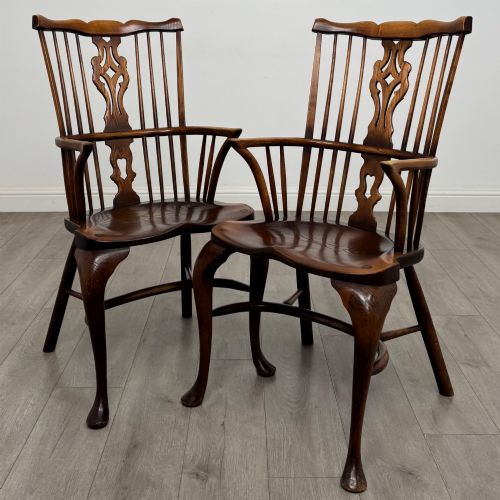
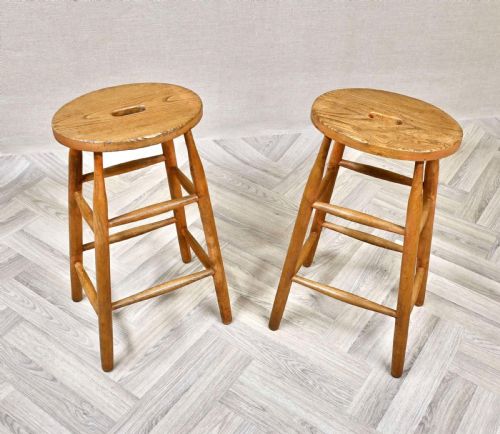
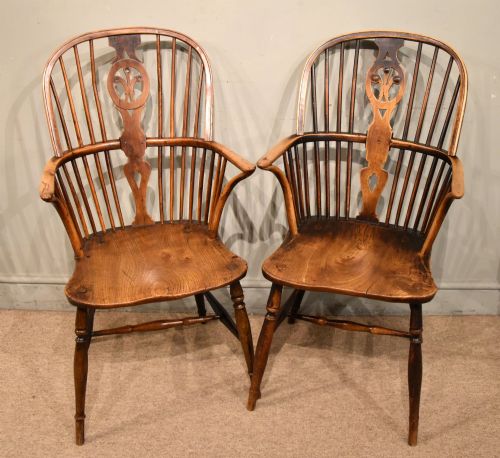
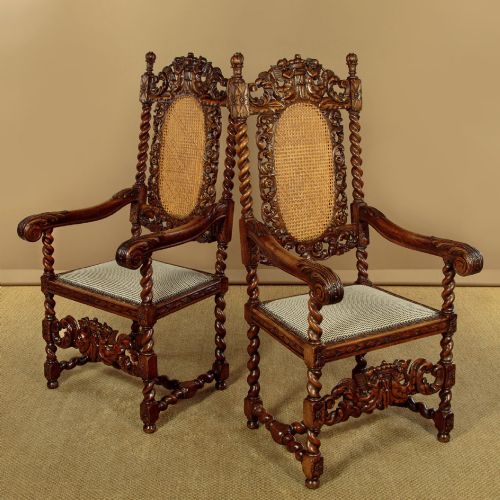
Pair high wooden seating covers robust chairs and stools designed with elevated backs or proportions, spanning periods from the eighteenth century to the twentieth. Buyers encounter Windsor armchairs, oak throne chairs, and walnut bar stools originating from English, French, and Welsh workshops.
The selection leans heavily toward vernacular country forms and formal revival styles, incorporating elm, oak, and walnut timbers. Many examples feature high backs, carved details, and occasional leather or fabric upholstery alongside simpler wooden seats.
How they were made
Timbers such as elm, oak, walnut, and beech form the structural core of these chairs, shaped through traditional joinery and turning techniques. Elm frequently provides strong, resilient seats for country armchairs, while walnut and oak lend themselves to elaborate carving.
Surface detailing ranges from simple waxed finishes on vernacular country seating to ornate giltwood and carved green man motifs on nineteenth-century throne chairs. Upholstered variants integrate leather or hand-stitched tapestry panels secured directly to the wooden frames.
Keep an eye out for carved green man faces glaring from the backrests of Victorian oak throne chairs.
What varies in quality
The distinction between ordinary and exceptional pieces rests primarily on the depth and crispness of the carving, timber selection, and structural integrity. Finely figured walnut and dense, well-seasoned oak command attention through the retention of original surfaces and sharp decorative detail.
Proportion and execution set grander throne chairs and French revival armchairs apart from utilitarian kitchen seating. Chairs retaining their original upholstery or patinated timber finishes display a more cohesive historical character than heavily altered examples.
William Morris
The Pair High Wooden Seating Glossary
- Windsor armchair
- A traditional seating form featuring a solid wooden seat into which the legs and spindle back are wedged directly. These chairs often utilise elm for the seat and ash or beech for the bentwood components.
- Throne chair
- A large, high-backed ceremonial seat typically carved from oak or walnut with substantial armrests. Such pieces often incorporate architectural motifs or figurative carving like the green man.
- Fauteuil
- An open-framed armchair with upholstered back and armrests, originating in France. Walnut and giltwood versions appear frequently in nineteenth-century interpretations of Baroque and Renaissance styles.
- Bar stool
- A tall seating form designed for raised counters or bars, appearing in twentieth-century contexts alongside traditional timber dining and kitchen chairs. These utilise materials like oak, walnut, and leather.
- Vertebral or vernacular
- A term describing regional, non-academic furniture traditions rooted in local craftsmanship rather than courtly design. Welsh and English country seating exemplifies this category.
Pair High Wooden Seating: Frequently Asked Questions
Where were these chairs used?
Such seating served diverse domestic and ceremonial functions, from country kitchens and dining rooms to grand halls and parlours.
Elm Windsor chairs suited domestic hearths, while ornate walnut and oak throne chairs occupied formal reception rooms.
How do I care for wooden seating?
Maintaining these pieces involves keeping them away from direct heat sources and fluctuating humidity to prevent timber splitting.
Regular dusting and occasional application of appropriate wax help preserve the natural finish and patina of the wood.
How are different periods identified?
Period attribution relies on timber choice, tool marks, joinery methods, and stylistic cues associated with movements like Gothic Revival or Art Deco.
Earlier pieces often display pegged joints and hand-turned spindles, whereas later nineteenth and twentieth-century examples show machine assistance and revival ornamentation.