

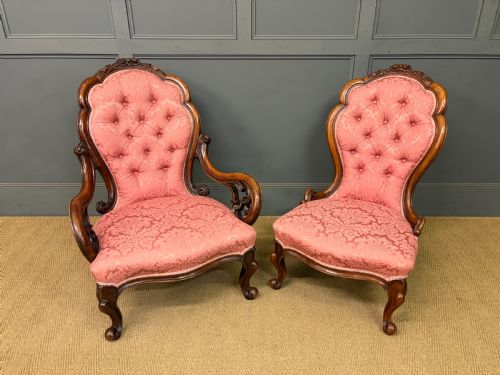


Vintage Wooden Nursing Chair
A vintage wooden nursing chair brings low seating and low-slung comfort to a room, drawing on Victorian and Edwardian craftsmanship.
Vintage Wooden Nursing Chair
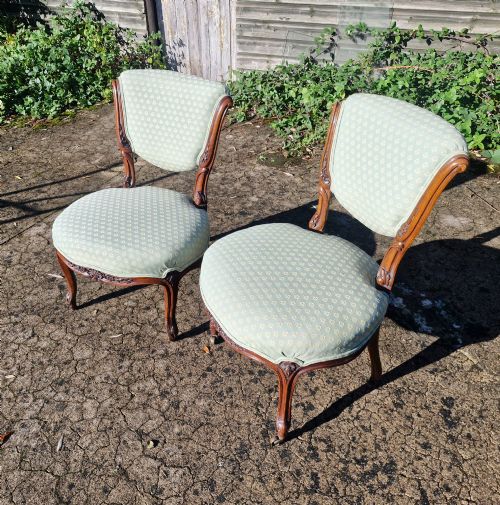
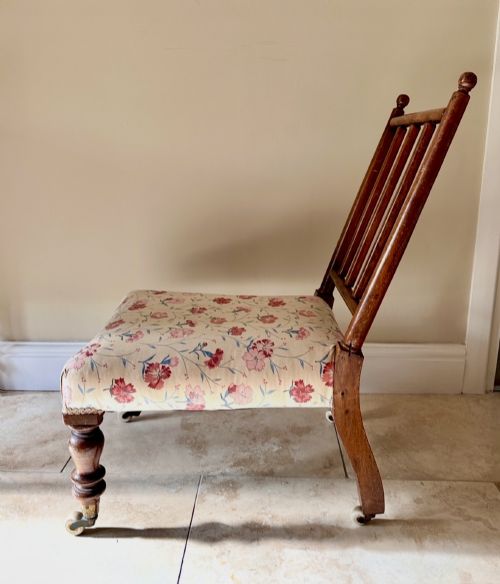
A vintage wooden nursing chair sits low to the floor, designed originally for tending to infants or dressing in comfort. These pieces emerge primarily from the Victorian and Edwardian eras, spanning the nineteenth and early twentieth centuries.
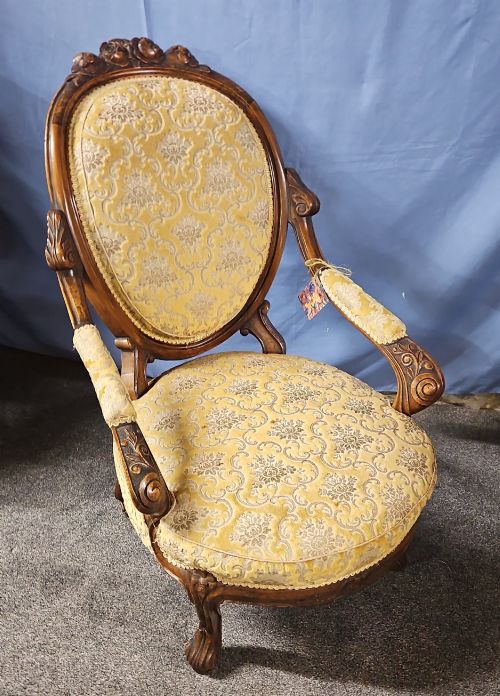
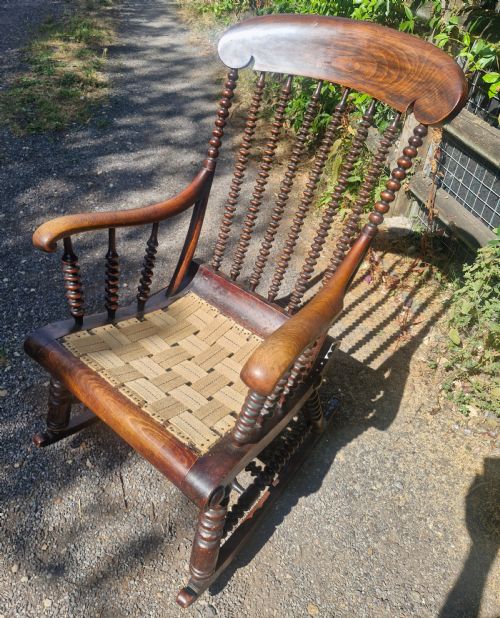
The selection on this page includes variants such as occasional chairs, rocking chairs, and salon chairs. Frameworks take diverse forms, including bobbin-framed designs and low button-back upholstered seats.
How they were made
Frames are constructed from timbers such as walnut, mahogany, beech, and oak, reflecting the dominant woods of the nineteenth and twentieth centuries. Structural elements incorporate carved details, floral inlay, and brass components.
Upholstery relies on traditional fabrics including velvet, leather, and floral textiles. Button-back padding provides the characteristic cushioned support seen across many examples.
Vintage Wooden Nursing Chair Retail Price Guide 2026
Typical asking prices for vintage wooden nursing chair among the pieces listed under this phrase on Sellingantiques today, from the lower quarter to the upper quarter. They describe what is for sale here now, not the wider market.
Some nineteenth-century makers mounted these low chairs on bobbin-turned frames that look uncannily like strings of wooden beads.
What varies in quality
Quality rests in the precision of the timber framing and the complexity of the woodwork, from plain beech bodies to carved walnut and inlaid mahogany. The refinement of stylistic influences, such as Aesthetic Movement lines or specific cabinetmaker attributions, elevates certain pieces above standard production.
The integrity of the structural frame and the choice of covering materials dictate the standard of survival. Intricate turnings, such as bobbin frames, and well-executed floral inlay distinguish finer workshop output from simpler domestic seating.
Wheeler Of Arncroach
The Vintage Wooden Nursing Chair Glossary
- Nursing chair
- A low-seated chair traditionally used for feeding babies or assisting with attire. These pieces feature compact proportions to suit bedroom and parlour settings.
- Bobbin frame
- A structural design featuring turned wooden segments resembling spools of thread. This technique appears on nineteenth-century rocking chairs and frames.
- Button back
- An upholstery method where deep buttons are pulled through the padding to secure the fabric in a diamond pattern. This detail is common on Victorian low chairs.
- Inlay
- A decorative technique where contrasting pieces of wood are inserted into the primary surface. Edwardian examples often utilise this method on mahogany and beech frames.
- Occasional chair
- A light, movable seat designed for intermittent use around a room. These pieces supplement main seating arrangements in Victorian and Edwardian interiors.
Vintage Wooden Nursing Chair: Frequently Asked Questions
What is a vintage wooden nursing chair used for?
These low seats were historically designed for nursing infants or assisting with personal dressing in nineteenth-century bedrooms and parlours.
Today, they function well as accent seating in living rooms or bedrooms due to their compact proportions.
How do I identify a Victorian nursing chair?
Victorian examples typically feature dark timbers such as walnut or mahogany, often with button-back upholstery and carved wooden details.
They generally date from the mid to late nineteenth century and sit closer to the floor than standard parlour chairs.
What is the difference between Victorian and Edwardian chairs?
Victorian pieces tend to use heavier timbers like walnut and feature deep buttoning, ornate carvings, or Aesthetic Movement influences.
Edwardian versions often utilise beech or inlaid mahogany, presenting lighter frames and sometimes incorporating floral inlay.
Are all nursing chairs rocking chairs?
Nursing chairs are distinct from rocking chairs, though some pieces combine both forms by mounting a low seat on rockers.
Standard nursing chairs rest on fixed legs, while occasional rocking versions appear across both Victorian and Edwardian periods.