




Vintage Wooden Filing Unit
A vintage wooden filing unit brings order to papers while anchoring a room with honest, hard-working timber.
Vintage Wooden Filing Unit
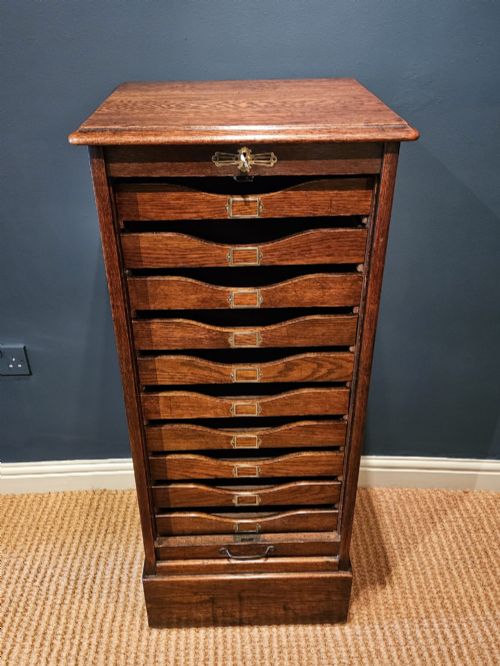
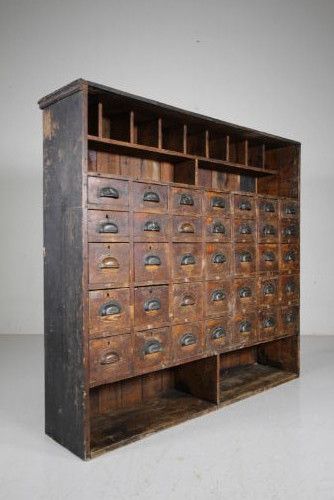
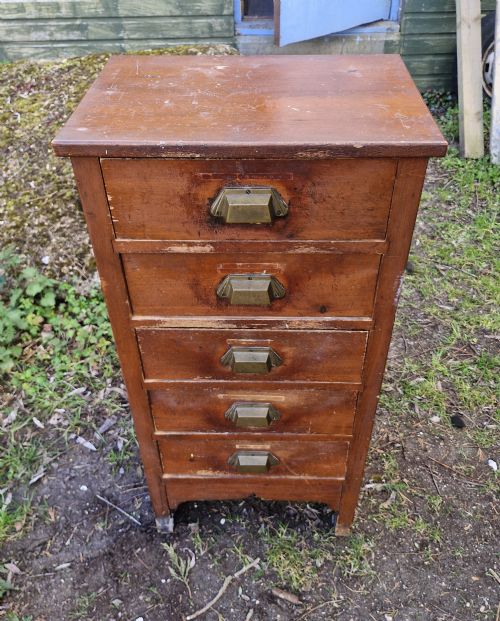
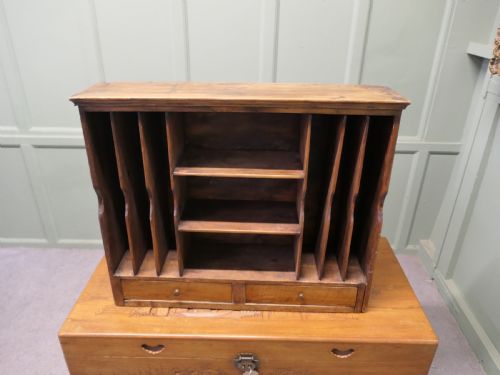
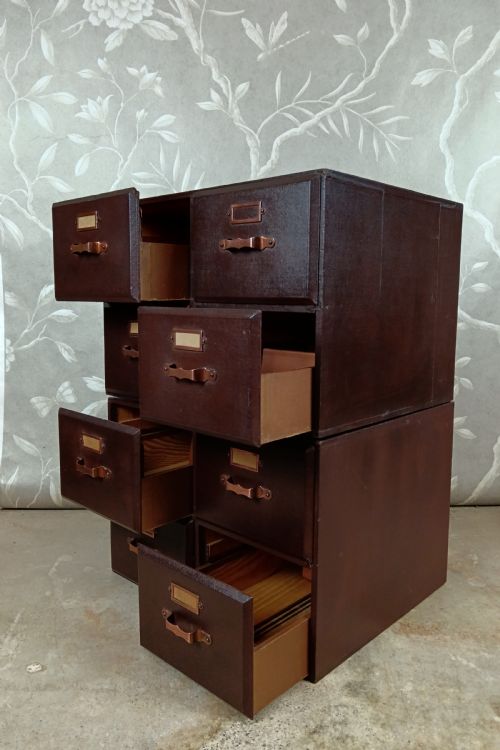
A vintage wooden filing unit serves as a practical storage piece designed to house correspondence, documents, and cards in an office or study. When searching for a vintage wooden filing unit, buyers encounter forms ranging from compact desktop drawers and music cabinets to substantial banks of drawers and plan chests.
The pieces on this page span the nineteenth century through the mid twentieth century, encompassing Edwardian, Victorian, and Art Deco styles. Oak predominates, accompanied by mahogany, pine, walnut, and beech, often paired with brass hardware.
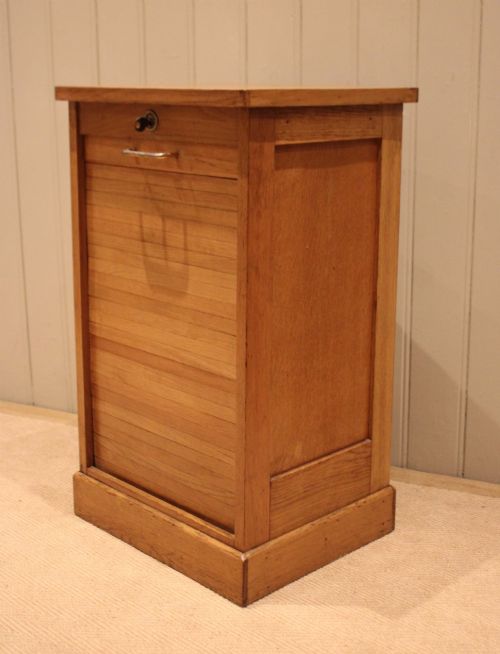
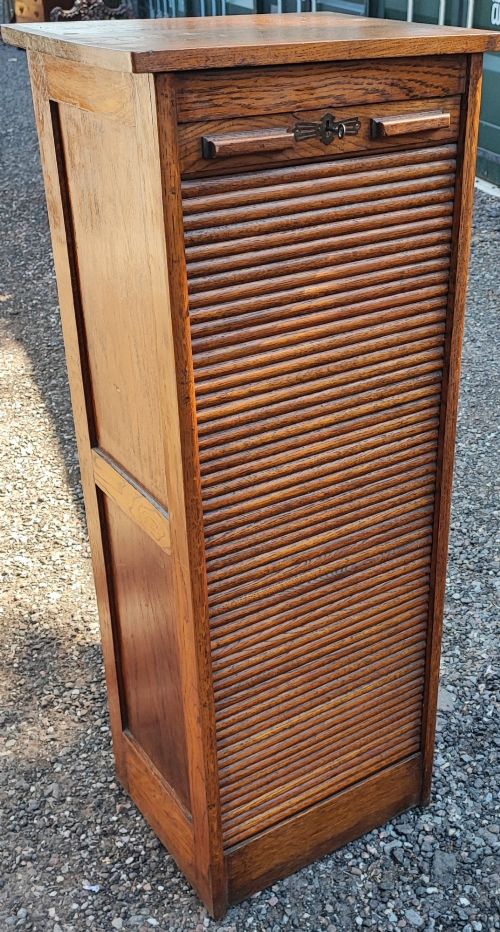
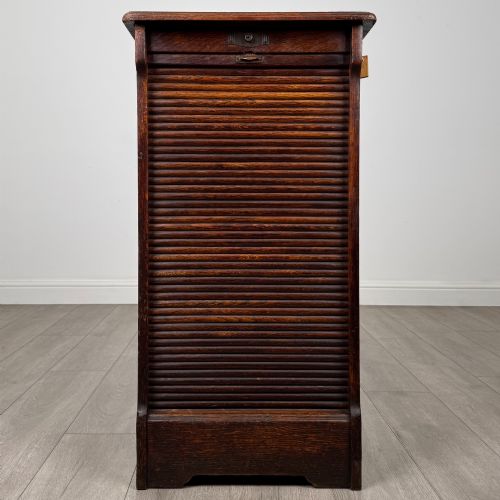
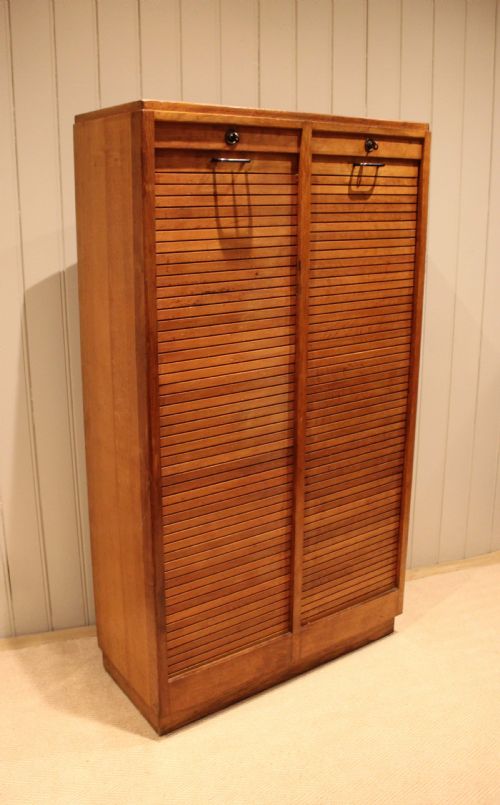
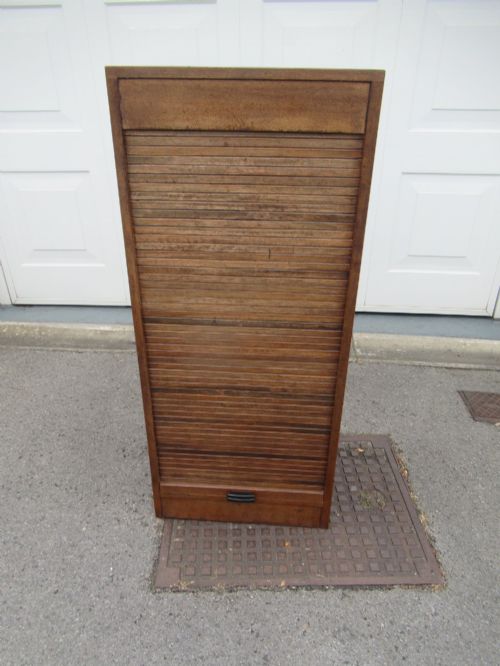
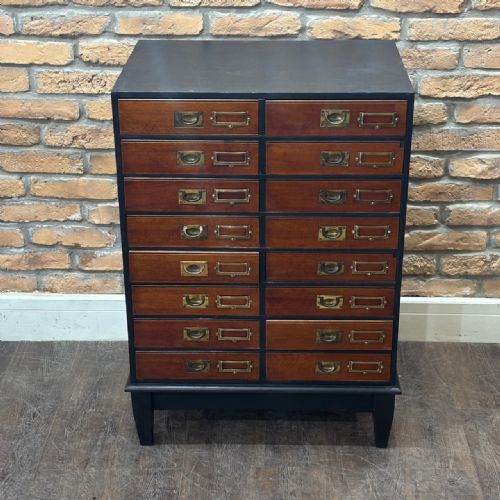
Tambour front office filing cabinets appear frequently, featuring slatted wooden doors that roll smoothly on tracks to conceal the interior shelves or drawers. Other variations include multi-drawer office cabinets, library card indexes, and letter files.
Materials and construction
Cabinet makers utilised solid hardwoods such as oak and mahogany alongside pine and walnut, joining carcases with robust traditional methods to withstand daily clerical use. Drawer construction typically incorporates dovetailed joints, ensuring durability across decades of opening and closing.
Tambour doors require intricate assembly, gluing individual wooden slats onto a flexible canvas or leather backing so the shutter can curve around a track. Metal components such as brass handles, label holders, cast iron brackets, and steel fittings provide structural reinforcement and mechanical function.
The listings span eight distinct decades from the nineteenth century into the mid twentieth century, featuring oak, mahogany, pine, and walnut.
Distinctions in quality
Quality rests upon the selection of timber, the precision of the joinery, and the integrity of the mechanical actions. Superior examples display carefully matched grain patterns, tight dovetails, and smooth operation of tambour shutters or heavy drawers.
Original hardware, including maker-stamped brass pulls and patent mechanisms, elevates a piece significantly. Finer units retain their fitted internal divisions, polished surfaces, and structural soundness without recourse to modern replacements.
Shannon·Amberg
The Vintage Wooden Filing Unit Glossary
- Tambour
- A flexible sliding door made of narrow wooden slats attached to a fabric backing, designed to travel along a grooved track. This mechanism allows the door to disappear into the sides or back of the cabinet.
- Plan chest
- A large, shallow chest of drawers specifically built to store architectural blueprints, maps, and large artwork flat. Each drawer has minimal height to prevent documents from curling.
- Bank of drawers
- A tall or wide multi-drawer cabinet intended for systematic sorting of correspondence, specimens, or office supplies. They frequently feature small brass pulls and integrated card holders.
- Music cabinet
- An upright wooden piece fitted with internal shelving or shallow drop-front drawers originally meant for sheet music. Their refined proportions make them suitable for domestic living spaces.
- Dovetail joint
- An interlocking wood joint formed by fan-shaped tenons that fit tightly into corresponding mortises. It represents traditional craftsmanship and resists being pulled apart.
Vintage Wooden Filing Unit: Frequently Asked Questions
How do tambour doors operate?
Tambour doors run on concealed tracks cut into the sides of the cabinet frame, allowing the slatted wooden shutter to glide open and slide around the interior curve. The mechanism relies on parallel grooves and the flexibility of the fabric backing holding the slats together.
Regular cleaning of the tracks prevents dust accumulation that can cause the shutter to stick. Applying a small amount of appropriate lubricant keeps the slats moving smoothly along the curved path.
Are these units suitable for modern paper sizes?
Many period filing units and card indexes accommodate standard modern documents, though older formats varied according to contemporary office standards. Measuring internal drawer dimensions helps confirm whether current files or folders will fit comfortably.
Desktop organisers and card drawers work well for stationery, notes, and smaller items. Deeper plan chests and multi-drawer cabinets hold large sheets and art supplies flat without folding.
How should I care for the wood finish?
Maintenance involves dusting with a soft, dry cloth and applying natural beeswax periodically to nourish the timber and preserve the polished surface. Avoiding direct sunlight and sustained moisture prevents the wood from warping or fading over time.
Harsh chemical cleaners strip the historic patina and dry out the grain. Gentle treatment preserves the depth of colour built up across generations of use.
How can I distinguish an Edwardian piece from a Victorian one?
Victorian office furniture often employs heavier proportions, darker finishes, and robust industrial detailing, reflecting the peak of the nineteenth-century commercial expansion. Edwardian pieces tend to show lighter oak construction, simpler lines, and a greater emphasis on domestic utility.
Hardware styles also offer clues, with Victorian pieces favouring substantial cast brass or iron, while Edwardian designs frequently feature refined drop handles and integrated card frames.