


Edwardian Tambour Office Cabinet
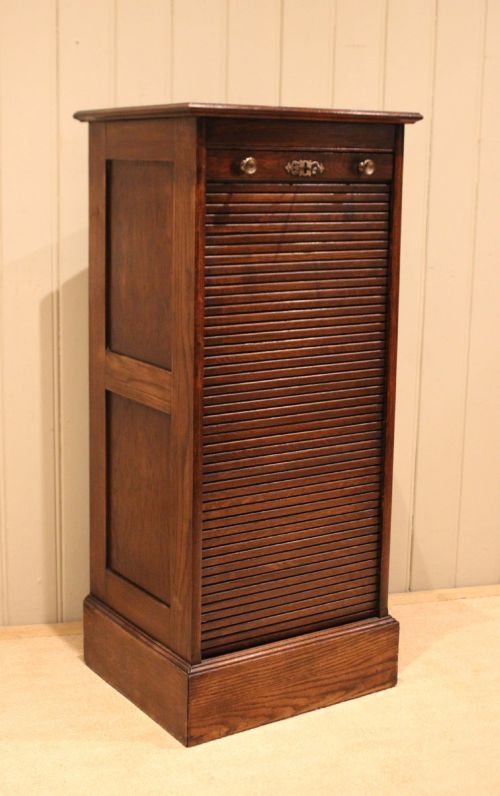
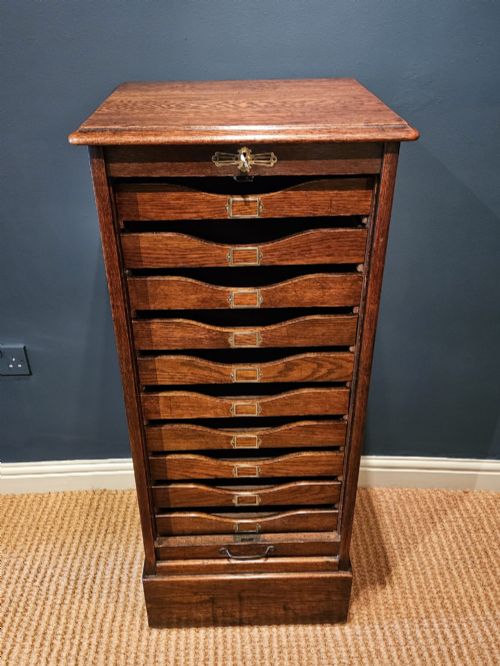
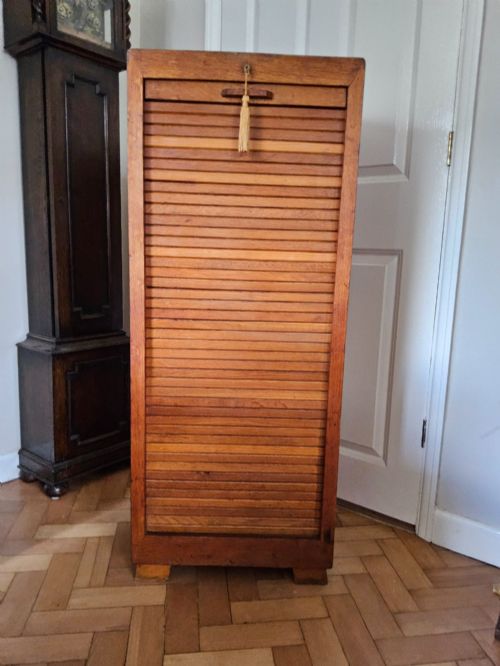
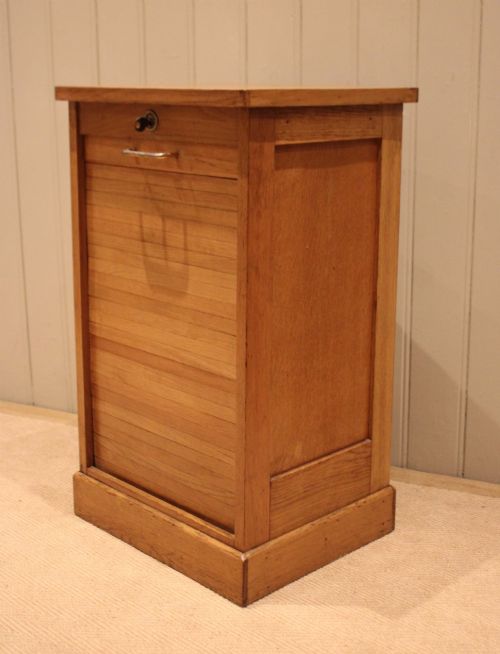
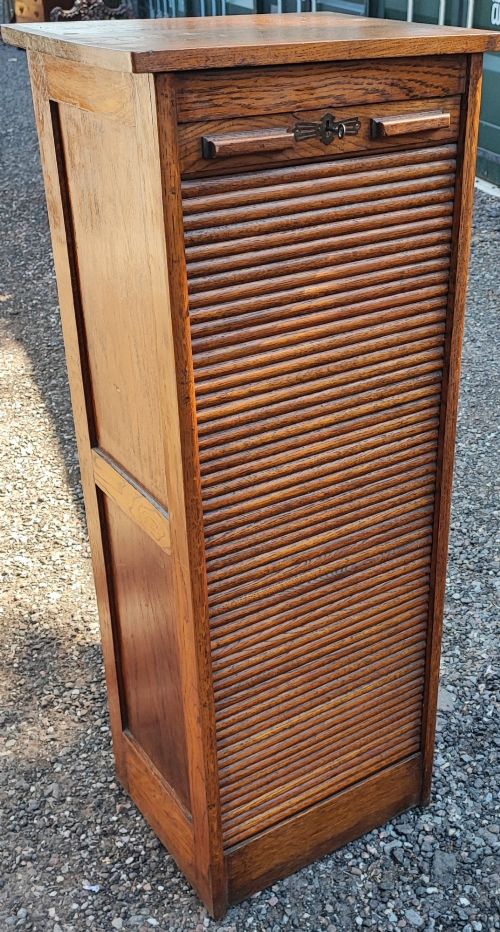
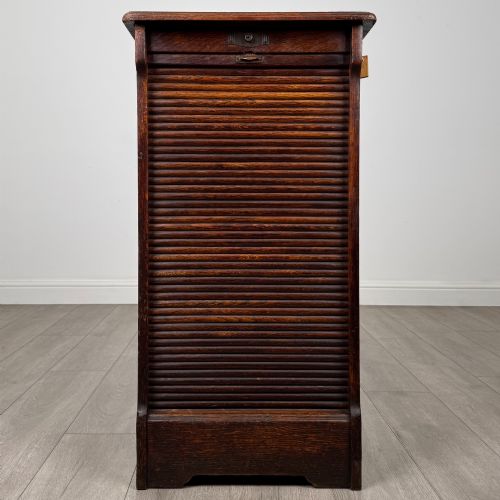
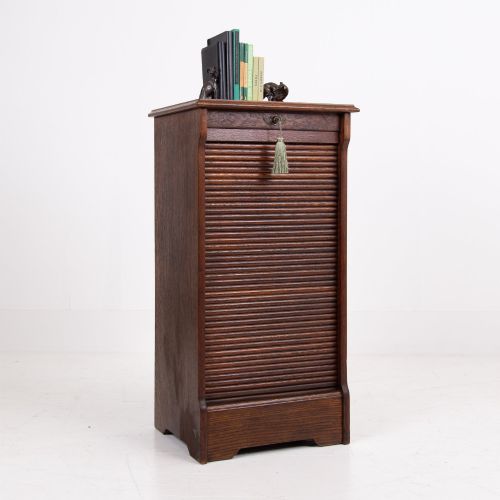
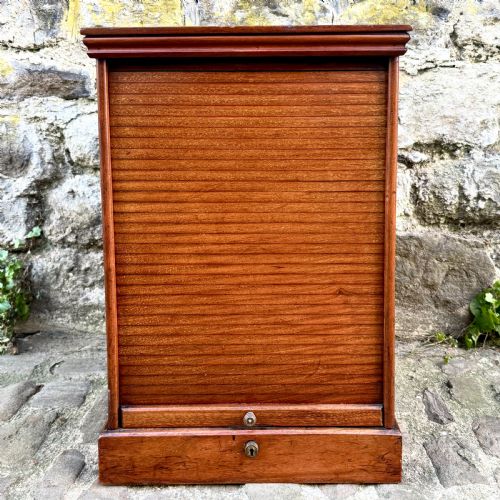
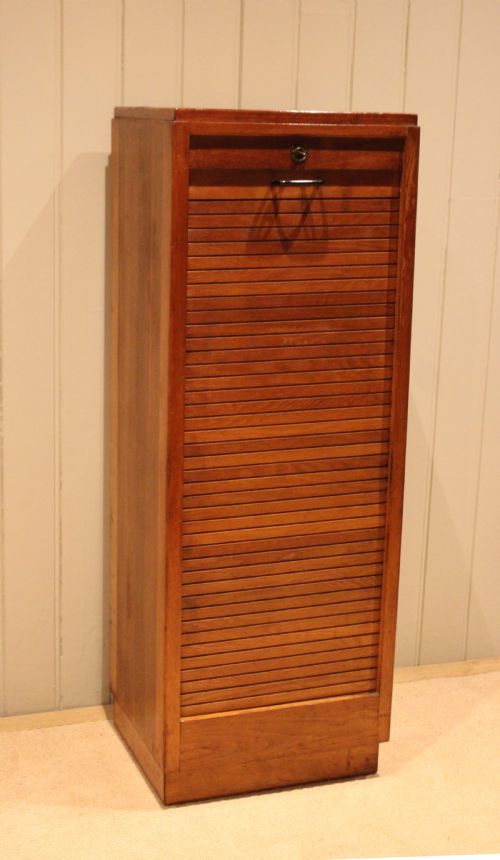
An Edwardian tambour office cabinet brings practical workspace storage together with slatted wooden sliding doors that conceal internal filing sections.
Edwardian Tambour Office Cabinet
An Edwardian tambour office cabinet is primarily designed for workspace organisation, featuring slatted wooden doors that run in grooves to slide out of sight. Buyers searching this phrase will find a strong selection originating predominantly from the Edwardian era and early twentieth century.
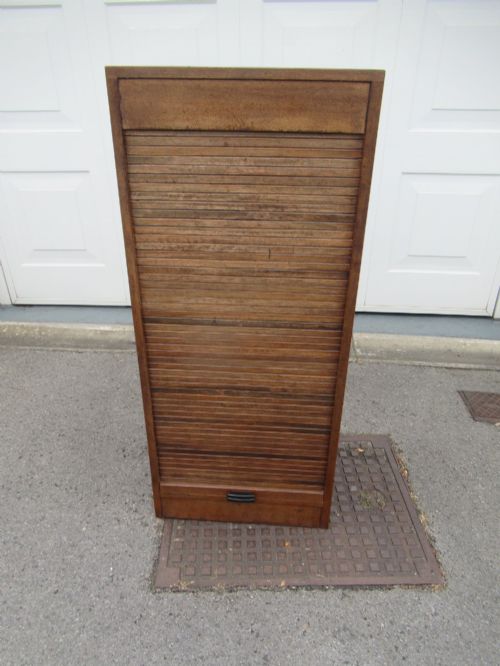
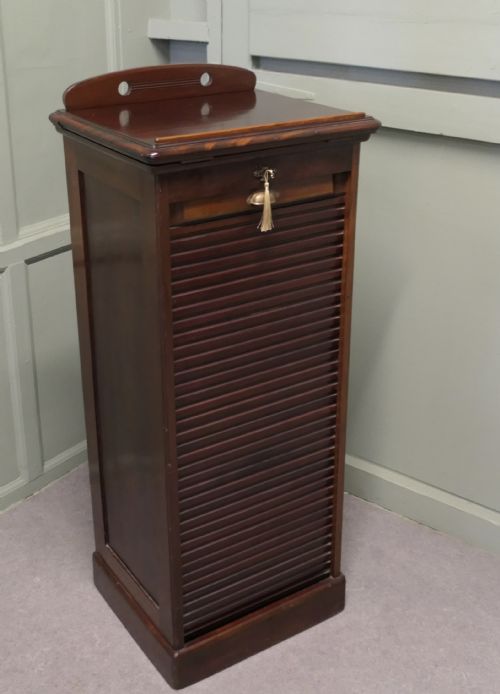
The most common form encountered on this page is the single or double tambour front filing cabinet constructed in oak, though variants in mahogany, walnut, and rosewood also appear alongside larger roll-top desks and bureaux.
How they were made
These pieces rely heavily on solid timber frames combined with canvas backings attached to individual wooden slats, which allow the flexible tambour doors to curve smoothly around their tracks. Joinery is robustly executed to withstand daily office use, utilising durable hardwoods alongside brass and metal hardware.
Makers selected quarter-sawn oak, mahogany, and walnut for their stability and grain appearance, applying smooth polished finishes that highlighted the natural timber while protecting the sliding mechanisms from sticking.
Listings span several decades, featuring periods from the late nineteenth century through to the 1940s alongside core Edwardian examples.
What varies in quality
The distinction between tiers of quality rests largely on the choice of timber and the precision of the slatted door mechanism. Finer examples display carefully selected oak, walnut, or rosewood grains with tight, smooth-running tambour tracks that operate without jamming.
Secondary quality markers include the complexity of the internal configuration, such as fitted stationery pigeonholes and pull-out writing surfaces, contrasted against simpler utilitarian filing carcases.
The Edwardian Tambour Office Cabinet Glossary
- Tambour
- A flexible door constructed from narrow strips of wood glued to a canvas or fabric backing. This allows the door to slide around a curved track and disappear into the body of the cabinet.
- Roll-top
- A style of desk or cabinet featuring a slatted tambour closure that pulls down from the top to secure the workspace or filing interior.
- Quarter-sawn oak
- Timber cut radially from the growth rings, producing a distinct medullary ray figure often prized in Edwardian office furniture for its strength and visual depth.
- Bureau
- A writing cabinet featuring a sloping fall-front lid that opens to reveal internal compartments and drawers.
Edwardian Tambour Office Cabinet: Frequently Asked Questions
How do tambour doors work?
Tambour doors operate through a series of narrow wooden slats attached side-by-side onto a flexible canvas or fabric backing. This allows the entire assembly to bend smoothly around a curved channel integrated into the cabinet frame.
When opened, the door slides sideways or downwards into the body of the piece, remaining concealed within the internal cavity to save exterior space.
Were these cabinets used in homes?
While originally designed for commercial offices, legal practices, and counting houses, these practical cabinets were frequently adopted for home studies and libraries. Their compact footprint made them suitable for managing correspondence and household paperwork.
Today, they function well in residential spaces as versatile storage units for stationery, electronics, or general organisation.
What woods were commonly used?
Oak is the predominant material seen across these pieces, frequently finished in dark or light tones that suited early twentieth-century offices. Mahogany, walnut, and rosewood were also utilised for more decorative or executive models.
Pine appears occasionally in secondary or simpler utility pieces intended for general clerical work.
How do I care for the sliding mechanism?
The key to maintaining a tambour door is keeping the running grooves free from dust and debris over time. Gentle cleaning with a dry cloth prevents the canvas backing and wooden slats from binding within the tracks.
Avoid applying heavy wax or moisture directly inside the grooves, as this can attract dirt and cause the slats to stick.