
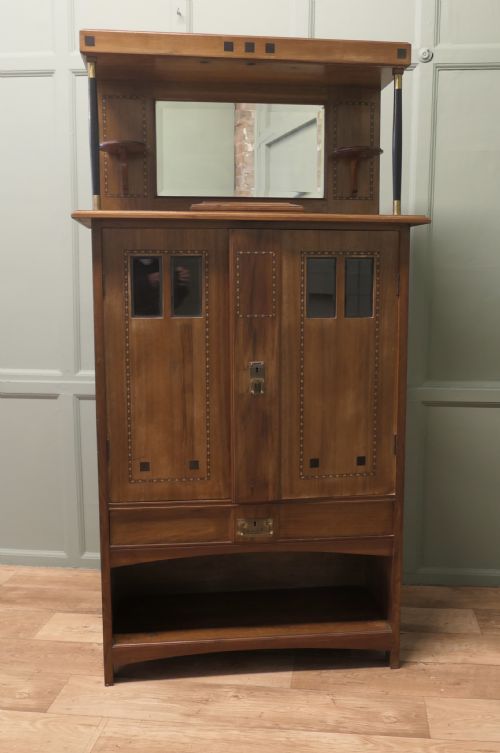
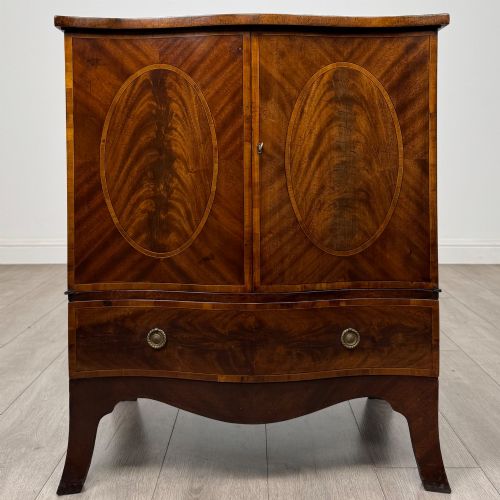
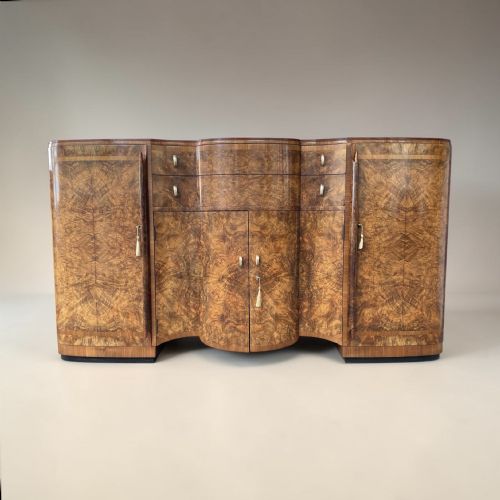
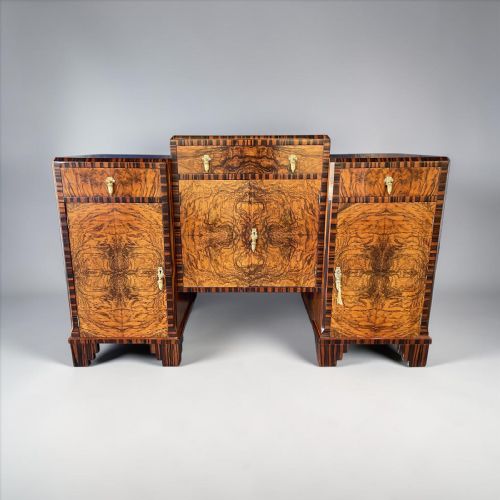
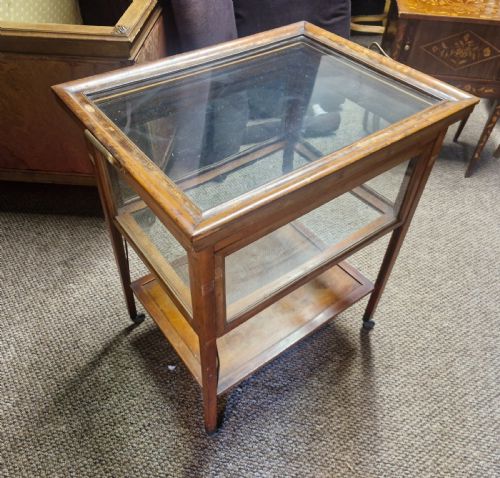


Vintage Wooden Cocktail Cabinet
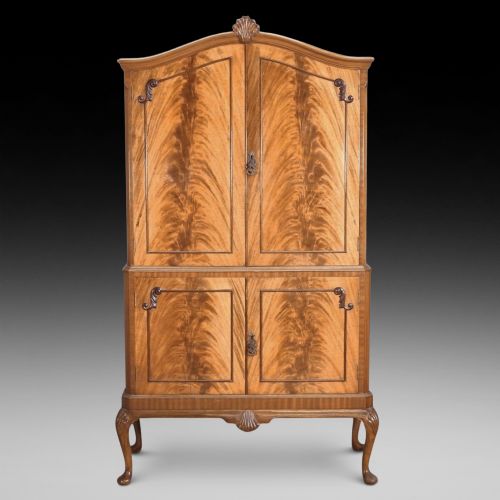
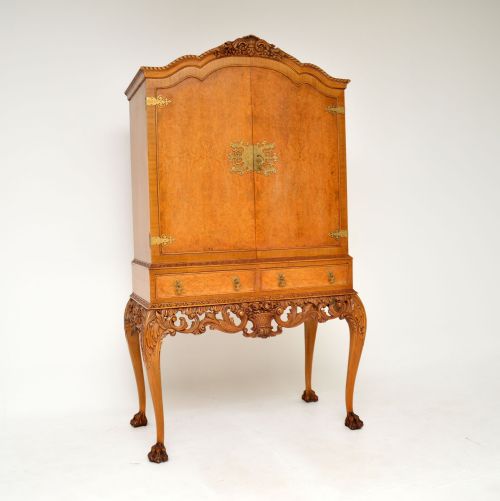
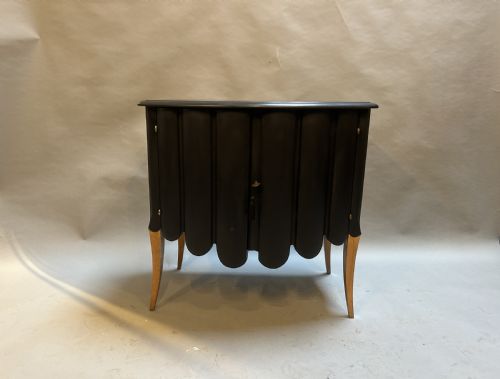
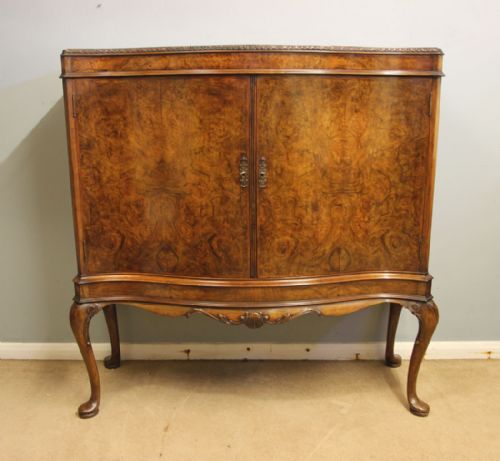
A vintage wooden cocktail cabinet brings serious presence to a room, offering clever storage for bottles and glassware behind timber doors.
Vintage Wooden Cocktail Cabinet
A vintage wooden cocktail cabinet serves as a dedicated station for drinks, drawing on forms from the Victorian era, the Edwardian period, and the nineteen-thirties. You will frequently encounter examples from nineteen thirty, alongside pieces spanning the Edwardian years and the nineteenth century.
Makers utilised timber carcases shaped as sideboards, side cabinets, and dedicated drinks chests. Common configurations include drop-down flaps, removable trays, and serpentine fronts designed to house bottles and glassware.
Stylistic influences range from Art Deco and Secessionist lines to Queen Anne, Georgian, and Louis XVI revivals. Pieces emerge in walnut, mahogany, burr walnut, oak, and camphor wood, often paired with glass and brass.
How they were made
Cabinet makers relied heavily on rich timbers such as mahogany, oak, and burr walnut, applying veneers to create striking grain patterns on front panels. Marquetry inlay work and serpentine shaping added decorative complexity to carcases.
Functional elements required careful joinery, incorporating drop sides, removable trays, and metamorphic mechanisms into side tables and drinks chests. Brass hardware and glass panels completed the internal storage spaces and display sections.
What varies in quality
The choice of timber veneer dictates much of the visual impact, with figured burr walnut and matched mahogany offering superior depth compared to simpler plain woods. Cabinet work by known workshops demonstrates tighter tolerances in doors, drawers, and folding mechanisms.
Design ambition separates standard storage from finer examples, evident in serpentine shaping, marquetry inlay, and specialised internal fittings like removable trays. The integration of brass mounts and glass panels reveals the care taken during construction.
Maurice Adams·Incorporall·Waring & Gillows
The Vintage Wooden Cocktail Cabinet Glossary
- Burr walnut
- A wood cut from walnut tree growths, yielding intricate, swirling grain patterns. It is frequently utilised on the primary doors of drinks cabinets for decorative effect.
- Serpentine front
- A furniture front curved in a wave shape with a convex centre and concave sides. This contour appears on Edwardian and nineteen-thirties sideboards and cupboards.
- Marquetry inlay
- Pieces of wood veneer fitted into a backing to form decorative patterns. Examples include floral or geometric designs across cabinet doors.
- Metamorphic
- Furniture designed to transform its shape or function, such as side tables that convert into drinks chests. These pieces use hinges and drop sides.
- Secessionist
- A design style emerging around nineteen hundred that favoured clean lines and geometric forms over ornate Victorian revivalism. It represents a shift towards modernism.
Vintage Wooden Cocktail Cabinet: Frequently Asked Questions
What is a cocktail cabinet?
A cocktail cabinet is a specialised piece of furniture designed specifically for storing bottles, decanters, and glassware. These pieces often feature drop-down flaps or mirrored interior compartments to assist with serving drinks.
Most examples date from the nineteen-thirties or the Edwardian period, utilising timbers like walnut and mahogany. They range from compact side cabinets to larger sideboard combinations.
How do I date a drinks cabinet?
Dating relies on identifying the prevailing style, construction methods, and materials used in the carcase. Pieces reflecting Art Deco or Secessionist aesthetics generally point to nineteen thirty, while Edwardian items lean towards traditional revival styles.
Hardware details, such as brass fittings and internal glass shelves, also offer clues to the period. Examining the timber veneer and secondary woods helps confirm the era of manufacture.
Where should I place a cabinet?
These cabinets work well in living rooms or dining spaces where entertaining takes place. Their substantial wooden construction makes them natural focal points against a wall.
Ensure there is enough floor clearance for drop-down flaps, doors, or metamorphic extensions to open fully. Placing them away from direct heat sources protects the timber veneers.
How do I maintain wood and brass?
Maintenance involves regular dusting with a dry or slightly damp cloth suitable for polished timber surfaces. Avoid harsh chemical cleaners that can damage walnut or mahogany finishes.
Brass handles and mounts can be cleaned gently with a specialist metal polish if required. Keeping the cabinet out of strong sunlight prevents the wood grain from fading over time.