

Vintage Wooden Cane Holder
These vintage wooden cane holder pieces organise umbrellas and walking sticks while anchoring a hallway with timber and brass.
Vintage Wooden Cane Holder
When you search for a vintage wooden cane holder, you encounter utilitarian hall furnishings designed to store walking sticks, umbrellas and parasols. These items range from domestic oak barrels to formal Victorian hall stands with compartmentalised racks.
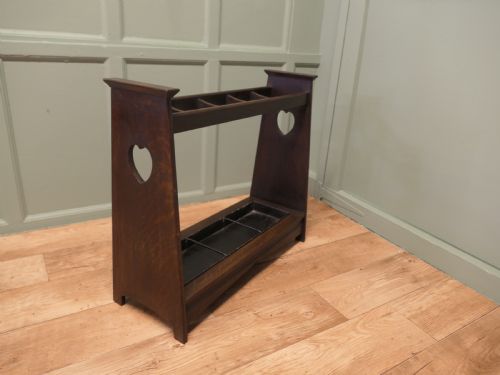
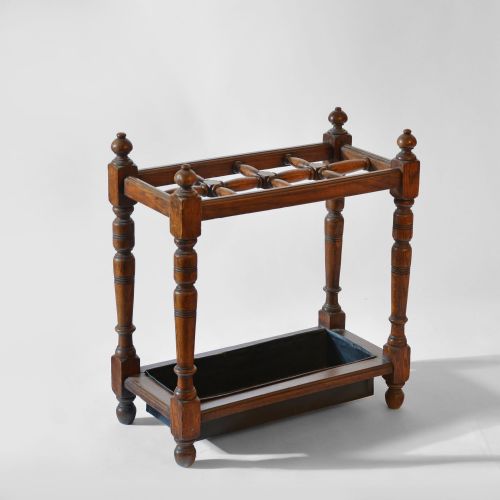
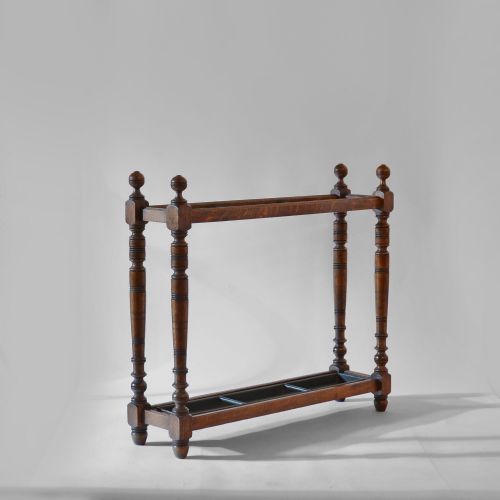
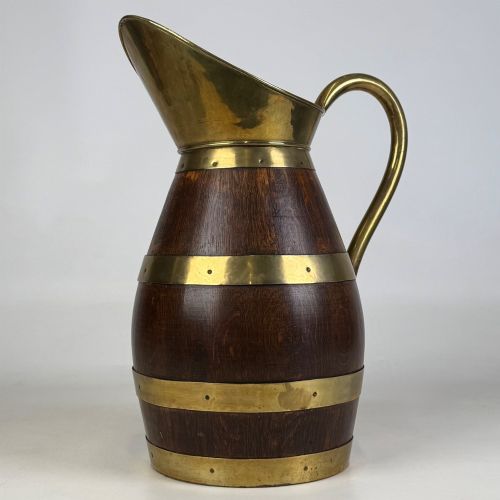
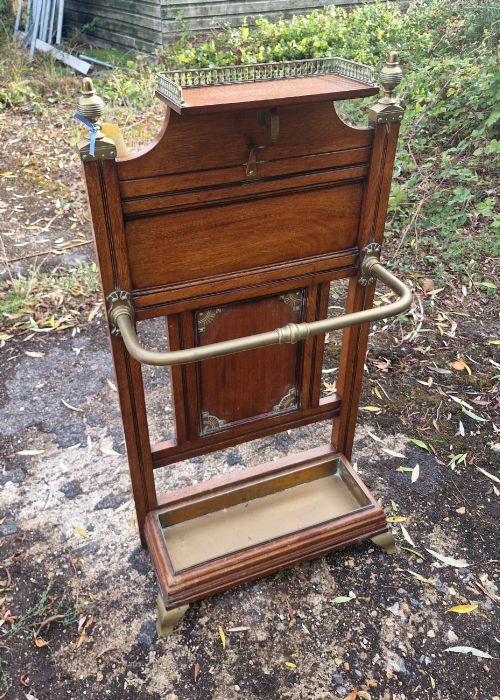
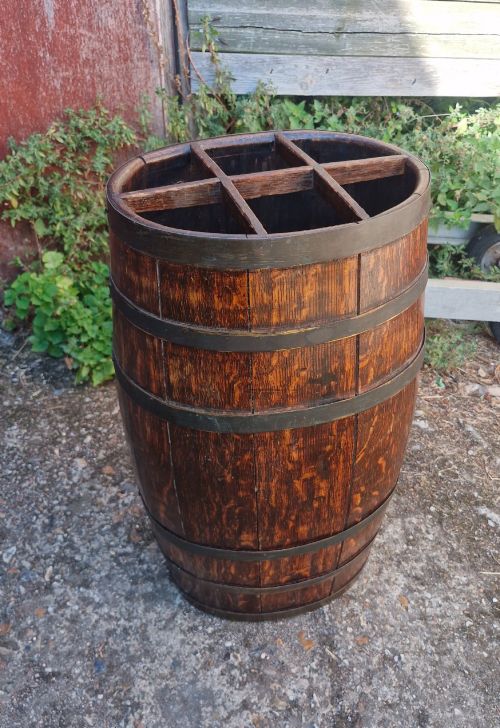
The pieces you meet most often on this page date from the nineteenth century into the Edwardian era, constructed primarily in oak or mahogany. Makers configured them as freestanding barrel forms, corner units, or wall-anchored hall stands complete with display divisions.
How they were made
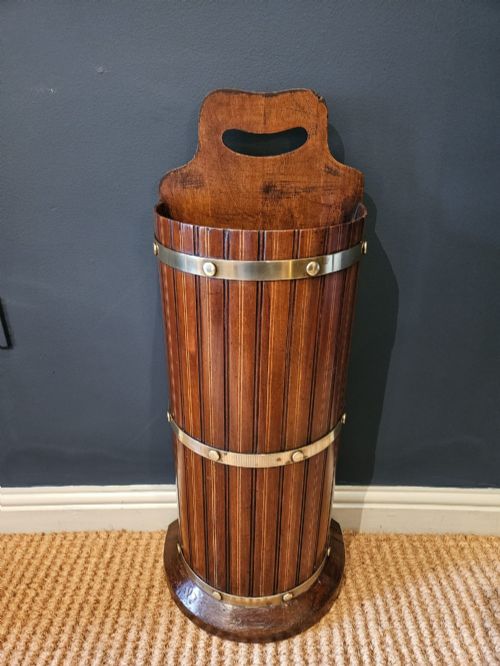
Carpenters built these stick stands using solid hardwoods such as oak, mahogany, and walnut, often employing coopered barrel construction with curved staves. Metal bands in brass, zinc, or cast iron were fitted around the timber bodies to provide structural tension and decorative contrast.
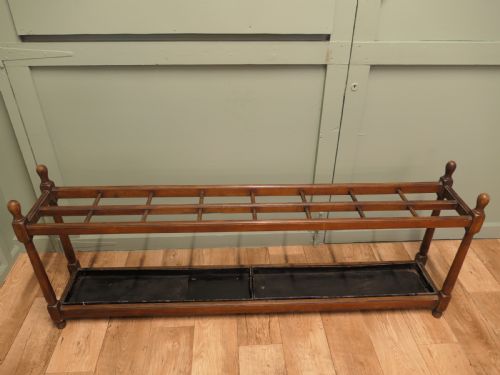
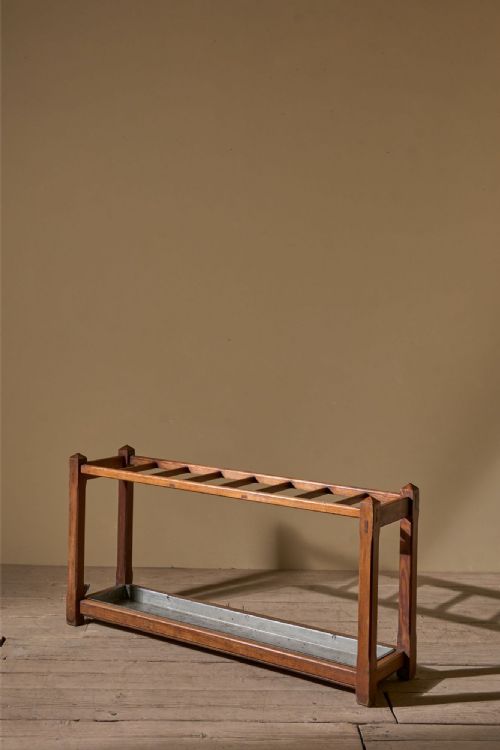
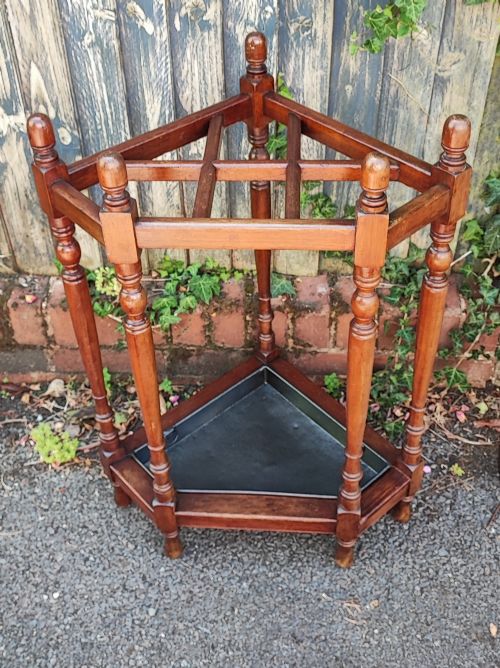
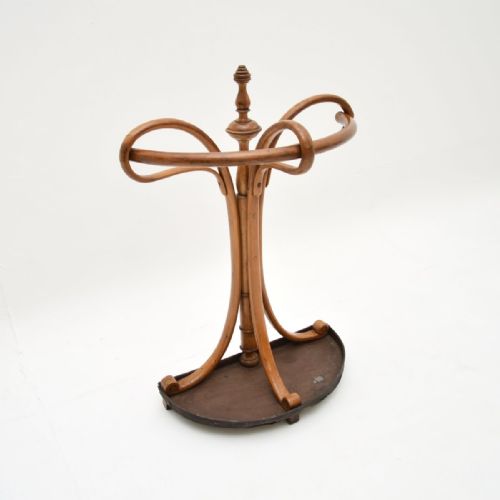
Makers integrated functional elements including metal drip trays at the base to catch moisture from wet umbrellas. Surface detailing incorporated carved panels, bentwood framing, and applied brass braces or crests.
Listings span the nineteenth and early twentieth centuries, featuring oak, mahogany, walnut, and pine constructed into barrels, racks, and hall stands.
What varies in quality
Quality in these hall pieces rests upon timber selection and structural integrity. Denser quartersawn oak boards and well-fitted coopered staves display greater durability than simpler utility boxes.
The presence of original hardware, such as fitted metal drip trays and substantial brass bindings, distinguishes finer workshop productions from plain domestic joinery.
Thonet·Heals of London·Shoolbred·Liberty Design
The Vintage Wooden Cane Holder Glossary
- Coopered
- Constructed from wooden staves bound together by metal hoops, much like a traditional barrel. This technique provided the watertight integrity needed for umbrella storage.
- Drip tray
- A metal insert placed at the bottom of the stand to catch water from wet umbrellas. These trays protected wooden floors from moisture damage.
- Demi lune
- A half-moon or semicircular shape often seen in hall stands designed to sit flat against a wall. This profile saved space in narrow Victorian corridors.
- Bentwood
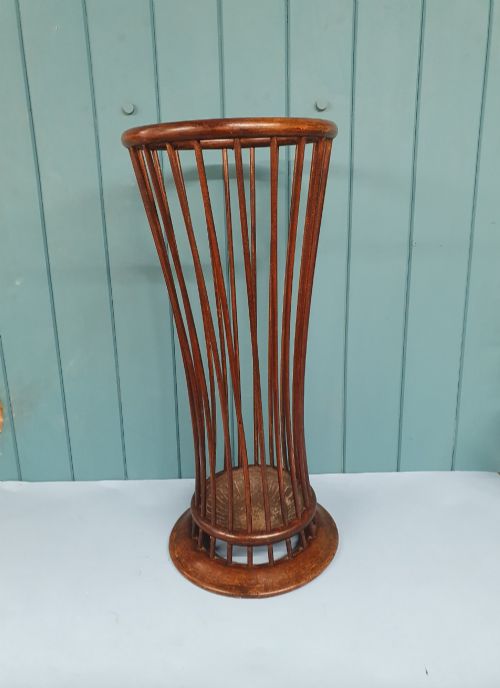
- Wood softened by steam and bent into curved structural forms. Makers utilised this technique to shape umbrella rings and frames.
- Aesthetic Movement
- A late nineteenth-century design style focusing on visual beauty rather than narrative meaning. Pieces from this movement display clean timber lines and refined proportions.
Vintage Wooden Cane Holder: Frequently Asked Questions
Where should I place my stick stand?
These tall wooden holders suit entrance halls, boot rooms, and corridors where umbrellas and walking sticks collect near the door.
Their slim vertical profiles allow them to fit into tight spaces without blocking passage.
How do I protect the wood from wet umbrellas?
Most stands feature original zinc, brass, or cast iron drip trays at the base to catch moisture from wet items.
Emptying and drying these metal liners regularly prevents water from damaging the interior timber.
What is the difference between an umbrella stand and a hall stand?
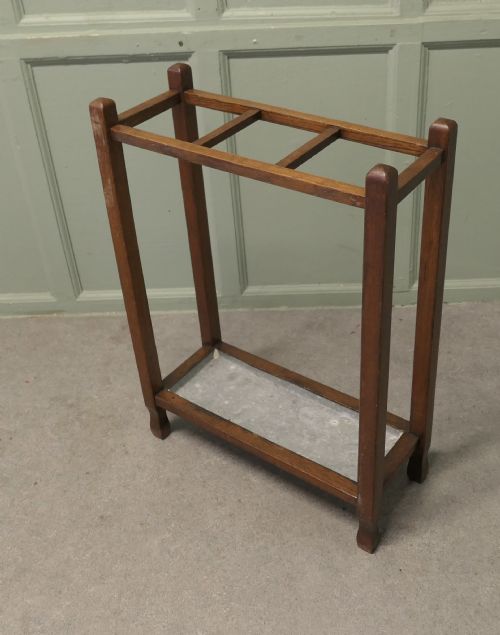
Umbrella stands focus solely on vertical storage for sticks and parasols using barrels or partitioned wooden racks.
Hall stands combine umbrella storage with coat hooks, mirrors, and sometimes small glove drawers into a single entryway unit.
How do I distinguish Victorian from Edwardian stands?
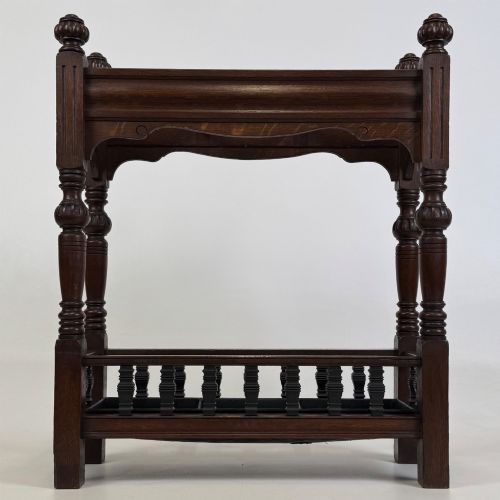
Victorian pieces frequently display heavier proportions, darker finishes, and ornate carved detailing associated with Gothic Revival or Aesthetic movements.
Edwardian examples tend to feature lighter golden oak tones and simpler Arts and Crafts lines.