







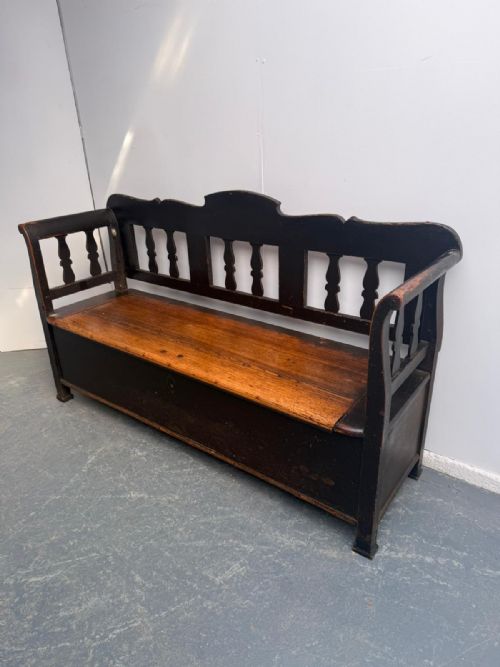

Vintage Wooden Box Bench
These vintage wooden box bench examples combine practical storage with upright seating across diverse European and regional traditions.
Vintage Wooden Box Bench
A vintage wooden box bench serves dual purposes as an everyday seat and a secure receptacle for blankets, linens, or household goods. Buyers seeking this phrase encounter sturdy domestic seating forms such as settle benches, hall seats, and storage chests with integrated hinged tops.
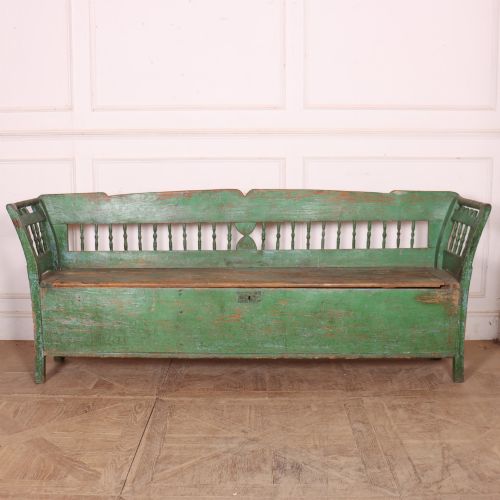
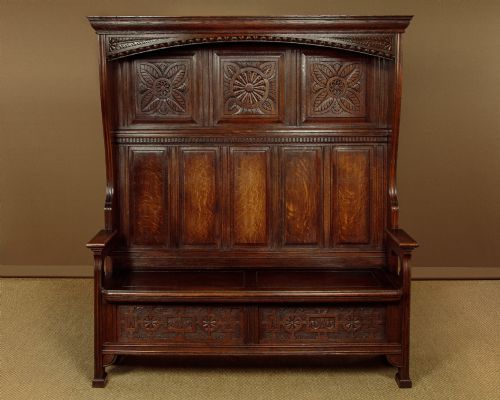
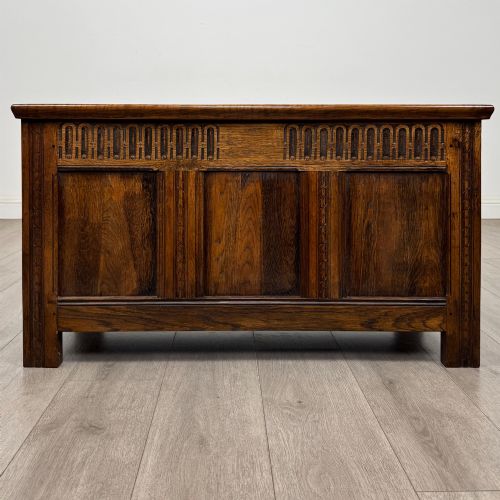
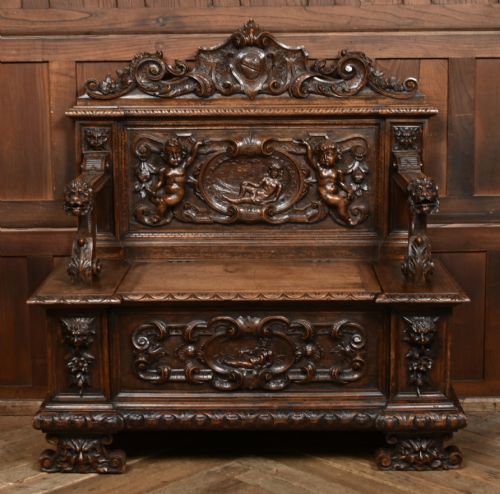
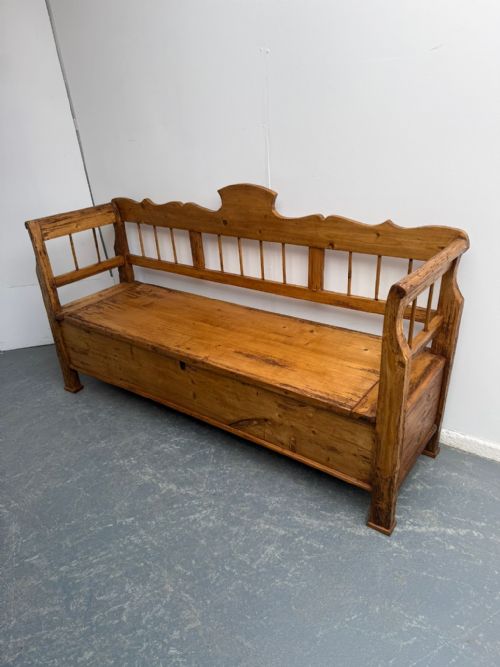
The selections span from robust English oak country pieces and carved Jacobean revival styles to painted pine folk art furniture originating from Hungary, Sweden, and Austria. Examples range through the Georgian, Victorian, and Edwardian eras, alongside distinct regional iterations like Anglo Indian carved hardwood variants.
Most variations met on this page rely on practical utility, merging deep chest bases with high backs or fold-over elements designed for hallways, boot rooms, and living spaces.
Materials and Construction
Makers utilised solid timbers such as native pine, heavy oak, walnut, and exotic hardwoods, frequently shaping panels with hand tools and traditional joinery methods. Many pieces incorporate structural iron hinges and brass fittings to support heavy lift-up lids and drop-front mechanisms.
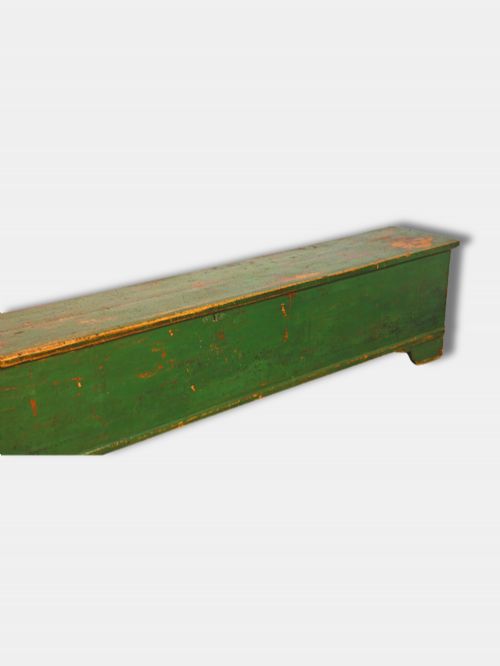
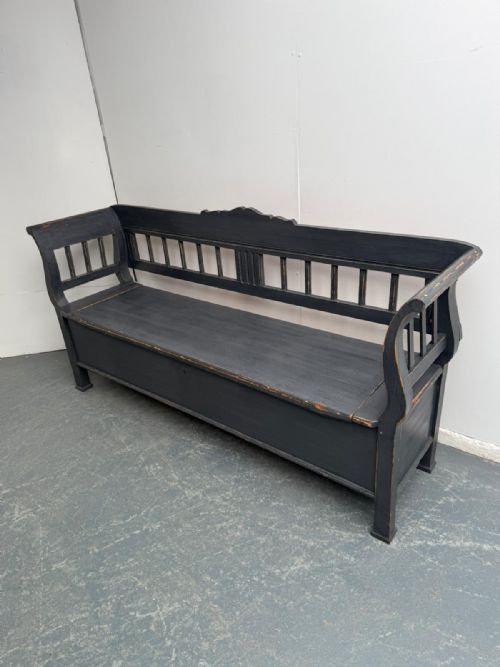
Surface treatments vary widely from waxed or polished dark oak and golden finishes to layered historic paintwork in grey, green, cream, or black. Some regional workshops embellished the timber surfaces with intricate carved details, panelled construction, and applied decorative hardware.
Vintage Wooden Box Bench Retail Price Guide 2026
Typical asking prices for vintage wooden box bench among the pieces listed under this phrase on Sellingantiques today, from the lower quarter to the upper quarter. They describe what is for sale here now, not the wider market.
Listings feature regional European traditions including Hungarian painted pine, Swedish storage benches, and English oak settle forms.
Factors Distinguishing Quality
Quality rests upon the integrity of the timber, the proportion of original hardware, and the preservation of historic surface finishes such as authentic patinated paint or deep wax polish. Pieces retaining their original hinges, locking mechanisms, and structural soundness command greater interest.
Refinement is further seen in the execution of carved details, the balance of the proportions between the storage box and the seat back, and whether the construction remains entirely solid without excessive modern intervention.
The Vintage Wooden Box Bench Glossary
- Settle
- A wooden bench with a high back, solid arms, and a box seat compartment beneath. This form helped shield occupants from draughts in older domestic interiors.
- Cassapanca
- An Italian chest bench featuring a high back and arms, functioning simultaneously as a seat and a storage receptacle. It often displays refined carved walnut details.
- Monks bench
- A convertible seat featuring a folding top that transforms the backrest into a table surface. This versatile form gained popularity during the oak revival periods.
- Blanket box
- A large chest designed for storing textiles, which frequently forms the base of a hall seat or bench. These containers often include lift-up lids and interior till boxes.
- Patina
- The surface sheen and texture developed by wood and paint over decades of handling and use. It indicates age and the natural wear of time.
Vintage Wooden Box Bench: Frequently Asked Questions
What is a box bench used for?
A box bench provides both a functional seat and concealed storage space for household items like blankets and boots. They were traditionally placed in hallways, kitchens, and living rooms to maximise domestic utility.
Today, they serve similar organisational roles in modern interiors while adding historic character to an entryway or boot room.
How do I date an oak settle?
Dating relies on examining construction techniques, joinery marks, and the style of any carved ornamentation. Pieces from the Georgian and Victorian eras exhibit specific tool marks and structural assembly methods unique to their time.
Comparing the timber grain, wear patterns, and hardware style helps place the piece within periods like the Edwardian era or the early twentieth century.
Are painted pine benches authentic?
Painted pine benches are common across Scandinavian and Central European folk art traditions, particularly from regions like Sweden and Hungary. Many retain their original layered painted surfaces in colours such as green, grey, and cream.
Evaluating the underlying timber and the nature of the surface wear helps determine the authenticity of the paint finish.
How do I care for antique wood?
Maintain antique wooden surfaces by keeping them away from direct heat sources and sudden humidity changes. Regular application of appropriate wax helps preserve the finish and nourishes dry timber.
Avoid harsh chemical cleaners, using a soft, dry cloth for routine dusting to protect the historic patina.