



Vintage Wooden Bookstands
Vintage wooden bookstands are practical desk accessories and desktop book rests designed to hold volumes upright, offering both function and period charm.
Vintage Wooden Bookstands
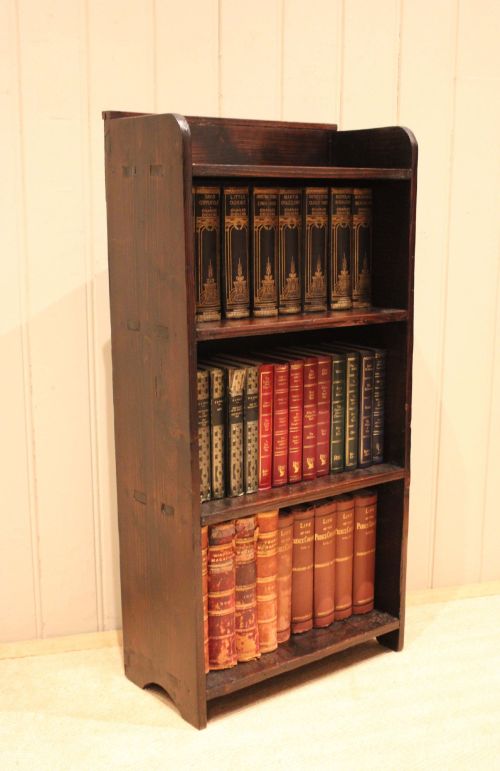
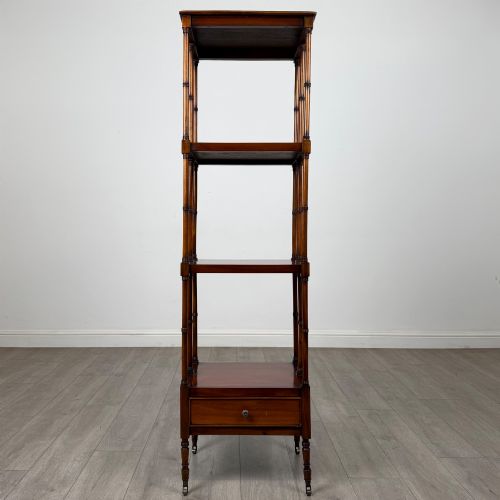
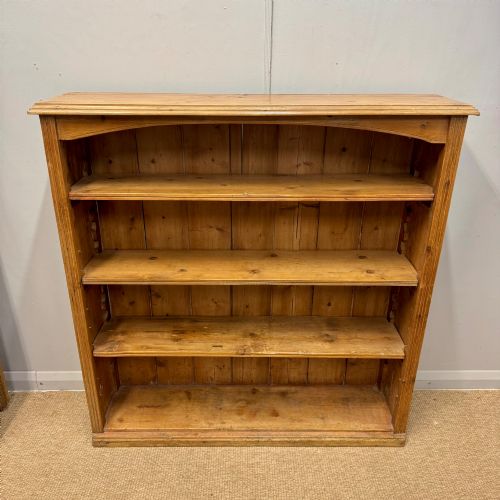
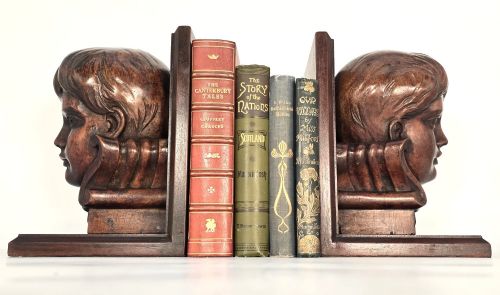
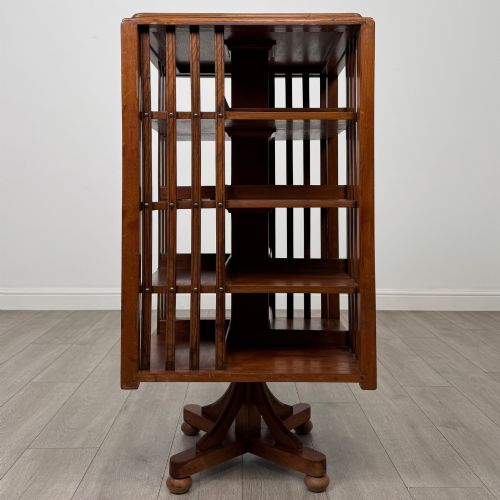
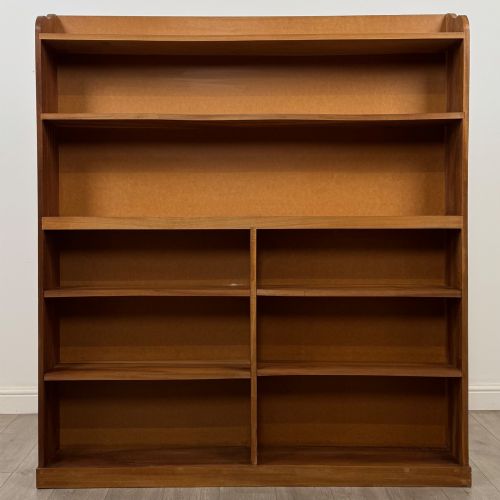
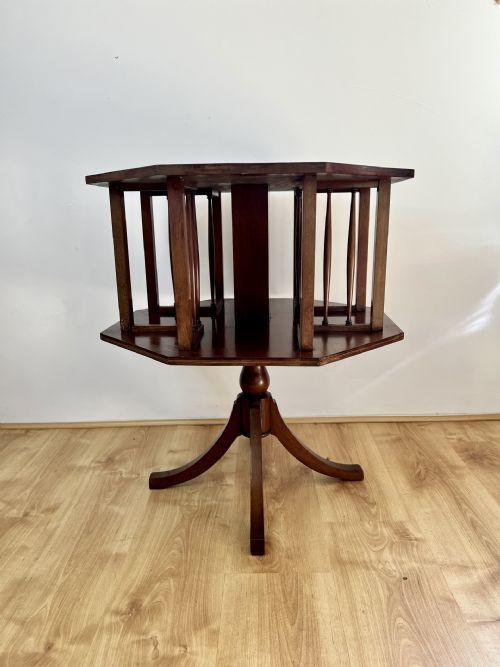
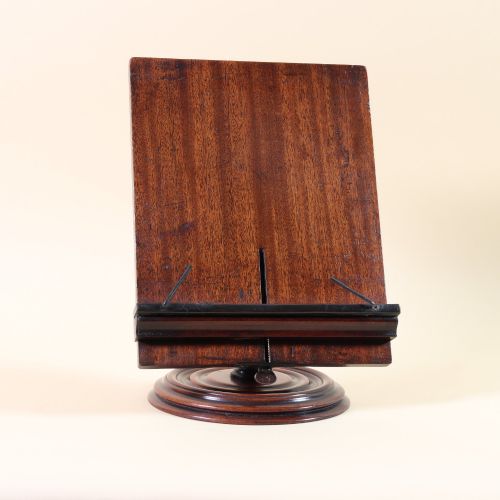
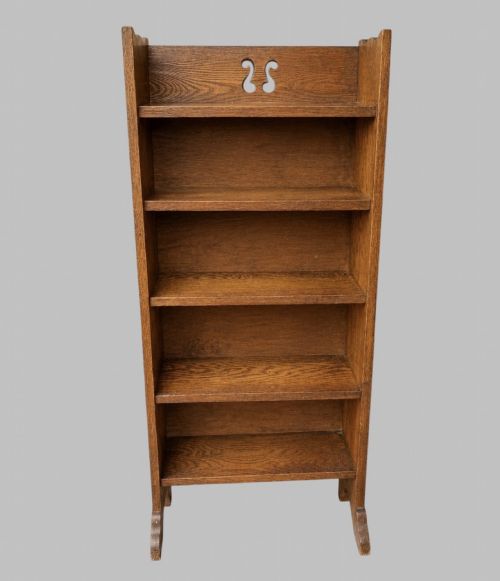
Vintage wooden bookstands encompass a variety of forms designed to keep volumes organised and accessible on desks, tables, and floors. When searching for vintage wooden bookstands, buyers encounter open bookcases, revolving book-cases, extending book slides, and desktop reading rests spanning the Victorian and Edwardian eras.
The selection ranges from compact desktop book rests and extending slides in mahogany or walnut to larger revolving bookcases in oak and satinwood. Many pieces reflect specific periods such as the Edwardian era, the Victorian period, and the Arts and Crafts movement, incorporating regional styles like Anglo-Indian and Kashmiri work.
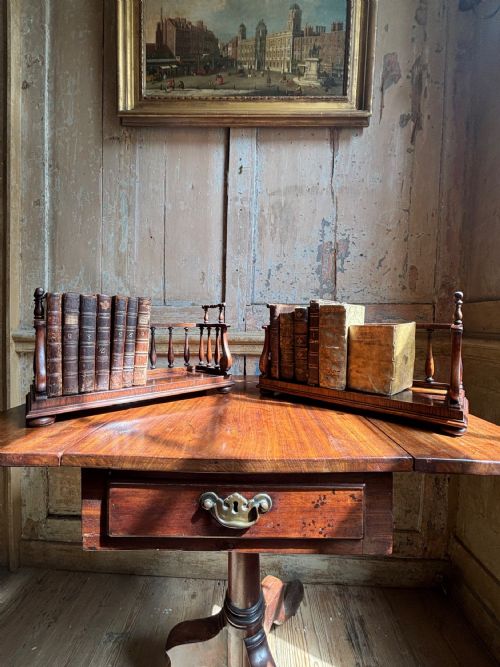
Common utilitarian forms include adjustable book slides and library book troughs, alongside more decorative items featuring brass mounts, mother-of-pearl inlay, or Tunbridge ware. These objects served functional roles in studies and libraries while displaying the cabinetmaker's skill through varied timbers and decorative details.
Materials and construction methods
Cabinetmakers utilised a range of dense hardwoods including mahogany, walnut, oak, and satinwood, often complemented by secondary timbers like pine and maple. These woods provided the necessary structural stability for extending mechanisms, revolving tiers, and desk-top reading rests.
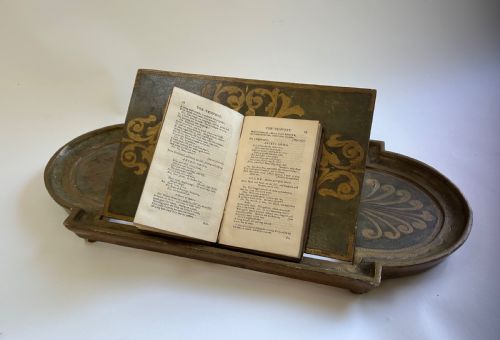
Decorative techniques recorded in the evidence include marquetry inlay, brass mounting, ecclesiastical carving, and painted plaques. Materials such as mother-of-pearl and specialised micro-mosaic work like Tunbridge ware were applied to enrich the surfaces of book slides and desk accessories.
The selection includes pieces spanning the nineteenth and twentieth centuries, featuring walnut, mahogany, oak, and satinwood.
Factors influencing quality
The standard of a piece is determined by the selection of timber and the precision of its joinery. Fine examples display well-figured mahogany or burr walnut grains, tight dovetail or mortise joints, and smooth mechanical action in revolving bases or extending slides.
Decorative refinement distinguishes superior items, seen in crisp inlaid satinwood stringing, finely cast brass fittings, hand-carved details, or intricate painted plaques. Conversely, simpler vernacular items in pine or plain oak rely on sturdy utility rather than ornamental elaboration.
Maple and Co
The Vintage Wooden Bookstands Glossary
- Book slide
- A device with an extending mechanism designed to hold a variable number of volumes upright between two ends. These pieces adjust in length to fit the shelf space available on a desk or table.
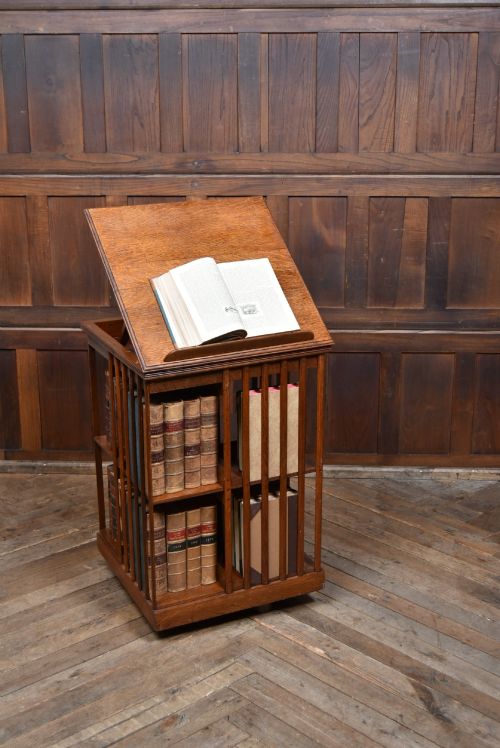
- Revolving bookcase
- A freestanding or desktop bookcase engineered to spin on a central spindle or pivot base. This design allows access to books from multiple angles in a study or library.
- Tunbridge ware
- Small wooden objects decorated with intricate micro-mosaic patterns formed from tiny blocks of naturally coloured wood. This technique creates geometric or pictorial surface designs.
- Inlay
- A decorative technique where pieces of contrasting timber, shell, or metal are inserted into recesses cut into the primary wood surface. Edwardian pieces frequently utilise satinwood stringing.
- Library book trough
- A small open-topped wooden receptacle designed to hold a selection of volumes for immediate reading. These are commonly encountered in mahogany or oak.
Vintage Wooden Bookstands: Frequently Asked Questions
How do revolving bookcases function?
Revolving bookcases operate on a central pivot mechanism concealed beneath the tier of shelves, allowing the entire structure to spin smoothly in a circle. This engineering enabled users seated at a desk or armchair to reach a large number of reference volumes without changing position.
They appear in tabletop and larger floor-standing formats, constructed primarily in timbers like mahogany and oak during the Victorian and Edwardian periods.
What woods were commonly used?
Cabinetmakers relied heavily on dense hardwoods such as mahogany, walnut, and oak for structural durability and pleasing grain patterns. Lighter woods like satinwood and maple, alongside secondary timbers like pine, also feature in period pieces.
More decorative items incorporate exotic materials or contrasting inlays to elevate the visual appeal of the desktop accessories and book troughs.
Where were these pieces used?
These items were designed for domestic studies, libraries, and office desks where reference books or current reading material needed organisation. Compact desk rests and book slides kept working volumes close at hand, while revolving bookcases stood beside armchairs or large library tables.
Their presence reflects the reading habits and interior arrangements of Victorian and Edwardian homes.