

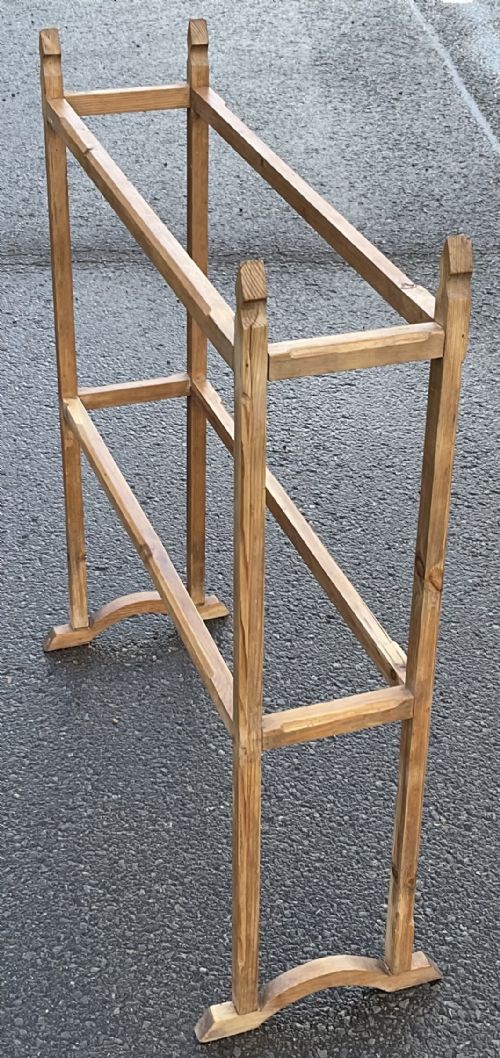


Vintage Wooden Blanket Stand
These vintage wooden blanket stand pieces offer practical textile storage, bringing traditional British craftsmanship and warm timber tones straight into your bedroom or bathroom.
Vintage Wooden Blanket Stand
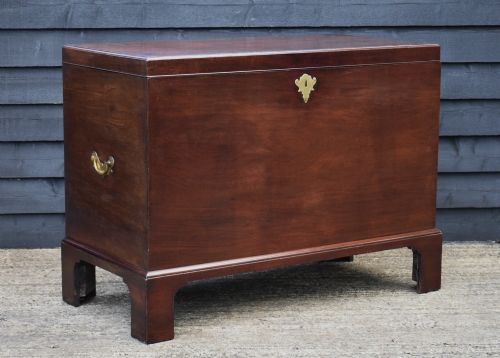
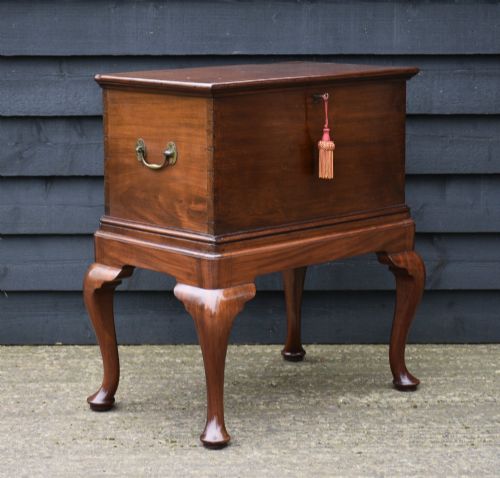
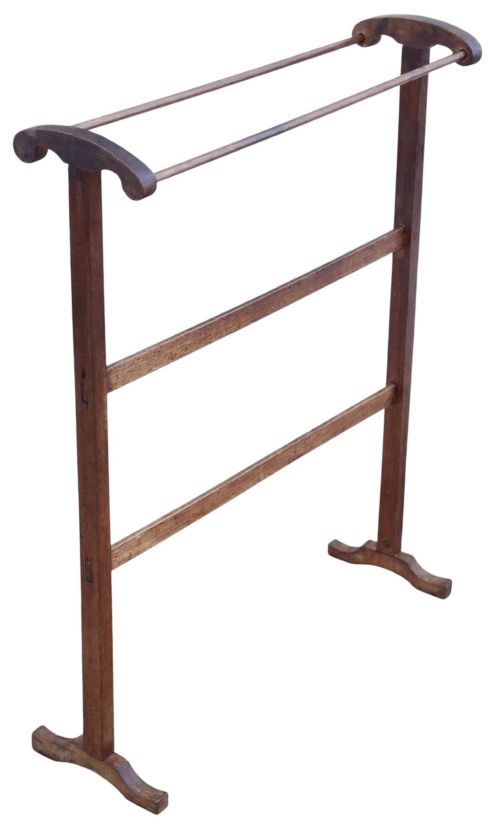
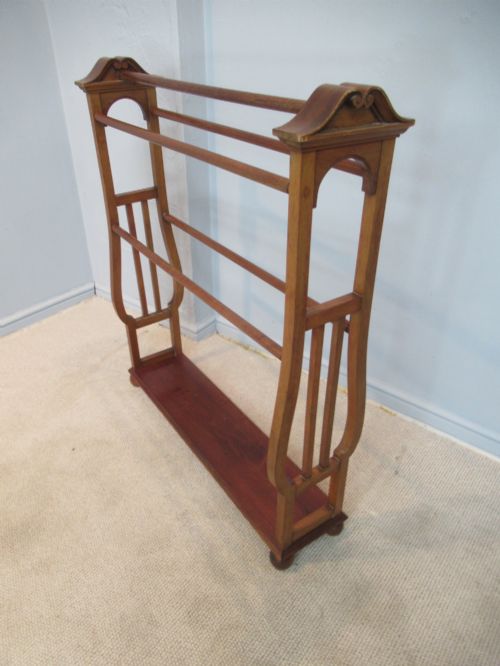
When you search for a vintage wooden blanket stand, you are primarily looking at standing towel rails, clothes airers, and occasional chests or coffers raised on stands. These pieces range from simple Edwardian pine rails to substantial nineteenth-century examples designed for domestic organisation.
The versions you are most likely to meet on this page date from the late nineteenth and early twentieth centuries, particularly Edwardian and Victorian eras. They utilise various timber forms to provide multiple hanging rails or enclosed storage for household textiles.
How they were made
Cabinet makers constructed these pieces using solid hardwoods such as mahogany, oak, walnut, and teak, occasionally applying ebonised finishes or satinwood inlay for decorative contrast. Joinery methods relied on traditional cabinet-making techniques to ensure stability across multiple rails and upright frames.
Hardware details frequently incorporate brass fixtures, particularly on campaign-style items and chests, while standing frames utilise straightforward timber construction designed to bear the weight of damp linens or heavy blankets.
Vintage Wooden Blanket Stand Retail Price Guide 2026
Typical asking prices for vintage wooden blanket stand among the pieces listed under this phrase on Sellingantiques today, from the lower quarter to the upper quarter. They describe what is for sale here now, not the wider market.
Materials recorded across the inventory include mahogany, oak, brass, satinwood inlay, hardwood, walnut, pine, and ebonised wood.
What varies in quality
The distinction between standard utility items and finer pieces lies in the selection of timber and the sophistication of decorative elements. Better examples feature figured mahogany, crisp satinwood inlay, or substantial proportions attributed to known cabinet makers rather than plain pine construction.
Structural integrity and the retention of original surface finishes significantly influence the character of each piece. Items displaying balanced proportions across multiple bars and clean, uncompromised timber surfaces stand apart from basic utilitarian rails.
Gillows
The Vintage Wooden Blanket Stand Glossary
- Ebonised wood
- Timber treated with a dark stain or chemical process to imitate ebony. This finish became particularly popular during the Victorian period for accentuating turned uprights and mouldings.
- Satinwood inlay
- A decorative technique inserting contrasting lighter wood into a darker timber ground. It appears on Edwardian pieces to create delicate geometric or floral borders.
- Campaign chest
- A portable set of drawers or a box made in sections with brass corners and recessed handles. Designed for military officers, these items utilise robust timbers like teak or mahogany.
- Coffer on stand
- A storage chest elevated on a separate frame or legs. This form lifts the main storage compartment off the floor, combining box storage with an open underframe.
Vintage Wooden Blanket Stand: Frequently Asked Questions
What were blanket stands originally used for?
These items served primarily to air, dry, and display household textiles, towels, and blankets in bedrooms and dressing rooms.
Their open rail construction allowed air circulation around heavy linens before the widespread adoption of modern laundry appliances.
How do I distinguish Edwardian from Victorian pieces?
Edwardian examples tend to feature lighter mahogany frames, sometimes decorated with subtle satinwood inlay or simpler five-bar configurations.
Victorian pieces often display heavier proportions, darker walnut or mahogany timbers, and more robust structural turnings.
Are these stands suitable for modern bathrooms?
Many people utilise these traditional wooden rails in contemporary bathrooms for hanging bath sheets and hand towels.
Care should be taken with placement to avoid excessive moisture exposure, preserving the original timber finish and polished surfaces.
What timbers are most common?
Mahogany and oak appear most frequently across these listings, spanning the Georgian, Victorian, and Edwardian periods.
Alternative materials include walnut, pine, teak, and ebonised wood, reflecting the changing interior fashions of the nineteenth and early twentieth centuries.