


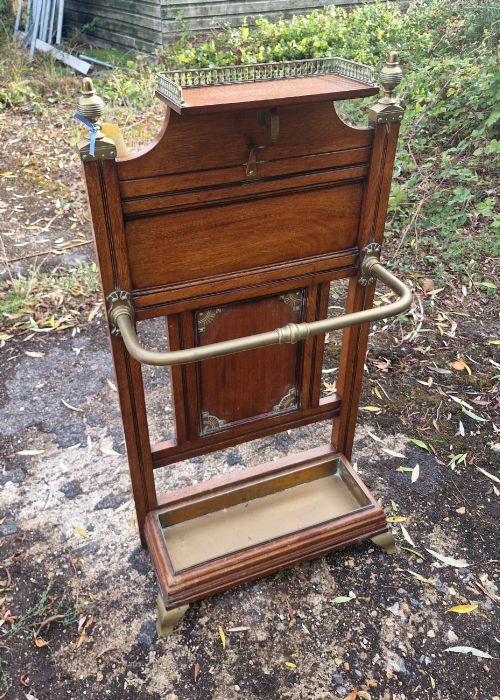
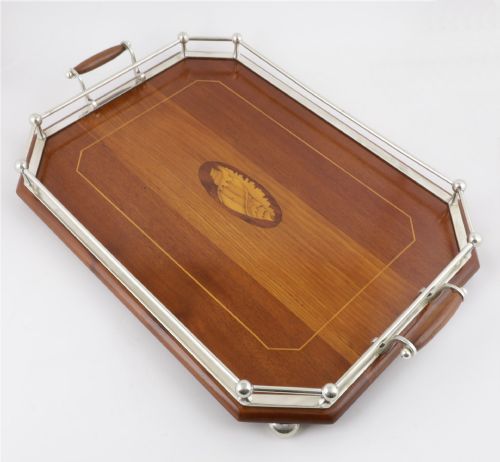
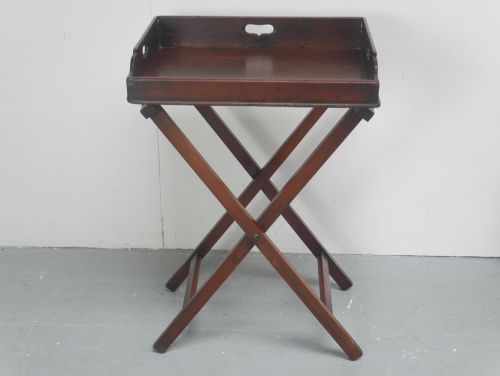
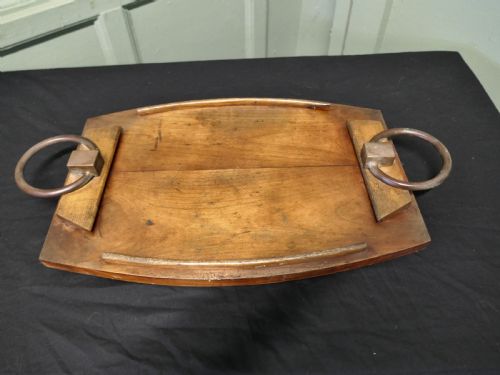
Vintage Wood Tray
A vintage wood tray brings practical utility and tactile warmth to a room, offering a functional surface shaped by decades of handling.
Vintage Wood Tray
A vintage wood tray encompasses items designed for serving, display, or portable storage, appearing across periods from the eighteenth century through the twentieth. These pieces range from simple serving boards to elaborate folding butler trays on stands and decorative inlaid containers.
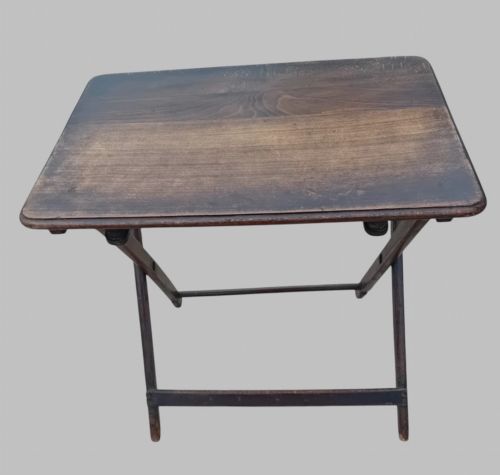
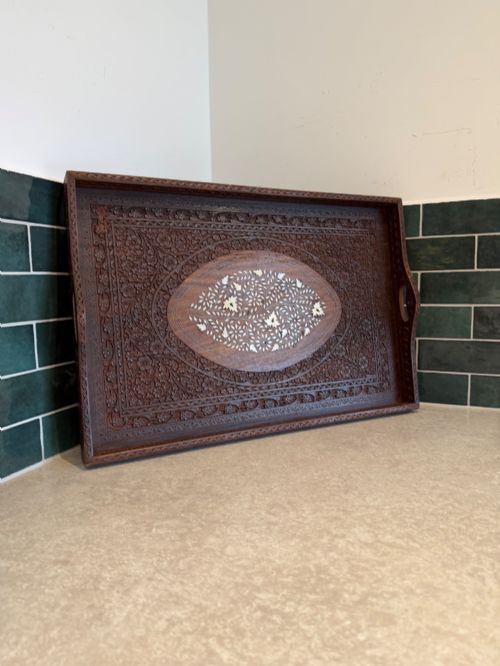
The Edwardian and Victorian eras dominate the selection, bringing oval serving vessels, marquetry work, and campaign-style folding tables into common circulation. Oak and mahogany serve as the primary timbers encountered in these practical domestic objects.
Beyond standard serving accessories, the category stretches to include specialised items such as cutlery trays, silver tables with tray tops, and ship's trays. These diverse forms reflect the varied domestic rituals of past households.
Assessing craftsmanship
Quality rests upon the selection of timber grain and the precision of the joinery connecting the base to the gallery or handles. Pieces featuring crisp marquetry, hand-cut dovetails, and substantial brass mounts stand apart from simpler utilitarian items.
The condition of the timber surface, including the depth of the original polish and the preservation of inlaid elements, dictates the desirability of a piece. Uniformity in the timber and tightness in folding stands indicate superior original manufacture.
The listings span multiple centuries, ranging from eighteenth-century Georgian items to early twentieth-century Arts and Crafts and Art Deco designs.
Thonet
The Vintage Wood Tray Glossary
- Butler's tray
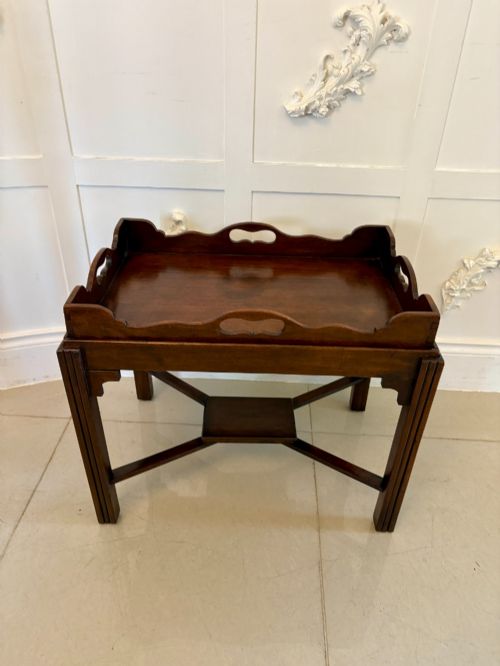
- A removable wooden tray with hinged or fixed sides, traditionally paired with a folding X-frame stand for portable serving.
- Marquetry
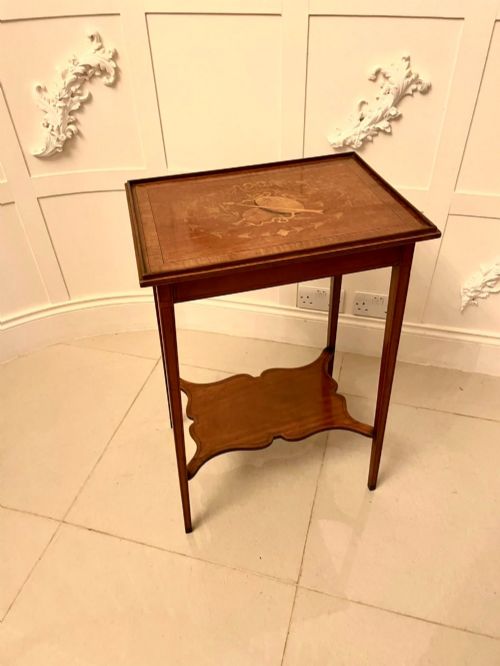
- The art of applying decorative pieces of veneer to a structure to form intricate geometric or floral patterns.
- Coopered
- Constructed from curved wooden staves bound together with metal or wood bands, commonly seen in cylindrical vessels and trays.
- Gallery
- A low decorative railing surrounding the perimeter of a tray or table top to prevent items from sliding off.
- Oyster veneering
- The practice of slicing small branches horizontally to produce circular or oval cross-section veneers resembling oysters.
Vintage Wood Tray: Frequently Asked Questions
How were vintage wood trays originally used?
Households employed these trays for serving drinks and food in reception rooms, carrying tea sets, or transporting dining accessories between floors.
Larger versions placed upon folding stands functioned as portable side tables during garden parties or drawing room gatherings.
How do I care for a wooden serving tray?
Maintain the timber by dusting with a dry cloth and avoiding excessive moisture or direct sunlight that might crack the antique polish.
Apply occasional specialised beeswax to nourish dry hardwood surfaces and preserve the natural grain.
Can I use an antique tray for daily serving?
Many sturdy mahogany and oak trays remain entirely suitable for carrying drinks, provided you protect the antique finish from liquid spills and heat.
Delicate inlaid pieces or items with fragile marquetry serve better as decorative display surfaces rather than active serving vessels.
How do I distinguish Georgian trays from Victorian examples?
Georgian trays typically exhibit heavier Cuban mahogany construction with restrained, elegant lines and minimal ornamentation.
Victorian and Edwardian pieces often incorporate busier marquetry inlay, gallery rails, or exotic veneers reflecting mass-production and global trade influences.