


Vintage Wood Arm Chair
A vintage wood arm chair brings structural warmth and practical seating to a room, spanning styles from sturdy Windsor forms to elegant Regency library models.
Vintage Wood Arm Chair
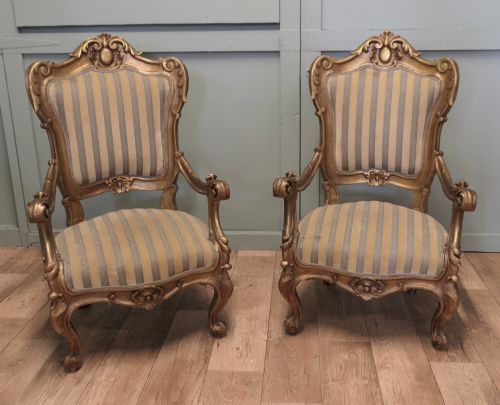
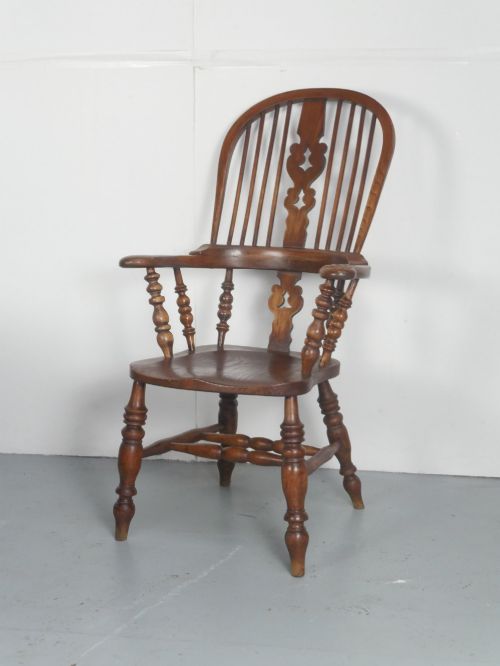
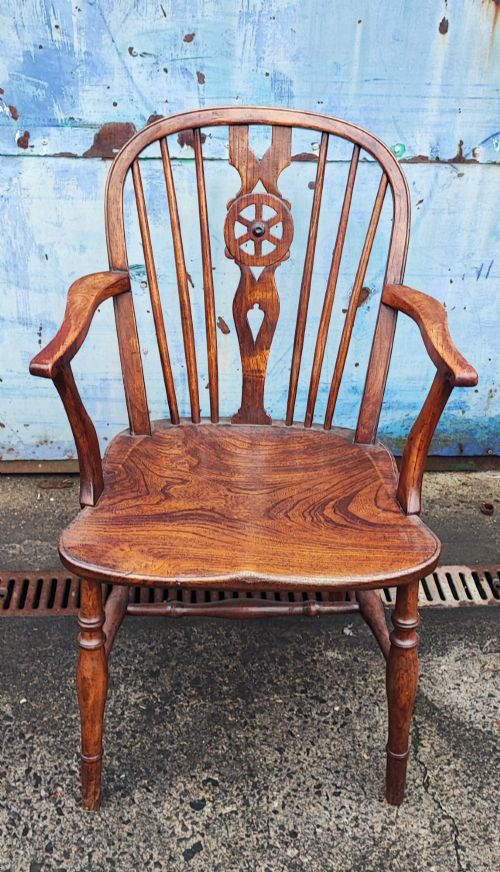
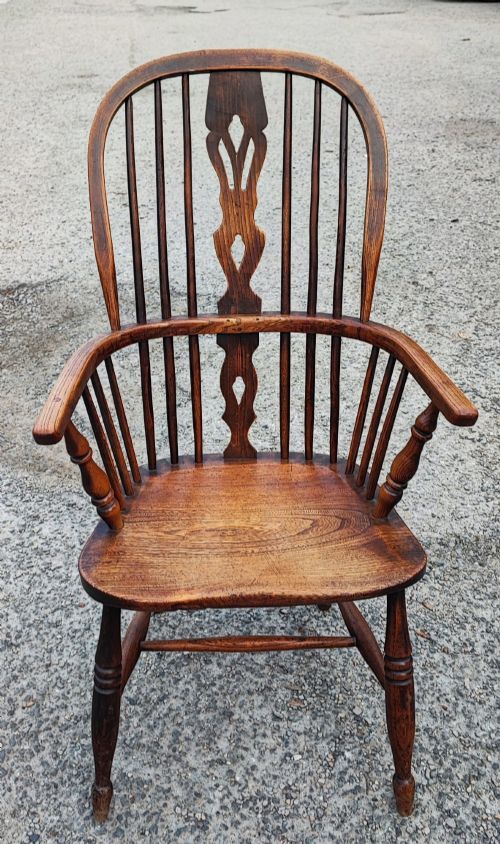
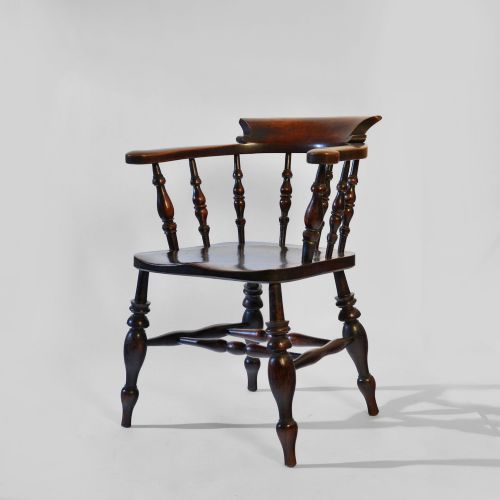
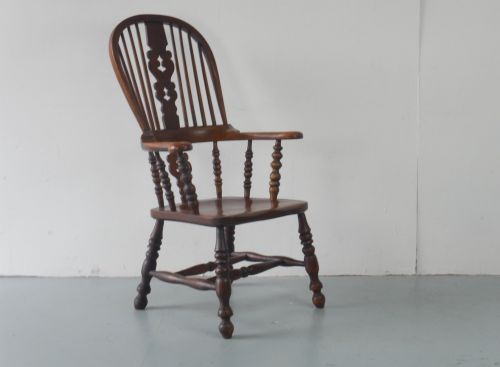
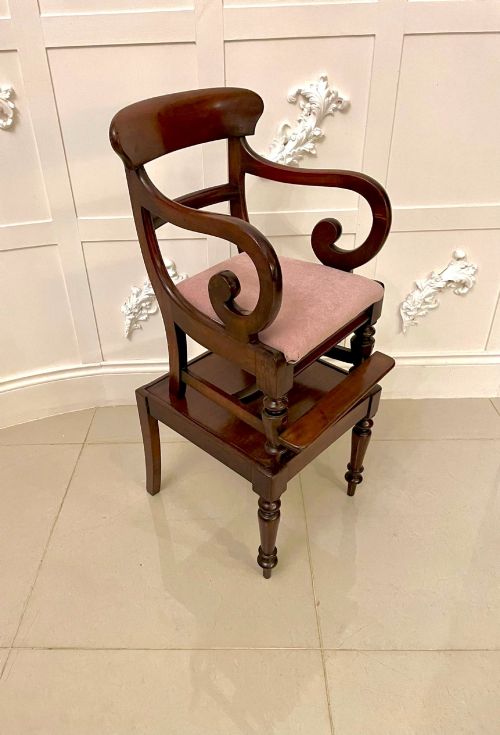
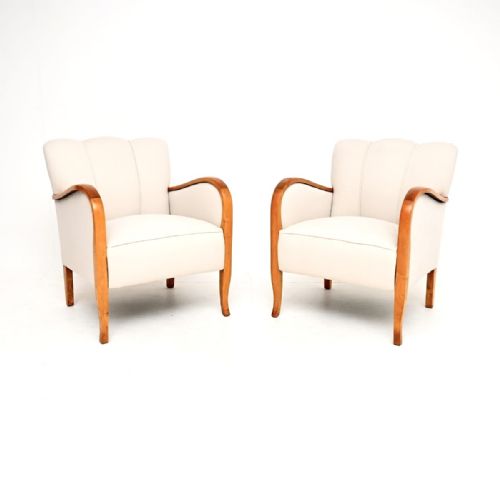
The most common examples on this page are nineteenth-century pieces, including sturdy Windsor designs, bobbin-turned rocking chairs, and mahogany carvers with upholstered seats. Alongside these traditional English forms, regional variations such as Swedish Art Deco satin birch chairs and French walnut fauteuils appear regularly.
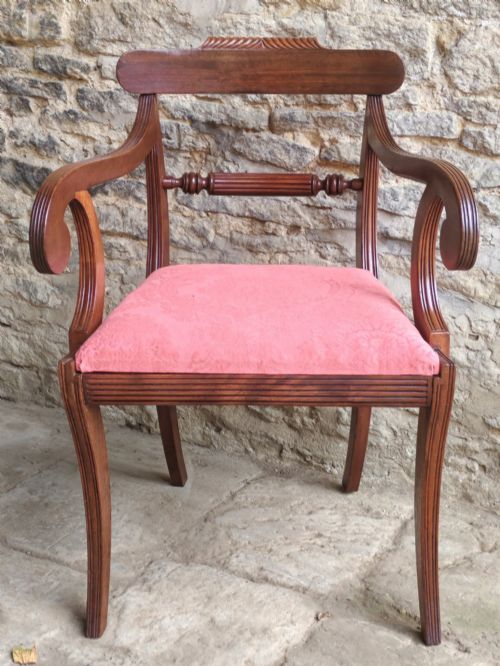
Beyond standard domestic seating, the category extends to specialised forms including children's chairs, high chairs, desk chairs, and daybeds. Each piece reflects the domestic habits and craftsmanship of its specific period, whether shaped as a country elm Windsor or a refined Regency elbow chair.
How they were made
Cabinetmakers and joiners utilised a range of native and imported timbers, pairing solid mahogany, oak, walnut, and elm with flexible beech and bentwood. Structural integrity relied on traditional joinery methods, including pegged mortise and tenon joints, steam bending for curved components like bentwood frames, and layered turnings such as bobbin framing.
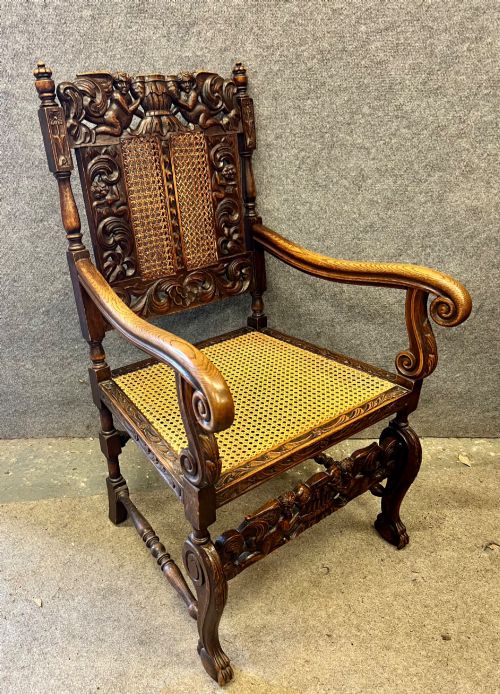
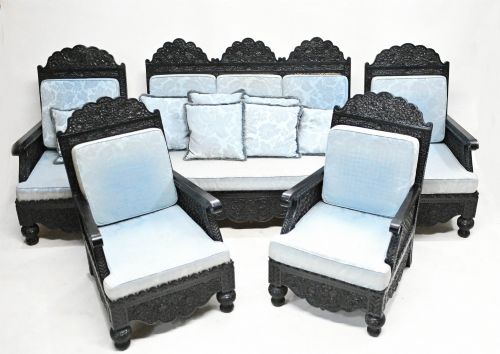
Surface decoration and support incorporated diverse techniques, from hand-carved floral and dragon motifs to brass inlay, cane work, and rush seating. Upholstery methods varied from simple drop-in pads and leather panels to elaborate sprung horsehair stuffing finished with fabric or hide.
Vintage Wood Arm Chair Retail Price Guide 2026
Typical asking prices for vintage wood arm chair among the pieces listed under this phrase on Sellingantiques today, from the lower quarter to the upper quarter. They describe what is for sale here now, not the wider market.
Listings feature seating from the Georgian and Regency periods through to Art Deco and mid-century designs.
What varies in quality
The distinction between ordinary and exceptional examples rests upon the harmony of proportions, the crispness of carved details, and the integrity of the original timber. Pieces displaying fluid lines, such as a well-defined sabre leg or balanced lyre arm, demonstrate superior design understanding compared to rigid or heavy-handed reproductions.
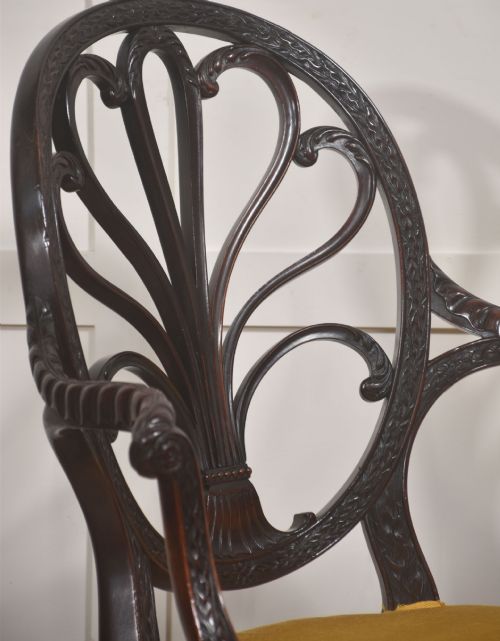
Quality also manifests in the selection of materials, where choice figured veneers like satin birch, dense rosewood, or richly patinated mahogany elevate a piece. Original construction methods, retained surface patination, and intact period elements such as brass inlay or rush seats further separate standard utility furniture from high-status workshop production.
Jacob and Josef Kohn·Morris and Co
The Vintage Wood Arm Chair Glossary
- Carver
- A dining chair featuring arms, traditionally placed at the head of a table or utilised as a desk chair. These pieces often mirror the design of smaller side chairs in a matching set.
- Windsor
- A traditional chair constructed with a solid wooden saddle seat into which turned legs and spindles are wedged directly. The back is formed by steam-bent rails or a central splat.
- Fauteuil
- An open-armed French armchair featuring exposed wooden framing and upholstered arm pads. This style typically originates from eighteenth or nineteenth-century French cabinetmaking traditions.
- Bentwood
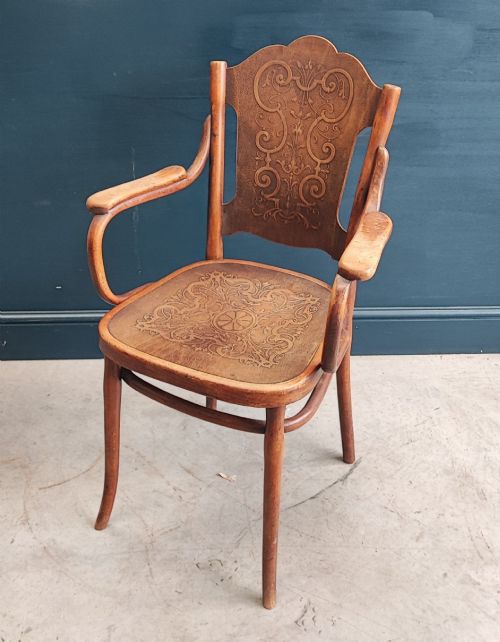
- Furniture formed by steaming timber until pliable and bending it into curved structural components. This technique defines lightweight nineteenth and twentieth-century cafe and rocking chairs.
- Elbow chair
- An alternative term for an armchair, frequently applied to dining and library seats with low armrests designed to fit beneath a table rim.
Vintage Wood Arm Chair: Frequently Asked Questions
How do I identify a Windsor chair?
A Windsor chair is distinguished by its heavy solid wooden seat, into which the legs and back spindles are tenoned directly. They lack a conventional internal frame, relying instead on a stout bow or comb-back structure.
Most examples utilise mixed timbers, pairing an elm seat with ash or beech spindles and legs, resulting in a resilient and organic silhouette.
Are bentwood chairs comfortable?
Bentwood chairs offer a surprisingly springy seat due to their steam-formed wooden components and open framework. Their lightweight construction allows them to flex slightly under movement.
Many examples feature woven cane or upholstered pad seats, adding a layer of compliance that made them popular for prolonged seating in cafes and offices.
What timber was used most often?
Mahogany dominated formal seating from the eighteenth century onward, valued for its deep colour and ability to hold crisp carved details. Oak and elm served as the primary choices for earlier country furniture and sturdy Windsor models.
More specialised pieces incorporated exotic hardwoods like goncalo alves, satin birch, and rosewood to achieve striking grain patterns and contrasting tones.