



Vintage Wmf Silver Plate
These vintage Wmf silver plate pieces bring organic forms and clean lines into your home, offering functional design with distinct period character.
Vintage Wmf Silver Plate
When you search for vintage wmf silver plate, you encounter items produced by the renowned Württembergische Metallwarenfabrik, spanning the late nineteenth century through the early decades of the twentieth century. The selection ranges from domestic tableware such as biscuit barrels and champagne buckets to decorative accessories including trinket dishes, mantel clocks, and table mirrors.
The aesthetic of these objects shifts across distinct design movements, moving from flowing natural motifs toward geometric patterns. You are most likely to meet pieces representing Art Nouveau, Jugendstil, and Art Deco styles, often featuring figural elements or stylised plant forms.
Object types vary widely in scale, encompassing small desk accessories alongside large floor-standing champagne coolers and floor lamps. Materials extend beyond silver plate to incorporate cut glass, pewter, Britannia metal, mahogany, and brass.
How they were made
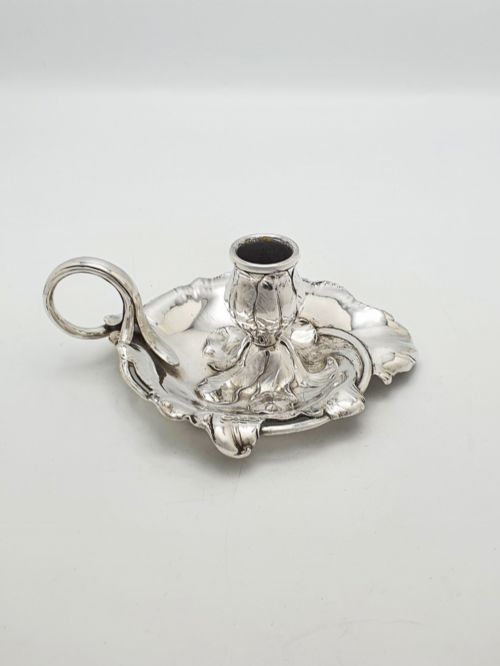
Makers utilised a base of Britannia metal, pewter, or brass, applying a silver-plated surface over the formed or cast structure. This metallic foundation allowed for intricate sculptural details such as tendrils, flower heads, and figural maidens.
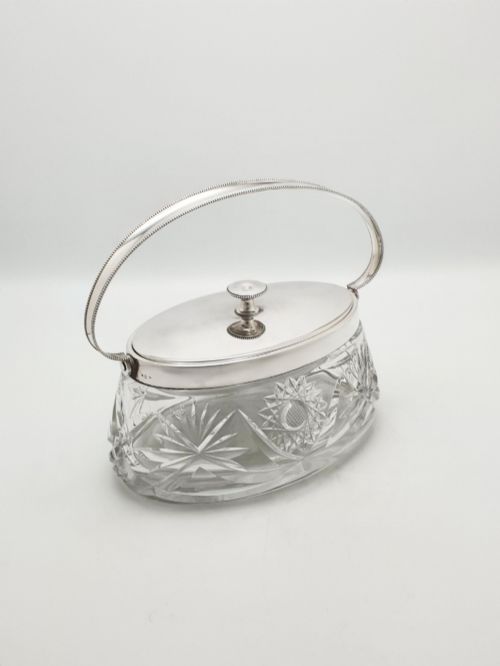
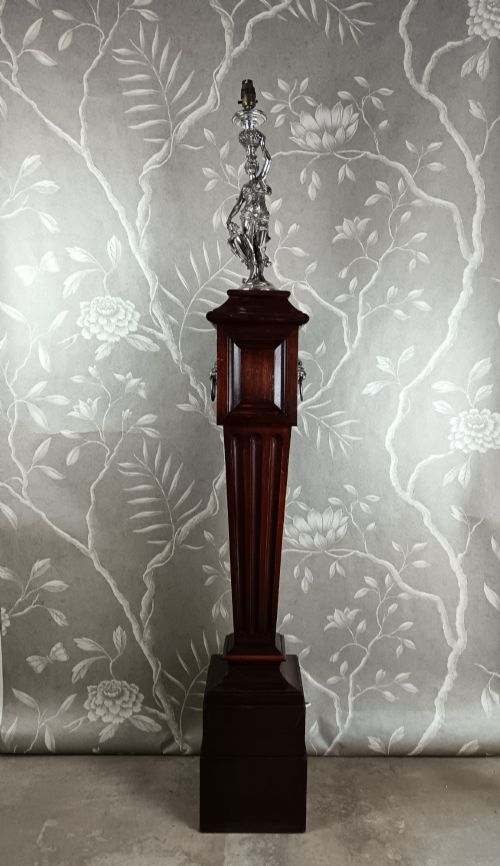
Glass elements, particularly cut glass for biscuit boxes, were integrated directly into metal mounts to create contrasting textures. Wooden components such as mahogany appear alongside the metalwork in floor-standing pieces like torchere lamps.
Vintage Wmf Silver Plate Retail Price Guide 2026
Typical asking prices for vintage wmf silver plate among the pieces listed under this phrase on Sellingantiques today, from the lower quarter to the upper quarter. They describe what is for sale here now, not the wider market.
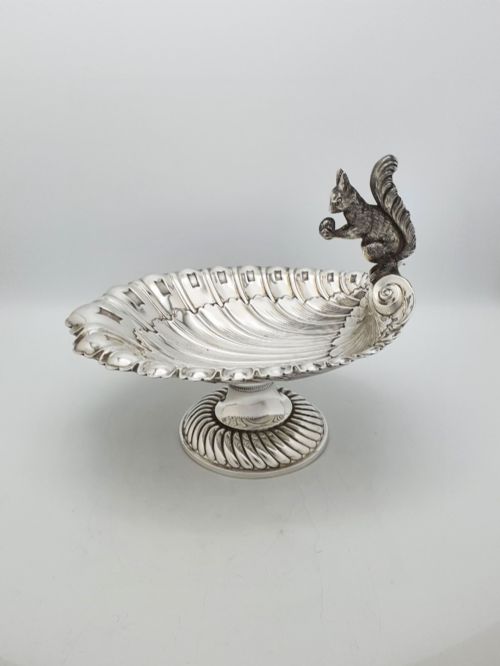
Squirrels make a delightful appearance holding nuts in the metalwork of a 1920s dish.
What varies in quality
The refinement of the casting and the crispness of the chased or stamped details distinguish the execution of individual items. Pieces with complex figural elements or integrated naturalistic motifs require greater sculptural skill than geometric forms.
The integrity of the plated surface and the preservation of original glass or wooden components dictate the overall physical condition. Cohesion between the functional design and the decorative style marks the more accomplished examples.
WMF
The Vintage Wmf Silver Plate Glossary
- Silver Plate
- A metallic base object coated with a thin layer of silver through an electroplating process. This technique allowed manufacturers to produce ornate domestic items at a lower cost than solid silver.
- Jugendstil
- The German variant of the Art Nouveau movement, characterised by flowing organic lines and natural motifs. The style dominated design around the turn of the twentieth century.
- Britannia Metal
- A specific type of pewter alloy composed largely of tin, antimony, and copper. It provides a smooth surface suitable for silver plating and detailed casting.
- Taza
- An ornamental pedestal bowl or shallow cup elevated on a central foot. These pieces were typically used for serving fruit or small confections at the table.
- Secessionist
- An early twentieth-century Central European design movement favouring simplified geometric forms over excessive ornamentation. It represents a transition toward modernist aesthetics.
Vintage Wmf Silver Plate: Frequently Asked Questions
What is vintage WMF silver plate?
Vintage WMF silver plate encompasses decorative and functional metalwork produced by the German manufacturer Württembergische Metallwarenfabrik. The items include tableware, lighting, and desk accessories.
The production spans several decades, capturing major design shifts from organic nineteenth-century styles to geometric twentieth-century forms.
How do I identify Art Nouveau WMF pieces?
Art Nouveau WMF pieces feature fluid, organic lines inspired by nature, including flowing tendrils, flower heads, and figural maidens. The forms emphasise asymmetry and movement.
Such items frequently date from the period around nineteen hundred and bear distinct maker marks.
What materials are used besides silver plate?
Many WMF items incorporate secondary materials to complement the metal structure. Cut glass appears frequently in biscuit boxes, while pewter and Britannia metal form the core of unplated or alternative pieces.
Wood such as mahogany and base metals like brass also support larger items like floor lamps.
How were champagne buckets and coolers used?
Champagne buckets and coolers served to chill wine and sparkling beverages at the dining table or during social gatherings. Tabletop versions accommodated single bottles, while floor-standing variants provided standalone support.
These functional vessels often received elaborate decorative treatment with figural or floral motifs.