
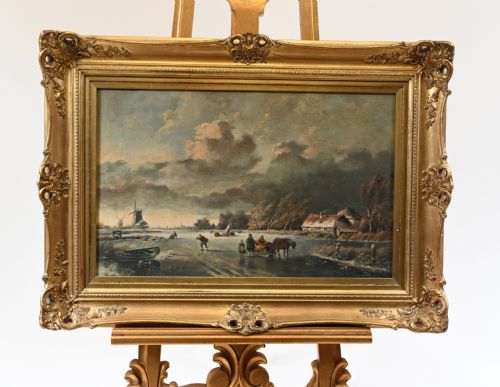


Vintage Winter Landscape Painting
These vintage winter landscape painting examples capture frozen fields, snowy villages and quiet frost, bringing historic chill and atmosphere to a room.
Vintage Winter Landscape Painting
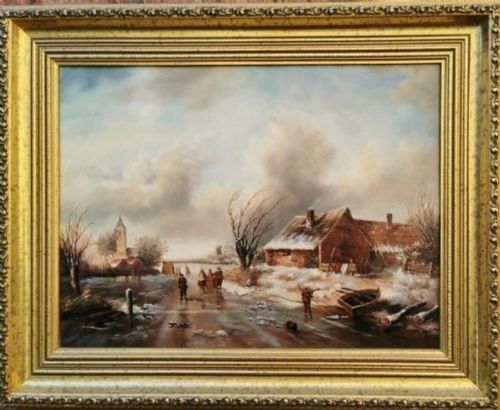
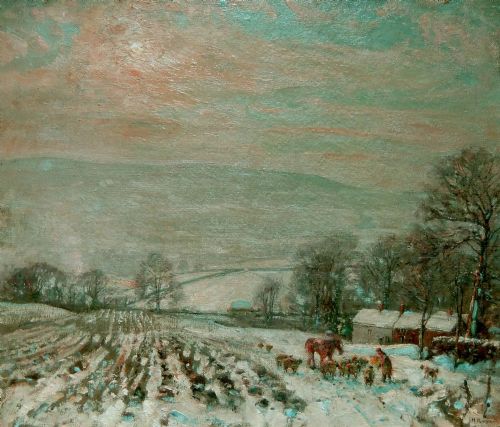
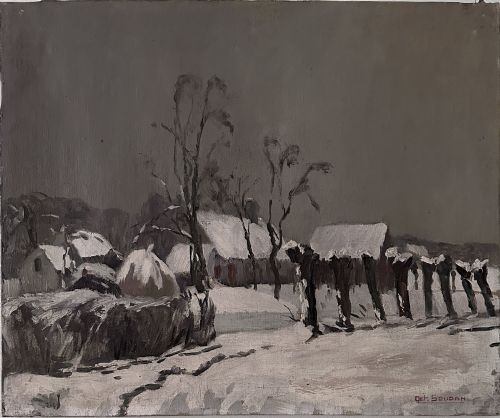
A vintage winter landscape painting records the stillness of snow-covered fields, frozen rivers and quiet villages through the eyes of artists working across the nineteenth and twentieth centuries. These works range from small, intimate village scenes to larger pastoral views featuring sheep-droving or figures skating on ice.
You are most likely to encounter oil paintings on canvas or board alongside watercolours on paper, spanning periods from the nineteenth century through the 1960s. Dutch school influences and British pastoral styles appear frequently among the subjects.
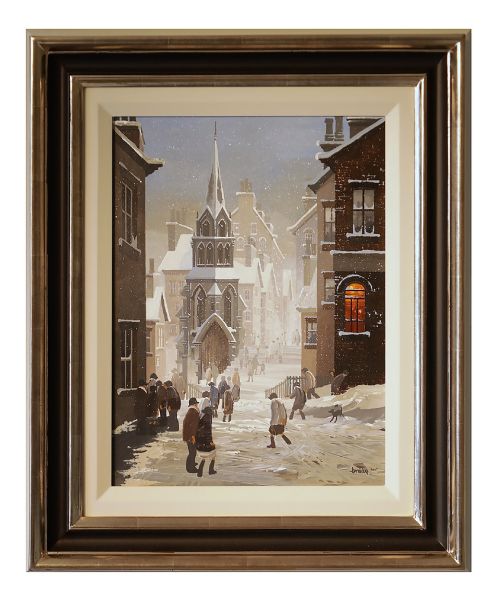
The compositions vary from atmospheric rural scenes to urban winter rooftops and French post-impressionist harbour views. Each piece documents a specific regional winter, whether in Yorkshire, France, Canada or the Netherlands.
Materials and methods
Artists painted these scenes using oil paint on canvas, wood or board, building rich textures to convey heavy snow and grey skies. Watercolours and pastels on paper offered a lighter medium for capturing soft winter light and pale mists.
Gilt frames often enclose the finished works, providing a traditional border that complements the muted palette of whites, greys and deep browns typical of winter subjects.
Several canvases record figures stubbornly continuing to chop firewood or herd sheep while deep in the snow.
What separates the best from the rest
The strength of a composition lies in how effectively the artist handles the difficult tonal range of snow, light and shadow without losing depth. Stronger works demonstrate confident brushwork and a clear sense of atmosphere, drawing the viewer into the cold air of the scene.
Condition and originality also play their part, with works retaining their original supports and period framing offering a more complete historical object.
Herbert Royle·Thomas Hicks·John Hobson Nicholson·Ernest Uden·William Tatton Winter·Pieter Cornelis Steenhouwer·John Richard Worsdale·Emily M Paterson·Louis Smets·Fred Lawson·Olle Nordberg·Maurice Long
The Vintage Winter Landscape Painting Glossary
- Oil paint
- A slow-drying paint made from pigment suspended in oil, usually linseed, allowing artists to blend tones and build heavy impasto for snow effects.
- Watercolour
- A paint consisting of water-soluble pigments on paper, used here to create luminous, translucent winter washes and skies.
- Canvas
- A heavy woven fabric stretched across a wooden frame to serve as a sturdy surface for oil paintings.
- Pastel
- A dry drawing medium made of powdered pigment and a binder, frequently used on paper to capture soft snowy textures.
- Dutch School
- A tradition of painting originating in the Netherlands noted for realistic landscapes, atmospheric light and frozen canal scenes.
Vintage Winter Landscape Painting: Frequently Asked Questions
How do I date a winter painting?
Examine the materials, stretcher bars, framing style and any signatures or inscriptions on the reverse of the canvas or paper.
Comparison with documented works by the same artist or regional school often narrows the date of execution to a specific decade.
Were these paintings made outdoors?
Some artists executed initial watercolours or oil sketches on location in the cold, capturing direct observations of light and frost.
Finished larger canvases were typically completed later inside a studio using those preparatory field studies.
How should I frame an unframed painting?
Select a period-appropriate moulding, such as a gilt wood frame, that matches the aesthetic and era of the artwork.
Ensure proper clearance and conservation mounting materials are used to protect the canvas or paper from damage.
How do I care for a vintage painting?
Keep the artwork away from direct sunlight, high humidity and sudden temperature fluctuations to prevent cracking in the paint layer.
Dust surfaces gently with a soft, dry brush and avoid using chemical cleaners on the canvas or paper.