


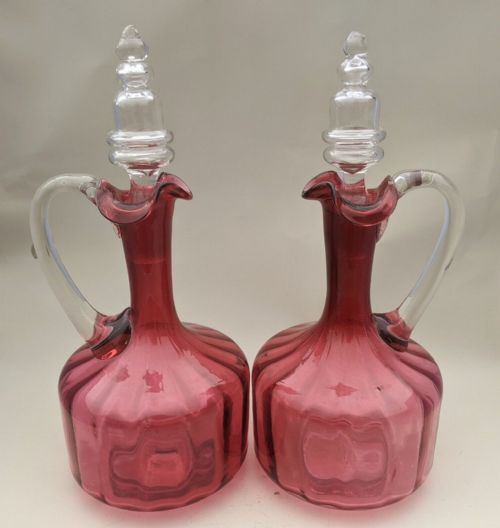


Vintage Wine Pitcher Stopper
These vintage wine pitcher stopper pieces combine glass and crystal with metal mounts, serving as functional vessels for the table.
Vintage Wine Pitcher Stopper
When you search for vintage wine pitcher stopper, you encounter table vessels designed for serving wine, encompassing decanters, ewers, and claret jugs. These items hail predominantly from the Victorian and Edwardian eras, alongside pieces from the Art Deco period and the nineteenth century.
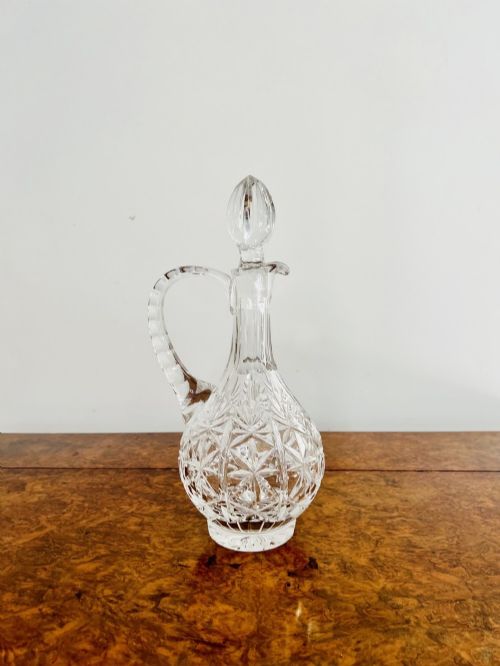
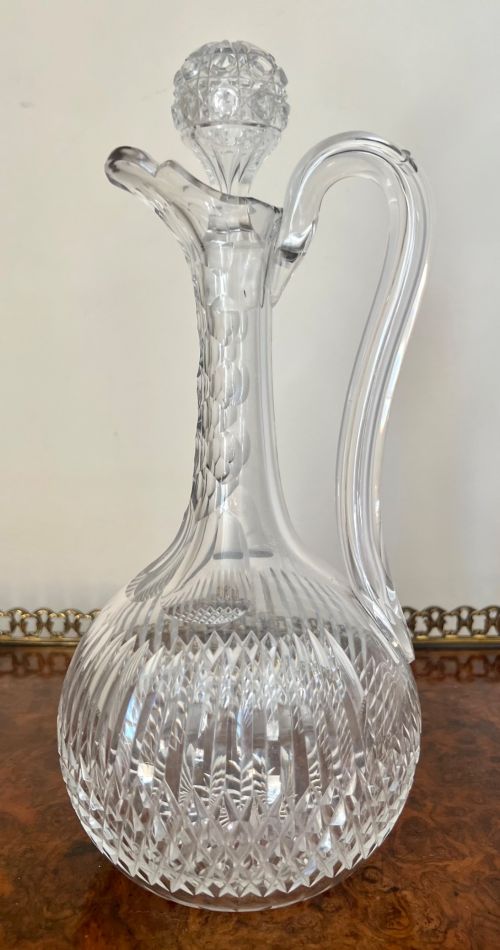
The most common forms on this page include cut glass ewers and claret jugs fitted with stoppers or mounts. You also find colourful examples in cranberry glass, green glass, and amber glass, sometimes accented with enamel decoration or gold gilt.
Origins span across British, Bohemian, and French workshops, reflecting diverse aesthetic movements from Art Nouveau to nineteenth-century traditional designs. Each vessel combines a pouring body with a corresponding stopper or metal collar to preserve the contents.
Materials and manufacturing techniques
Makers utilised clear glass, cut glass, lead crystal, and coloured glass such as cranberry, green, and amber. These glass bodies were shaped by blowing and finished with extensive wheel-cut facets or smooth blown contours.
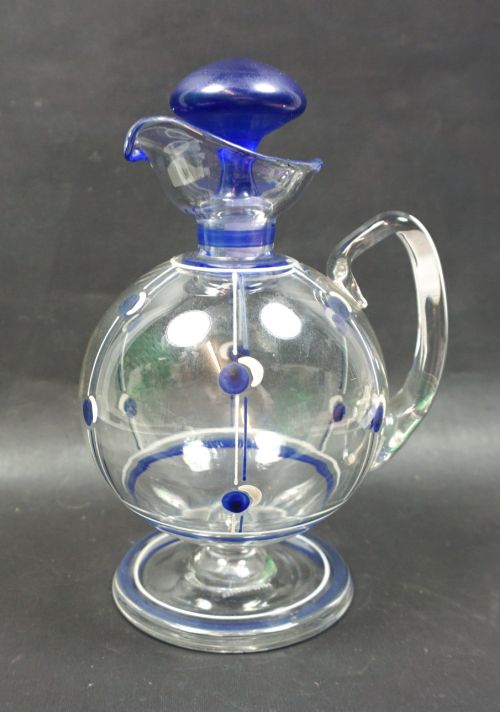
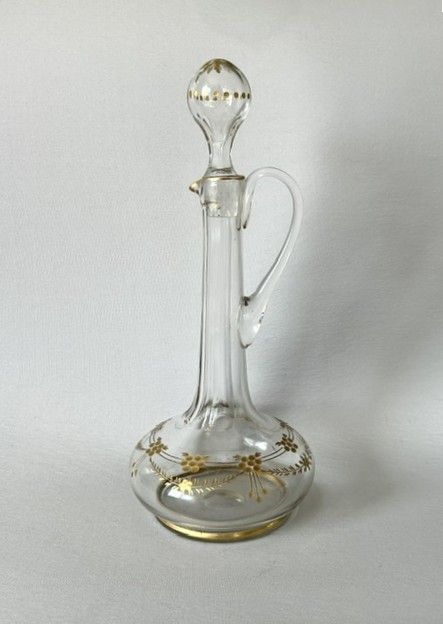
Surface ornamentation involved hand-painted enamel decoration, gold gilding, and Mary Gregory style painting. Metal components, including silverplate and silver mounts, were affixed to collars and handles to complete the vessels.
Objects on this page include ewers, claret jugs, and decanters from nineteenth-century France and Bohemia.
Distinctions in quality
The sophistication of the glass cutting and the clarity of the lead crystal establish the baseline for finer pieces. Deep, crisp wheel-cut facets catch the light differently than pressed or lightly moulded glass bodies.
The integration of decorative elements, such as hand-painted enamel work, gold gilt highlights, and substantial silverplate or silver mounts, separates standard domestic items from superior examples. The presence of matching stoppers and balanced proportions completes the higher tier.
The Vintage Wine Pitcher Stopper Glossary
- Ewer
- A large jug with a wide spout and a handled body, traditionally used for serving wine or water at the table. These vessels often feature decorative cut glass patterns.
- Claret jug
- A specific type of container designed for serving red wine, typically featuring a glass body fitted with a metal handle, collar, and hinged lid.
- Cranberry glass
- A rich red-pink glass created by adding gold chloride to the molten batch during the glassblowing process. It was particularly popular during the Victorian era.
- Lead crystal
- Glass containing a high percentage of lead oxide, which increases the weight, refractive index, and clarity of the material. This allows for deeper and sharper cutting.
- Mary Gregory
- A style of decorative glass painting featuring white enamel silhouettes of children playing in natural settings. This technique appears on Victorian green and cranberry glass vessels.
Vintage Wine Pitcher Stopper: Frequently Asked Questions
How do I date these glass pieces?
Dating relies on stylistic clues such as the heavy geometric cutting of Victorian and Edwardian pieces, or the streamlined forms of Art Deco design.
Materials like cranberry glass and specific enamel techniques also point towards nineteenth-century production periods.
Can I use these for serving wine?
These glass and crystal vessels were originally manufactured for serving wine and claret at the dining table.
Modern use is entirely possible, provided you inspect the interior for cleanliness and handle silver-mounted or gilded parts with care.
What is the difference between a decanter and an ewer?
Decanters generally feature a stopper and a flat base designed for resting on sideboards or tables.
Ewers incorporate a prominent spout and a handle, functioning primarily as pouring pitchers during meals.