



Vintage Wine Ewers
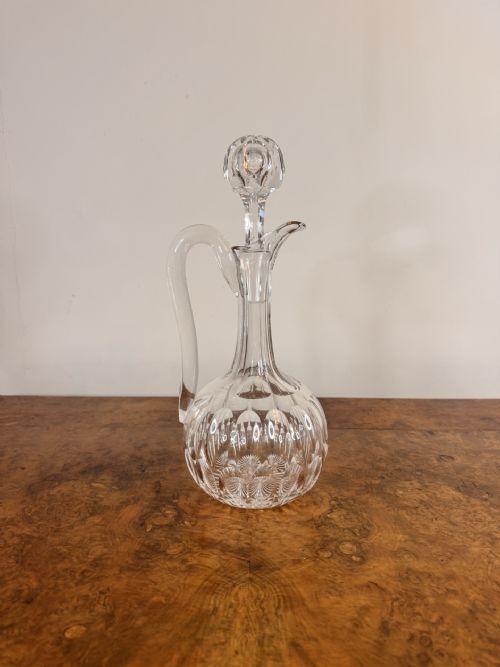
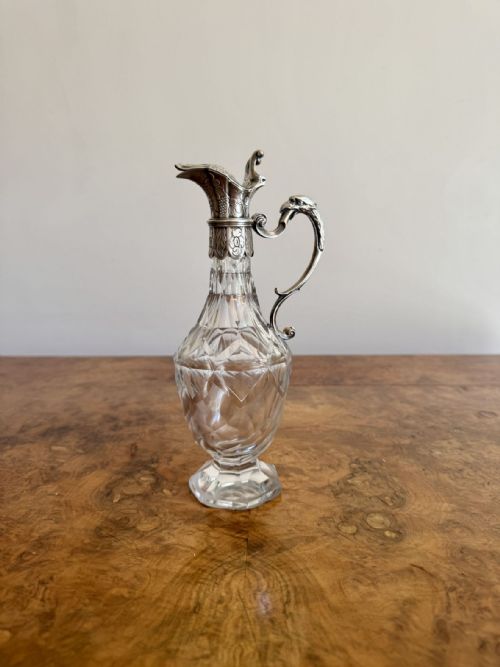
These vintage wine ewers are serving vessels for the table, bringing glass, crystal and silver plate into your dining room from periods spanning the eighteenth century to the twentieth.

Vintage Wine Ewers
When you search for vintage wine ewers, you are looking at pouring vessels designed to hold and serve wine at the table. These pieces range from tall serving jugs to decorative vessels intended for display.
You are most likely to meet Edwardian and Victorian examples on this page, alongside pieces from the late nineteenth century and the eighteenth century. Forms include cut glass ewers, claret jugs, liqueur ewers and dessert wine jugs.
Origins span English, Italian, German and Chinese Qing Dynasty workshops. The materials shift from plain glass to intricate lead crystal and hand-blown glass, often paired with silver plate.
How they were made
Makers shaped these ewers through hand-blowing and cutting glass, lead crystal and crystal to create faceted surfaces and decorative forms. Artisans also worked with cloisonné enamel, brass and silver plate for mounts and handles.
Italian and English workshops employed traditional glassblowing techniques to form footed ewers and pitchers. Silver plate mounts were secured to glass bodies to provide sturdy handles and hinged lids for pouring.
Vintage Wine Ewers Retail Price Guide 2026
Typical asking prices for vintage wine ewers among the pieces listed under this phrase on Sellingantiques today, from the lower quarter to the upper quarter. They describe what is for sale here now, not the wider market.
The listings here feature pieces from the eighteenth century, Victorian era, Edwardian period and nineteen-twenties, using cut glass, crystal, silver plate, enamel and brass.
What varies in quality
The distinction between ordinary and exceptional vintage wine ewers lies in the depth of the glass cutting and the clarity of the crystal. Heavier lead crystal and finely detailed silver plate mounts separate the better pieces from simpler serving jugs.
Artisanal hand-blown glass exhibits individual character through subtle variations in weight and form. Ewers featuring specialised decoration, such as Mary Gregory enamel work or cloisonné, demand greater skill from the maker.
The Vintage Wine Ewers Glossary
- Ewer
- A large jug with a wide spout and handle, traditionally used for holding and pouring wine at the table.
- Silver Plate
- A thin layer of silver fused to a base metal, commonly utilised for the mounts, handles and lids of glass ewers.
- Lead Crystal
- Glass containing lead oxide, which increases the weight, brilliance and refractive index for sharper cutting.
- Mary Gregory glass
- Enamelled glassware featuring white silhouettes of children, popular during the Victorian period.
- Cloisonné
- An ancient technique for decorating metalwork objects with coloured glass paste separated by wire strips.
Vintage Wine Ewers: Frequently Asked Questions
What is a wine ewer used for?
These vessels were originally designed to hold wine for serving at the dining table. They allowed hosts to decant and present vintage wines before pouring.
Today, they function as decorative objects or as functional serving jugs for modern gatherings.
How do I clean a glass ewer?
Glass and crystal vessels require careful hand washing in warm water with mild detergent. Avoid sudden temperature changes to protect the material.
Silver plate mounts should be cleaned with a soft cloth and appropriate metal polish, keeping moisture away from glued or fitted joins.
Are these ewers made of real silver?
The metal components on these pieces are typically silver plate rather than solid silver. This involves a layer of silver bonded over a base metal foundation.
Silver plate provided a durable and bright finish for handles and hinged lids while keeping the weight and cost manageable.
How do I date a vintage ewer?
Dating relies on the style of the glass cutting, the form of the handle and any manufacturing marks on the silver plate. Victorian and Edwardian examples often feature distinct cut glass patterns and revivalist styles.
Comparing the manufacturing techniques and material composition helps place the object within its correct period.