



Victorian Liqueur Decanters
These Victorian liqueur decanters bring together cut glass, silver plate, and rich timber to hold your digestifs in proper style.

Victorian Liqueur Decanters
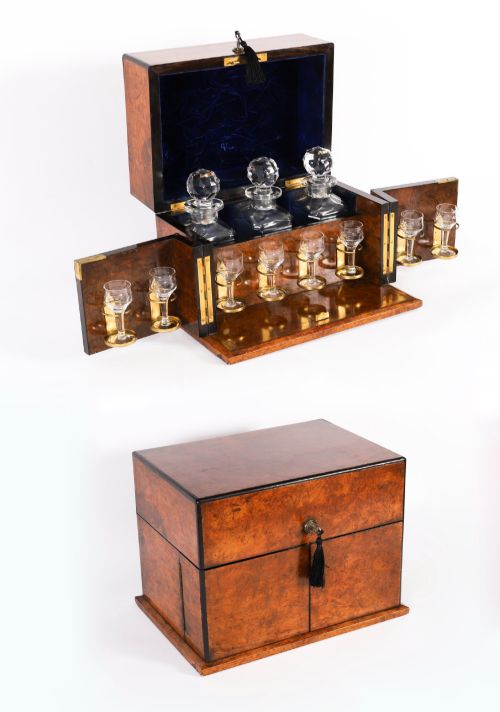
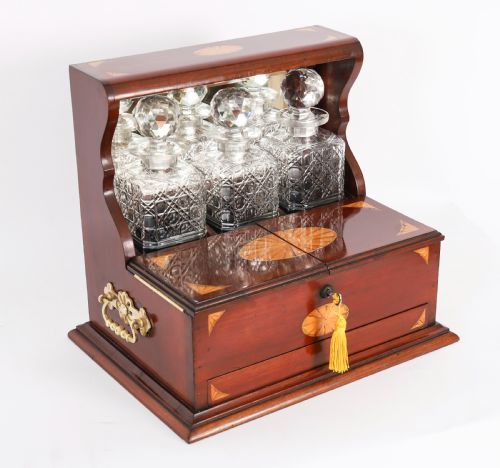
Victorian liqueur decanters include cut glass vessels, tantalus sets, and fitted stands housed in materials like mahogany, satinwood, and brass. These pieces range from simple single bottles to elaborate games compendiums and silver-plated trays designed for formal entertaining.
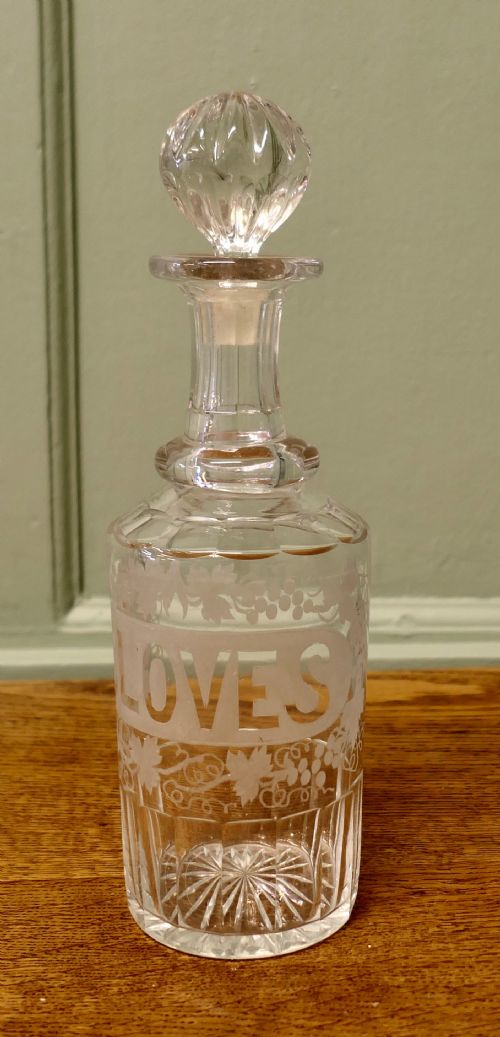
You are most likely to encounter cut crystal bottles, silver-plated stands, and Black Forest wooden caddies representing the later nineteenth century. The selection spans etched crystal decanters, miniature champagne bottles, and paired liqueur ewers from the 1860s through to the early twentieth century.
How they were made
Glassmakers utilised lead crystal and cranberry glass, applying deep cutting and delicate etching to create the patterned bodies of the decanters. These glass vessels were then paired with silver-plated mounts, enamel highlights, and hinged brass hardware.
Cabinetmakers constructed the accompanying caddies and tantalus frames from dense timbers such as mahogany and satinwood, often incorporating intricate wood inlays. Metalworkers fabricated the silver-plated trays, decanter labels, and locking mechanisms that secured the bottles within their stands.
Victorian Liqueur Decanters Retail Price Guide 2026
Typical asking prices for victorian liqueur decanters among the pieces listed under this phrase on Sellingantiques today, from the lower quarter to the upper quarter. They describe what is for sale here now, not the wider market.
Materials recorded across the inventory include cut glass, lead crystal, silver plate, brass, enamel, satinwood, and mahogany.
What varies in quality
The sophistication of the glass cutting and the clarity of the crystal distinguish finer vessels from simpler production. Heavier lead crystal and crisp, hand-etched botanical or geometric motifs elevate a decanter above standard moulded glassware.
The complexity of the housing separates standard stands from superior luxury pieces. Elaborate satinwood inlay, fully functioning locking tantalus frames with working keys, and heavy silver-plated trays indicate higher standards of original craftsmanship.
The Victorian Liqueur Decanters Glossary
- Tantalus
- A locking wooden cabinet or stand that holds decanters securely while displaying their contents, preventing access without a key. This clever device earned its name from the mythological figure punished by being placed just out of reach of water.
- Cranberry glass
- A rich red-pink transparent glass created by adding gold to the molten batch during manufacturing. It became particularly popular for decorative tableware during the nineteenth century.
- Silver plate
- A thin layer of silver fused to a base metal, typically copper or brass, to provide the appearance of solid silver at a lower cost. It was widely utilised for the trays, stands, and mounts accompanying Victorian drinkware.
- Ewer
- A large jug with a wide spout and a curved handle, often used for pouring water or wine. In Victorian drinks sets, they occasionally served as decorative alternatives to standard decanter bottles.
Victorian Liqueur Decanters: Frequently Asked Questions
What is a tantalus?
A tantalus is a locking wooden frame that holds decanters securely in place so guests cannot pour a drink without a key. The clever mechanism keeps the stoppers locked down while still displaying the cut crystal bottles.
These pieces combine cabinetmaking with glassware, often featuring fine timbers like satinwood and mahogany alongside brass hardware.
Are the stoppers original?
Matching stoppers are common on period pieces, though replacements happen frequently over long histories of use. Examine the ground glass neck and the base of the stopper to see if they share matching wear patterns and hand-cut numbers.
Original stoppers sit snugly within their specific decanters, having been ground to fit that exact opening during manufacture.
How were liqueur sets used?
Victorian hosts used these matched sets and portable stands to serve after-dinner cordials and spirits in the drawing room. The lockable caddies and tantalus stands kept expensive imported liqueurs secure from household staff.
These collections typically included a set of small glasses arranged alongside the decanters on a silver-plated tray or inside a wooden cabinet.