




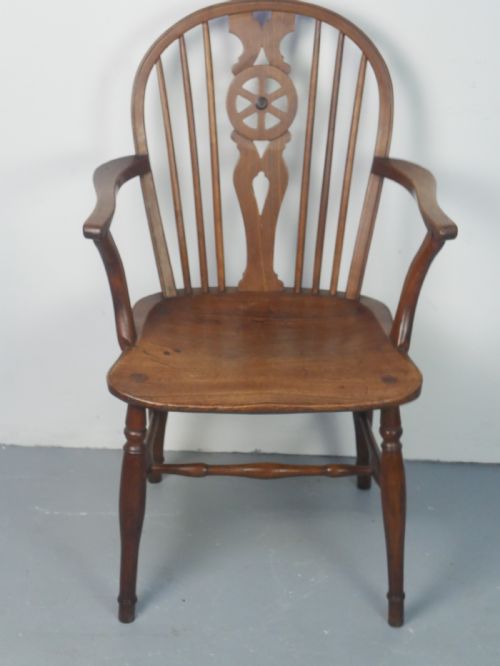
Vintage Windsor Carver Chair
A vintage windsor carver chair brings tactile English country craftsmanship straight to the sitting room through honest vernacular seating.
Vintage Windsor Carver Chair
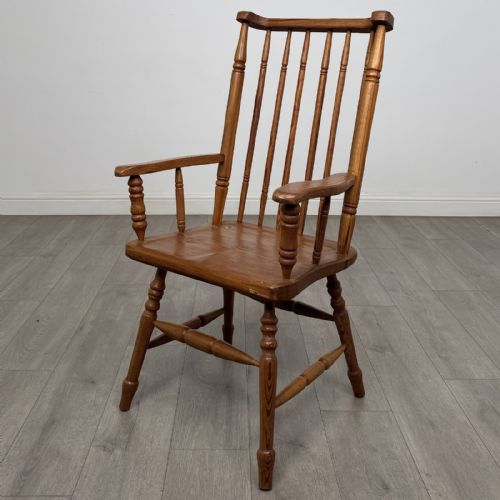
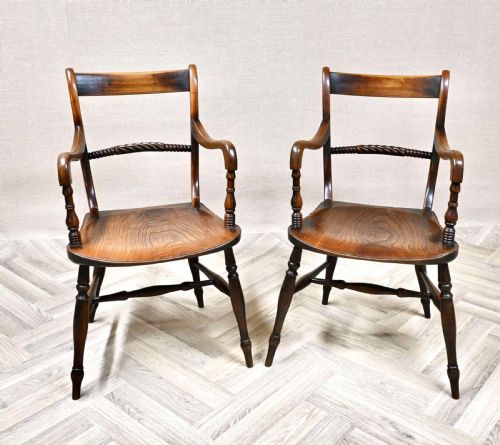
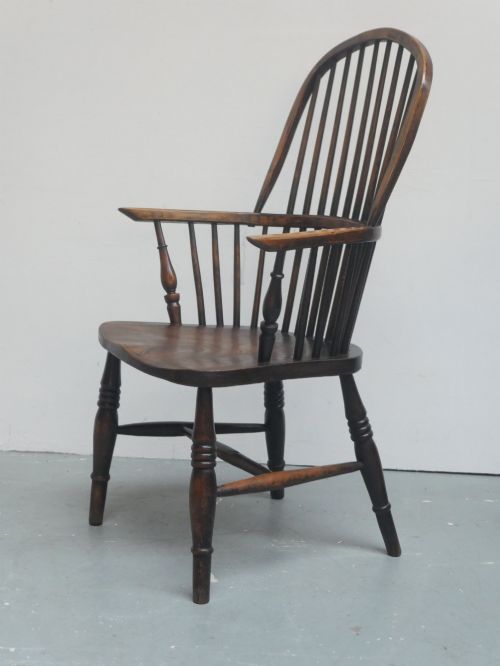
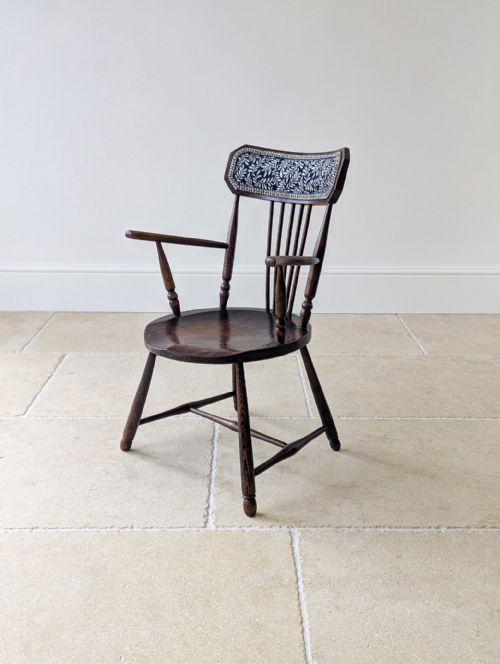
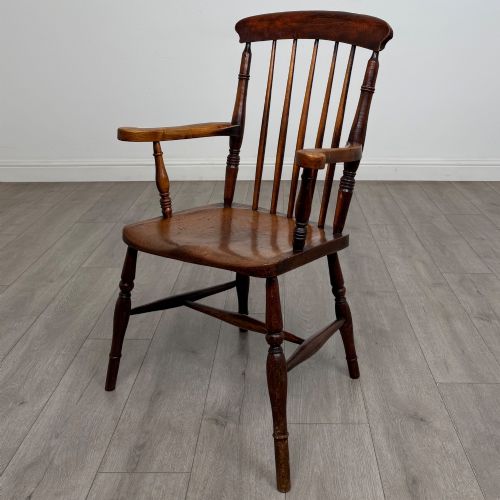
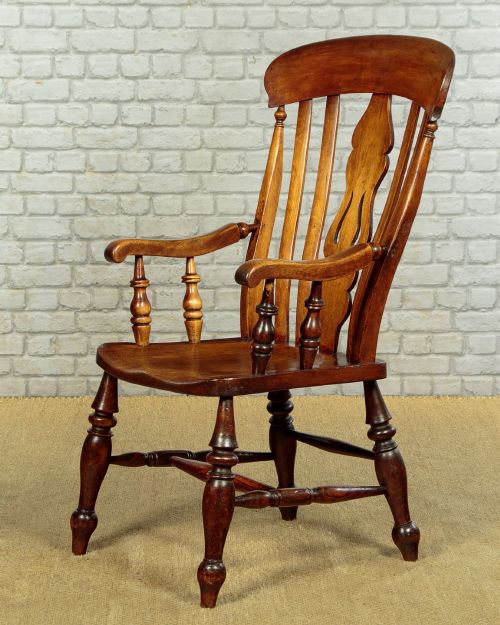
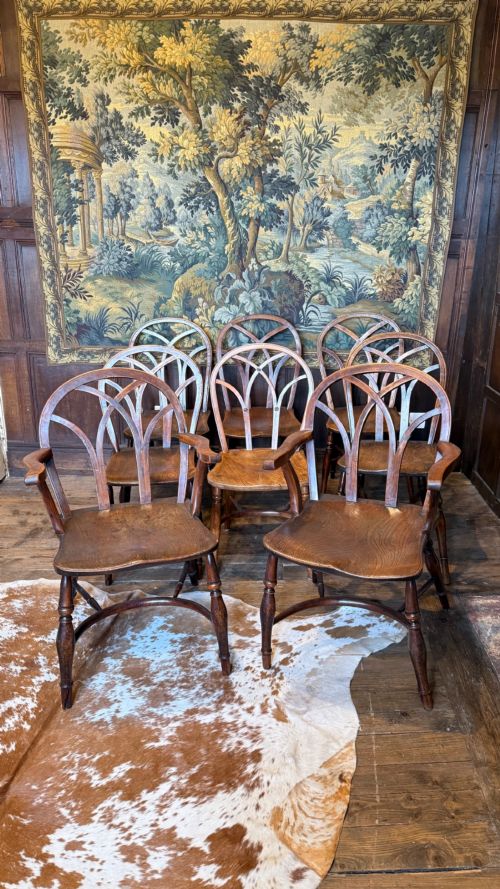
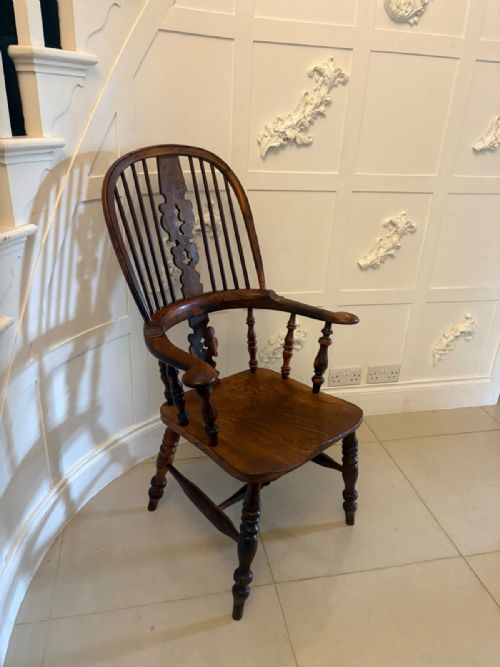
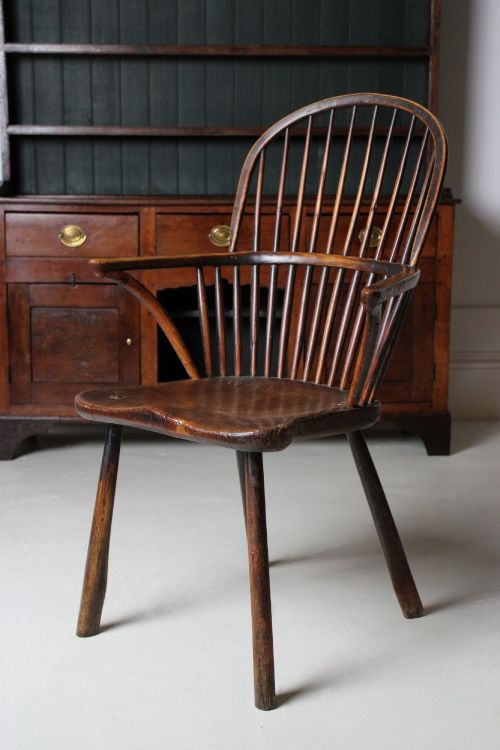
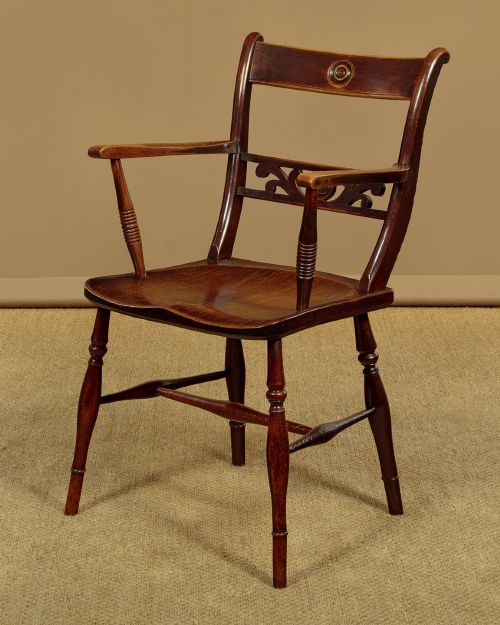
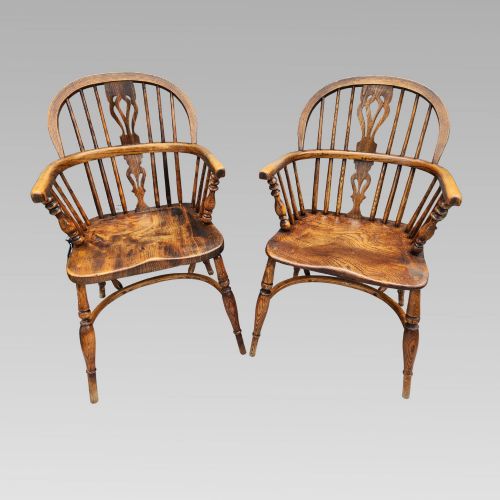
A vintage windsor carver chair is a substantial timber armchair designed for the kitchen, farmhouse, or country house, featuring a supportive back and distinct armrests. These sturdy seats appear in formats ranging from low-back and bar-back configurations to grand comb-back and high-back iterations across English country vernacular traditions.
The pieces on this page span the Georgian era through to the early twentieth century, taking in Victorian and Arts and Crafts periods. Makers of the time shaped them as functional seating, producing armchairs and elbow chairs that served utilitarian domestic roles before becoming sought-after decorative antiques.
Woods and construction
Cabinet makers and bodgers constructed these chairs by combining contrasting native timbers, typically pairing robust elm seats with flexible ash or beech for spindles and bentwood elements. Yew and oak also appear, supplying varied grain patterns and natural strength to the hoop backs and arms.
Joinery relied on traditional turning and steam bending rather than complex metal fixings, locking spindles directly into carved saddle seats. This saddle-shaped seat base provided deep comfort while anchoring the vertical stick-backs and lath-backs firmly in place.
Vintage Windsor Carver Chair Retail Price Guide 2026
Typical asking prices for vintage windsor carver chair among the pieces listed under this phrase on Sellingantiques today, from the lower quarter to the upper quarter. They describe what is for sale here now, not the wider market.
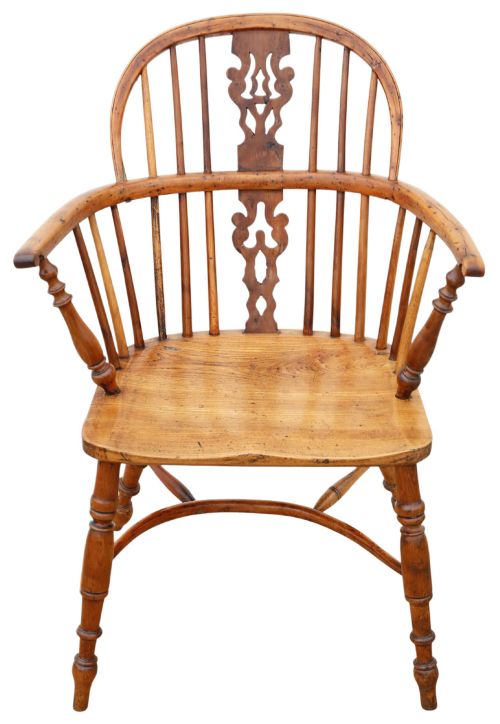
A crinoline stretcher offers your feet a dainty curved iron or wooden perch while you sit.
Proportion and timber selection
Superior examples distinguish themselves through the choice and figuring of the timber, particularly where richly grained yew or deeply figured elm has been selected for the seat and arms. The finesse of the spindle turnings and the balance of the overall proportions further separate standard utility pieces from finer country house commissions.
Age and honest patination dictate the character at the upper end of the scale, where centuries of daily use have deepened the lustre of the wood. The presence of regional traits, such as crinoline stretchers or distinct Nottinghamshire framing, adds substantial depth of interest to individual chairs.
The Vintage Windsor Carver Chair Glossary
- Carver chair
- An armchair designed for use at the dining table or desk, often featuring elbow rests that match simpler dining chairs.
- Comb-back
- A Windsor chair style where the vertical spindles extend upward to support a horizontal headrest piece resembling a decorative comb.
- Hoop back
- A continuous curved wooden bow that forms the back and arm supports of the chair in a single fluid line.
- Saddle seat
- A thick wooden seat base scooped out into a comfortable, ergonomic depression resembling a horse saddle.
- Vernacular
- Objects made by local craftsmen using traditional regional designs and native materials rather than formal academic styles.
Vintage Windsor Carver Chair: Frequently Asked Questions
What is a windsor carver chair?
A windsor carver chair is a wooden armchair featuring distinct vertical spindles inserted into a solid carved seat base. These robust seats served practical daily roles in country kitchens and farmhouses.
Over generations, their functional forms evolved into classic decorative seating. They remain prized for their honest construction and tactile timber surfaces.
How do I tell different periods apart?
Differentiating periods relies on observing subtle shifts in back design, turning styles, and timber choice. Georgian and early nineteenth-century pieces often display simpler stick-back or comb-back arrangements.
Later Victorian and Arts and Crafts examples introduce lath-backs, bar-backs, or more elaborate steam-bent hoops. Examining the wear on the wooden seat offers further clues to age.
Were these chairs used outdoors?
These armchairs were principally designed for interior domestic settings such as farmhouse kitchens and country house dining rooms. Their sturdy timber construction meant they handled heavy daily household service.
Using them outside exposes the native hardwoods to damp weather that damages historic joints. Keeping them indoors preserves the original patination and timber integrity.
How do I live with antique timber chairs?
Living with these wooden armchairs involves placing them away from direct heat sources and sudden temperature swings. This prevents the native elm, ash, and beech from drying out and splitting.
Routine care requires little more than occasional dusting with a dry cloth to maintain the finish. Their sturdy frames easily accommodate modern domestic seating needs.