


Vintage Windmill Wall Art
Vintage windmill wall art brings the turning blades and quiet waterways of historic landscapes directly into your interior.
Vintage Windmill Wall Art
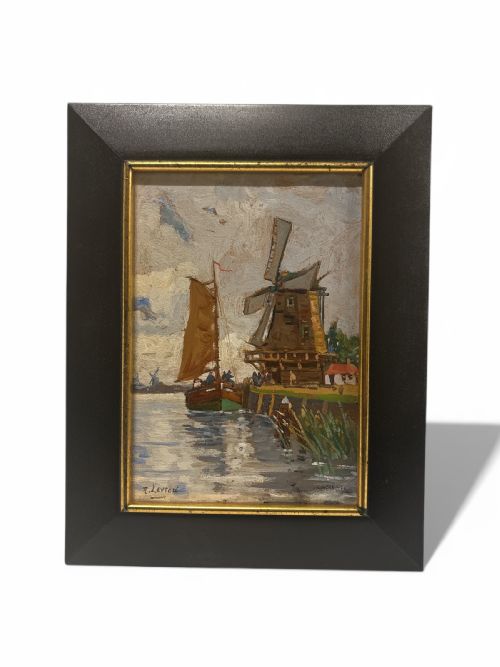
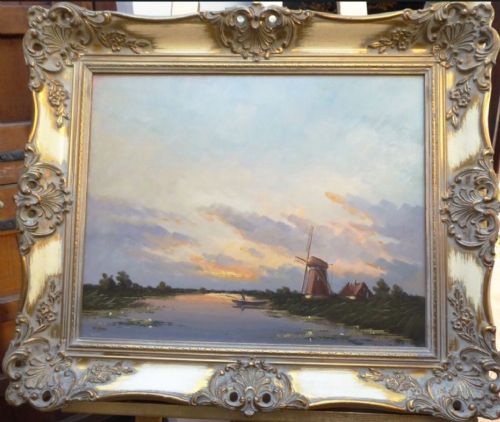
Vintage windmill wall art encompasses painted scenes of historic mills, marshes, and waterways ranging from the nineteenth century through the mid twentieth century. Buyers seeking this subject matter often encounter Dutch river landscapes and coastal views that capture these working structures in oil or watercolour.
The selections available here lean heavily towards nineteenth century canvases and post war impressions, alongside Edwardian and mid century interpretations. Works such as Dutch landscape paintings and Norfolk broads river scenes dominate the forms, reflecting traditional rural life across European and British waterways.
A variety of stylistic approaches appear across the selection, moving from nineteenth century British marine painting and Dutch realism to naive art and impressionist interpretations. Whether examining a sunset landscape or an early twentieth century canvas by R Leyton, each piece offers a distinct window into agrarian history.
Materials and Technique
These works rely primarily on oil paint applied to canvas or paper, accompanied by occasional watercolours on paper. Artists utilised traditional pigments to build up textured brushwork, capturing the atmospheric light over marshes and rivers.
Framing often involves gilt moulding that enhances the depth of the painted surface, particularly on nineteenth century and Edwardian canvases. The physical construction combines wooden stretchers and supports appropriate to the period of creation.
One nineteenth century listing manages to sneak a mechanical automaton into the company of quiet rural oil paintings.
Assessing Quality and Execution
Quality rests upon the handling of light and atmospheric perspective within the landscape, distinguishing confident brushwork from rigid application. The ability of an artist to render the movement of sails and water brings life to the composition.
The integrity of the original surface, the depth of the oil pigment, and the harmony of any associated gilt moulding contribute to the overall presence of the piece. Masterful handling of colour and scale separates prominent works from simpler decorative renderings.
R Leyton·Thomas Bush Hardy·Edward Seago·Kershaw Schofield
The Vintage Windmill Wall Art Glossary
- Impressionist
- A style of painting emphasising light and its changing qualities rather than precise detail. Artists applied visible brushstrokes to capture the immediate visual impression of a scene.
- Gilt Moulding
- A decorative wooden frame or border coated with a thin layer of gold leaf or metallic gilt. This finish adds brightness and structure around the perimeter of a painting.
- Polder
- A low-lying tract of land enclosed by dikes that forms an artificial hydrological entity. These areas frequently feature in Dutch and East Anglian landscape paintings.
- Automaton
- A relatively self-operating machine or mechanism designed to follow a predetermined sequence of operations. Nineteenth century examples sometimes incorporated mechanical movement into pictorial displays.
- Marine Painting
- Works of art that depict the sea, ships, and coastal views. This genre encompasses both open ocean scenes and sheltered estuaries or river mouths.
Vintage Windmill Wall Art: Frequently Asked Questions
What periods do these paintings come from?
The works span from the nineteenth century through the Edwardian era and into the mid twentieth century, including pieces dated to the eighteen eighties, eighteen nineties, nineteen twenties, and nineteen fifties and sixties.
This broad chronological range allows collectors to select pieces reflecting either nineteenth century realism or post war impressionistic interpretations.
What materials were used to create them?
Artists worked primarily in oil paint on canvas or paper, alongside watercolour on paper. Many pieces incorporate original wooden supports and gilt moulding frames.
The combination of traditional oil pigments and canvas gives these works their enduring structural stability and rich surface texture.
How do I identify a Dutch windmill scene?
Dutch windmill scenes typically feature flat river landscapes, canals, and polders under expansive skies, often painted in the style of nineteenth century Dutch realism or the Dutch school. These compositions focus on traditional rural water management structures.
Titling often references specific locations in Holland or general coastal and canal views characteristic of the region.
Where do these landscape views originate?
The geographical subjects are split between Dutch waterways and British locations such as the Norfolk Broads and the Maas in Holland. Artists travelled across these marshland regions to record working mills and sailing vessels.
This focus on specific waterways provides a documentary record of rural engineering and landscape design from past centuries.
How should I display vintage art at home?
These oil paintings and watercolours suit traditional or transitional interiors, especially when hung on neutral walls that allow the gilt moulding and oil pigments to stand out. Proper placement away from direct sunlight protects the paint layers over time.
Pairing them with appropriate lighting enhances the visible brushwork and atmospheric depth of the canvas.