





Vintage Wind Vane
These vintage wind vane pieces bring authentic folk art character and movement to a rooftop or garden.
Vintage Wind Vane
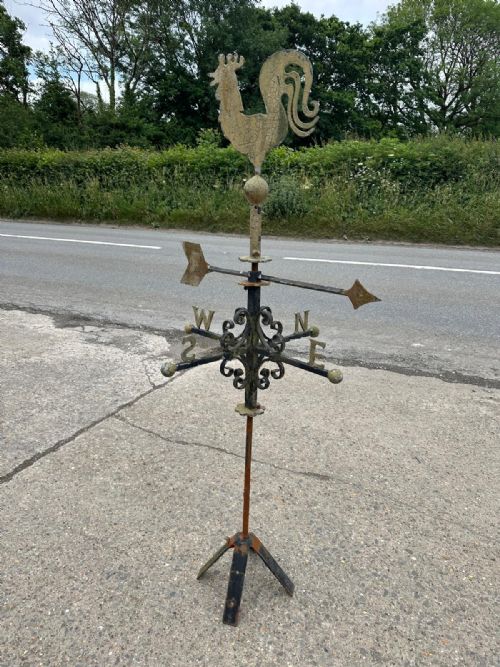
A vintage wind vane encompasses copper cockerels, wrought iron forms, and sheet metal silhouettes designed to indicate wind direction outdoors. These objects emerge from 19th Century, Georgian, Edwardian, and early 20th century periods, often categorized under folk art and rustic country styles.
The most common versions met on this page are copper and iron cockerels, alongside American and English folk art whirligigs and nautical pieces. These sculptures combine functional scientific instruments with decorative sculpture, reflecting traditional craftsmanship from rural and coastal settings.
Materials and construction methods
Construction relies heavily on copper, sheet iron, and wrought iron shaped into recognizable animal silhouettes or mechanical figures. Artisans hammered and cut sheet metal, utilising paint to add surface detail and protection against the elements.
Makers incorporated wood and stone elements into supporting structures or base components where necessary. These enduring materials allowed the vanes to withstand decades of outdoor exposure while maintaining their original folk art aesthetic.
A stoic huntsman silhouette keeps permanent watch alongside a row of proud copper cockerels ready to catch the breeze.
Assessing quality and character
Quality rests upon the sculptural strength of the silhouette and the integrity of the original surface paint or natural verdigris. Stronger examples display crisp hand-beaten shaping in the copper or iron, giving the animal or figure a convincing sense of movement.
The distinction between ordinary and superior pieces often lies in the sophistication of the folk art execution and the depth of age accumulated on the metal. Surface patination achieved through long exposure adds considerable visual weight to the better survivals.
The Vintage Wind Vane Glossary
- Weather vane
- A movable device attached to an elevated structure to indicate the direction of the wind. Traditional versions feature directional arms and a pivoting ornamental top.
- Whirligig
- A wooden or metal folk art figure with moving parts driven by the wind. These kinetic sculptures often depict sailors, animals, or workers in motion.
- Verdigris
- A green patina formed naturally on copper or brass surfaces through atmospheric weathering. This layer protects the underlying metal and indicates considerable age.
- Folk art
- Artistic work created within a traditional culture by self-taught makers. These pieces prioritize utilitarian function and expressive regional style over academic training.
- Anemometer
- An instrument used for measuring the speed of the wind. Early examples combine scientific utility with robust metal construction.
Vintage Wind Vane: Frequently Asked Questions
How do I mount a vintage wind vane?
Most vanes require a secure vertical bracket or mounting rod attached to a stable roof apex or garden post.
Ensure the directional points align correctly with true north, south, east, and west during installation.
Can these wind vanes stay outside?
These pieces were built from durable metals like copper and iron to withstand outdoor weather conditions.
Over decades, exposure develops a natural protective verdigris or weathered paint surface that collectors prize.
What is the difference between a vane and a whirligig?
A standard wind vane pivots to point into the direction of the wind using a balanced directional arrow or silhouette.
A whirligig includes spinning blades or moving mechanical parts powered directly by passing air currents.
How do I date an iron or copper vane?
Dating relies on stylistic clues, construction techniques, and the type of metal or paint present.
Early pieces often display hand-cut sheet metal and period-specific folk art silhouettes rather than modern factory stamping.