


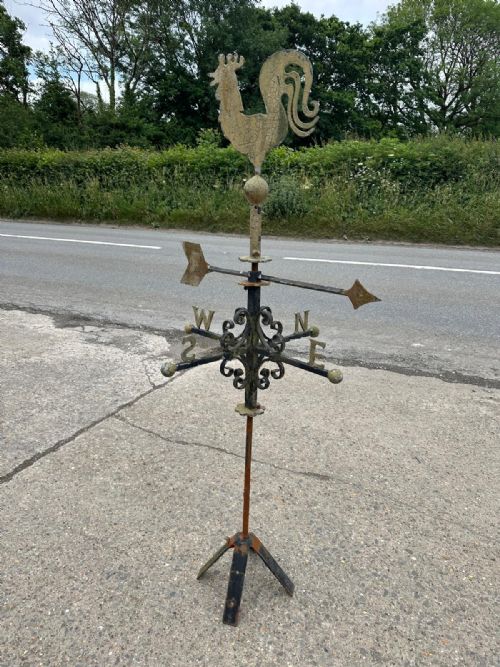


Antique Weather Vane
An antique weather vane brings architectural movement to a garden or roofline, combining practical wind measurement with robust folk art sculpture.
Antique Weather Vane
An antique weather vane is a sculptural indicator designed to show wind direction from a rooftop, spire or garden mount. When you search for this phrase, you encounter traditional forms that range from simple sheet metal silhouettes to intricate three-dimensional figures.
The selections available here predominantly feature animal and figure subjects rooted in folk art traditions. Cockerels, horses, and foxes appear alongside rarer maritime galleons and mythological dragons.
Originating largely from the nineteenth and early twentieth centuries, these pieces bridge utility and decorative sculpture. English and American folk art styles dominate the examples, showing the hand of regional blacksmiths and metalworkers.
How they were made
Makers shaped these objects using beaten copper, sheet iron, and wrought iron, often mounted on wooden or stone supports for display. Copper lent itself to repoussé work, allowing artisans to hammer hollow figures into shape from two halves.
Iron components provided the structural rigidity needed to withstand outdoor exposure, frequently finished with layers of old paint. The combination of sheet metal and forged iron created durable directional indicators designed for decades of service against the elements.
The listings show a strong presence of copper and iron materials, spanning nineteenth-century folk art to early twentieth-century examples.
What varies in quality
Quality rests primarily in the sculptural presence of the silhouette and the character of the surface patination. Examples retaining original weathered paint or deep natural verdigris on copper hold greater visual appeal than stripped or heavily restored surfaces.
The distinction between a standard directional arrow and a finely modelled creature, such as a galloping horse or a huntsman silhouette, defines the upper tier of the range. Strong proportions and clear regional folk art characteristics elevate an ordinary utility object into sculpture.
Negretti and Zambra
The Antique Weather Vane Glossary
- Repoussé
- A metalworking technique where a malleable sheet of copper is hammered from the reverse side to form a raised design. This method allowed makers to create hollow, lightweight figures for rooftop mounting.
- Verdigris
- The green patina that forms naturally on copper and brass through atmospheric exposure over many decades. Collectors value an undisturbed verdigris surface for its authentic age and protective quality.
- Whirligig
- A wind-driven folk art sculpture with moving parts that spin or reciprocate in the breeze. These kinetic pieces often depict figures in motion, such as teeter-totters.
- Silhouette
- A solid outline portrait cut from sheet metal, common in early weather vanes. This flat form contrasts with full-bodied, three-dimensional copper sculptures.
Antique Weather Vane: Frequently Asked Questions
How do I mount an antique weather vane indoors?
Mounting an antique weather vane inside typically involves a bespoke iron stand or a securely fixed wooden base that supports the vertical rod.
Place the piece away from heavy foot traffic to protect delicate sheet metal components and old paint surfaces from accidental knocks.
What is the difference between iron and copper weather vanes?
Iron weather vanes generally rely on forged or sheet iron to create heavy, dark silhouettes that weather to rust over time.
Copper vanes offer a lighter construction formed by hammered halves that develop a distinctive green verdigris patina rather than oxidizing into scale.
How can I tell a nineteenth-century vane from a modern reproduction?
Nineteenth-century examples show genuine wear patterns, hand-cut metal edges, and old fixings that match historical manufacturing techniques.
Inspect the surface for authentic paint layering and natural oxidation rather than chemical ageing treatments applied to recent copies.
Why do cockerel designs appear so often?
The cockerel served as a traditional Christian symbol of vigilance and protection against evil spirits when placed at the highest point of a building.
Over centuries, this practical sentinel became a staple motif for blacksmiths and folk artists across England and America.