


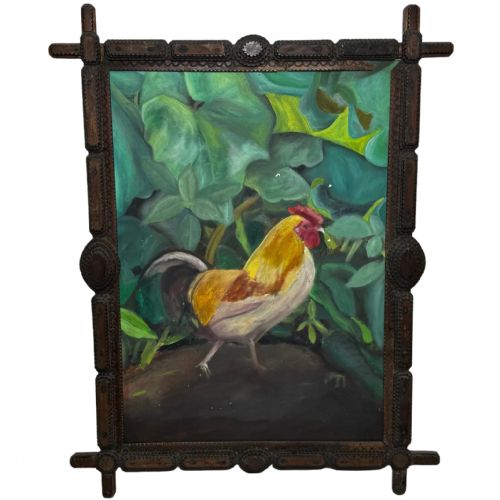


Folk Art Cockerel
These folk art cockerel pieces bring raw provincial character to a room, ranging from old painted weather vanes to carved shop displays.
Folk Art Cockerel
A folk art cockerel stands as a vibrant expression of rural craft, taking form as weather vanes, oil paintings, money boxes, textile panels, and carved shop displays. When searching this phrase, buyers encounter working-yard items and decorative provincial objects created across various European traditions.
The versions most commonly met on this page span the nineteenth and early twentieth centuries, drawing from English, French, Greek, and Spanish origins. These pieces range from sheet metal roof markers to framed canvas works and carved wooden figures.
How they were made
Metal items utilise beaten copper and painted tinplate, shaped to catch the wind on roofs or serve as donation boxes with tactile surfaces. Artisans applied oil paint directly onto iron and tin, allowing weathering to create authentic patination over decades.
Wooden and textile examples rely on solid carved timber and embroidered linen or silk panels. Makers used hand-tooling and traditional stitching to build texture, as seen in Greek island embroideries and French provincial shop carvings.
The site listings feature works spanning the nineteenth century through the Edwardian era and the 1930s.
What varies in quality
Quality rests in the directness of the carving and the honesty of the surface paint, where untouched layers show true age rather than contrived distress. Pieces with crisp silhouettes and balanced proportions outrank tired items that have lost their original definition.
The integrity of the material dictates upper tier examples, whether through substantial copper gauge on a weathervane or fine needlework density in a textile panel. Maker intent and regional vernacular strength separate ordinary workshop output from genuinely striking provincial design.
The Folk Art Cockerel Glossary
- Weathervane
- A movable device attached to an elevated structure to show the direction of the wind. These metal fowl figures served practical agricultural purposes before entering the collector market.
- Patina
- The surface alteration resulting from age, wear, and exposure to the elements. On these painted and metallic pieces, original skin adds visual depth and historical truth.
- Provincial
- Originating from regions outside the capital city, carrying local stylistic traditions. French and English provincial works show distinct rural interpretations of domestic fowl.
- Donation box
- A secure container used to collect funds, often fashioned with painted tinplate or metal mechanisms. These functional objects doubled as trade displays in public spaces.
- Embroidery
- The craft of decorating fabric using a needle to apply thread or yarn. Greek island textile panels utilise this technique to portray traditional motifs.
Folk Art Cockerel: Frequently Asked Questions
What were folk art cockerel weathervanes used for?
These metal figures sat atop barns and roofs to indicate wind direction for farming communities.
Over time, exposure to the weather created the weathered paint and verdigris surfaces that collectors value today.
How do I identify a nineteenth century piece?
Nineteenth century items show genuine hand-hammered construction and layered old paint rather than modern chemical distressing.
Examining the fixings, metal gauge, and timber grain helps confirm the period of origin.
Are these objects meant for outdoor display?
While many items like copper weathervanes began outdoors, historic pieces benefit from stable indoor humidity to preserve fragile paint.
Protecting fragile tinplate and textiles from direct weather ensures their long-term survival.
Where do most of these items originate?
The available selection draws from English, French, Greek, and Spanish rural traditions.
Each region employed distinct materials, from Catalan oil paintings to Skyros embroideries.