



Vintage White Pearl Ring
A vintage white pearl ring brings together lustrous organic gems and sparkling diamonds in settings of gold and platinum that span multiple decades.
Vintage White Pearl Ring
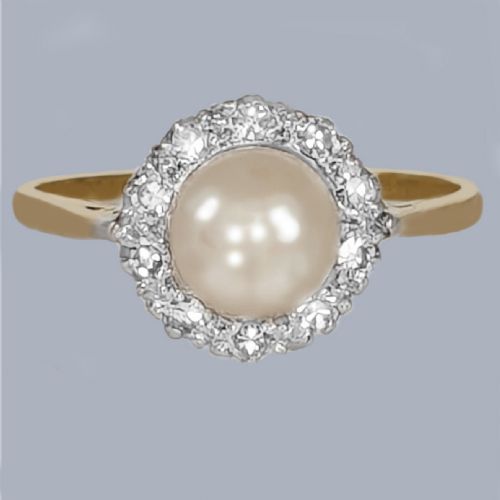
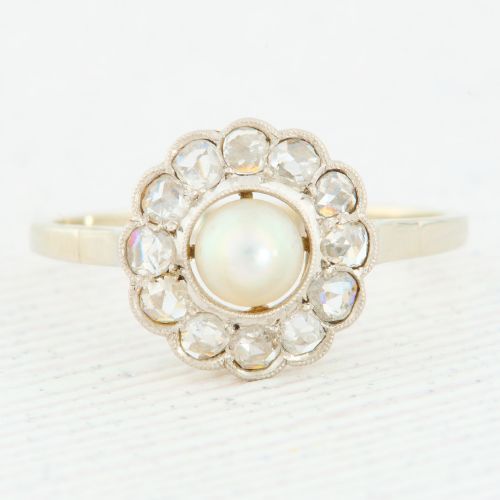
When you search for a vintage white pearl ring, you encounter pieces spanning from the Edwardian and Art Deco eras through to the mid-century period. Cluster rings and cocktail designs dominate the selection, often pairing pearls with diamonds in geometric or floral arrangements.
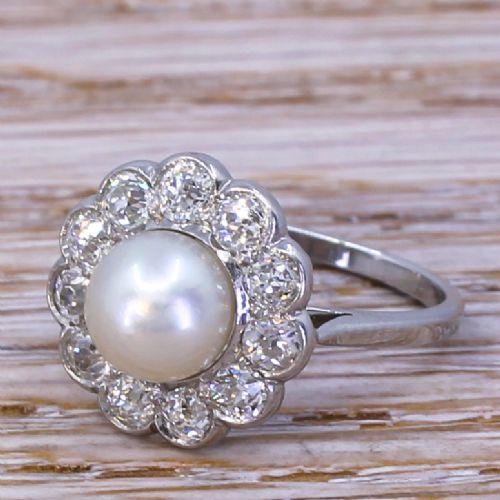
You are most likely to meet cluster configurations where a central pearl or diamond is surrounded by smaller stones. These designs draw upon styles from 1900 up to the 1960s, reflecting changing tastes in jewellery design across the twentieth century.
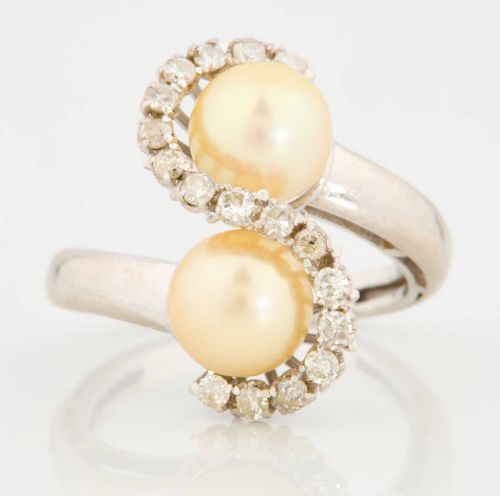
The origins of these pieces stretch from the early twentieth century through the 1950s and 1960s. Formats range from simple solitaires and crossover bands to substantial cocktail rings set with considerable diamond weight.
Materials and construction
Goldsmiths and platinum smiths fashioned these rings using precious metals including 18ct gold, white gold, and platinum. Platinum provides the strength needed for intricate Edwardian and Art Deco settings, while gold offers a warm contrast to white pearls and diamonds.
The construction relies on securing pearls alongside diamonds using claw settings, bezels, and platinum work. Natural pearls, saltwater pearls, and cultured pearls are paired with old cut diamonds to create textured surfaces and contrasting finishes.
Some pearls prefer to be worn regularly because natural oils from human skin help maintain their moisture and deep lustre.
Assessing quality
Quality in these rings rests on the lustre and origin of the pearl combined with the cut and weight of the surrounding diamonds. Natural saltwater pearls and substantial old cut diamonds elevate a piece significantly above standard commercial work.
The precision of the metalwork also defines the upper tier of the range. Fine platinum wirework in Edwardian pieces or crisp geometric symmetry in Art Deco examples demonstrates superior craftsmanship.
The Vintage White Pearl Ring Glossary
- Cluster ring
- A ring featuring a central stone surrounded by a cluster of smaller gems. This configuration maximises visual impact by grouping diamonds around a central pearl.
- Old cut diamond
- A diamond cut in the late nineteenth or early twentieth century featuring a small table and high crown. These stones produce a distinctive soft glow rather than modern brilliant sparkle.
- Platinum
- A dense, durable white metal prized for fine jewellery settings. Its strength allows for delicate openwork without risking the security of the stones.
- Natural pearl
- A pearl formed organically within an oyster without human intervention. These pearls possess a deep, organic lustre valued by collectors.
- Crossover ring
- A ring design where the band sweeps across the finger in opposing curves. This style often highlights two principal gems meeting at the centre.
Vintage White Pearl Ring: Frequently Asked Questions
How do I care for a pearl ring?
Pearls are relatively soft organic gems that require gentle handling to preserve their lustre. Avoid exposing them to harsh chemicals, perfumes, or ultrasonic cleaners.
Clean your ring using a soft damp cloth after wearing and store it separately from harder gemstones to prevent scratching.
Are these rings suitable for daily wear?
Many vintage rings are robust enough for regular wear, particularly those set in platinum or heavy gold. However, pearls demand more care than diamonds due to their lower hardness on the Mohs scale.
Consider removing the ring during strenuous activities or housework to protect the pearl from impacts and abrasions.
How can I tell an Edwardian ring from an Art Deco one?
Edwardian rings typically feature delicate, lace-like platinum work with floral motifs and softer curves. The Belle Epoque influence brings an airy lightness to the metal.
Art Deco rings shift towards bold geometric shapes, sharp lines, and symmetrical cluster arrangements that reflect the modernism of the 1920s and 1930s.
What is the difference between natural and cultured pearls?
Natural pearls form entirely by chance when an irritant enters an oyster in the wild. They are uncommon and highly prized in antique jewellery.
Cultured pearls are created with human assistance by placing a nucleus inside the oyster, initiating the same pearl-producing process under controlled conditions.