


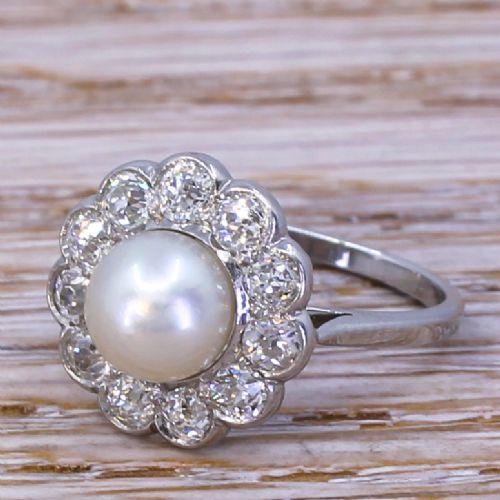

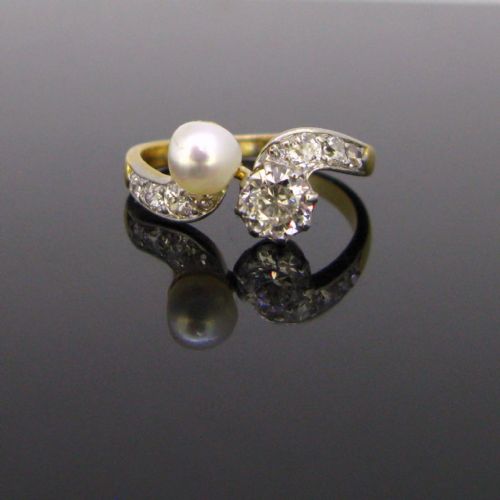

Platinum Pearl Dress Ring
A platinum pearl dress ring brings together lustrous organic gems and crisp precious metal across several defining twentieth-century design movements.
Platinum Pearl Dress Ring
A platinum pearl dress ring combines central pearls with diamonds set in platinum, white gold, or yellow gold foundations. These pieces span the Edwardian, Art Deco, and Mid-Century periods, showing how jewellers adapted the form through changing decades.
Buyers encounter cluster rings, crossover toi et moi designs, and trilogy settings. The Edwardian examples often pair pearls with old-cut diamonds in delicate mountings, while Art Deco versions employ geometric lines and bolder stone arrangements.
Origins stretch from domestic British workshops to French ateliers, using precious metals combined with natural saltwater pearls and blister pearls. The resulting rings serve as statement hand adornments that retain historical character.
Materials and construction methods
Jewellers utilised platinum and white gold alongside traditional 18ct yellow gold to form secure mountings for pearls and diamonds. Platinum provided the tensile strength needed for intricate Edwardian and Belle Epoque openwork without adding excessive bulk.
Gems were secured using claw settings, bezel techniques, and pave work, surrounding natural pearls with old-cut and rose-cut diamonds. Metalsmiths combined gold shanks with platinum settings to contrast warm yellow bands against bright white gem platforms.
Some pearls prefer wearing a soft jumper over hard metal tasks.
Distinguishing quality across the range
Quality rests upon the natural orient and surface skin of the pearl, alongside the cut and brilliance of accompanying diamonds. Finer examples display harmonious proportions between the central gem and its surrounding stones.
The precision of metalwork sets superior pieces apart, particularly where delicate millegrain edges and pierced platinum galleries remain crisp and intact. Heavier gold shanks and robust structural integrity also mark out better-made dress rings.
The Platinum Pearl Dress Ring Glossary
- Cluster ring
- A ring design featuring a central gem surrounded by a tight halo of smaller stones, typically diamonds encircling a pearl. This arrangement maximises visual impact and light reflection on the finger.
- Toi et Moi
- A French term meaning you and me, describing a ring with two main opposing or crossover gems representing two souls intertwined. Edwardian versions frequently paired a pearl with a diamond in this configuration.
- Millegrain
- A decorative technique involving tiny raised metal beads along the edges of a setting. This adds a soft texture that defines Edwardian and Art Deco platinum work.
- Blister pearl
- An organic gem formed when a pearl grows attached to the inside shell of an oyster rather than within the tissue. These possess a distinctive domed front and a flat back used in specific antique settings.
- Old-cut diamond
- A hand-faceted diamond cut before modern machine standards were established, characterised by a smaller table, higher crown, and open culet. These stones catch candlelight with a softer, broader twinkle than modern brilliants.
Platinum Pearl Dress Ring: Frequently Asked Questions
How do I care for an antique pearl ring?
Pearls are organic gems that require gentle handling, so avoid exposing them to harsh chemicals, perfumes, or ultrasonic cleaners. Wipe them softly with a damp cloth after wearing and store them away from harder jewellery to prevent scratching.
Have the setting checked periodically by a jeweller to ensure the claws holding the pearl and diamonds remain secure. Regular inspection prevents the soft gem from shifting within its platinum or gold mount.
Are pearls in these rings natural?
The pieces feature natural pearls formed organically in saltwater environments without human intervention. This natural origin distinguishes antique pieces from later cultured pearl jewellery.
Examining the pearl under magnification reveals the subtle irregularities characteristic of natural growth formations. These organic traits confirm the age and authenticity of Edwardian and Art Deco mountings.
What is the difference between Edwardian and Art Deco styles?
Edwardian rings lean towards delicate floral motifs, lace-like platinum openwork, and flowing curves inspired by Belle Epoque elegance. They often feature intricate millegrain detailing around old-cut diamonds and pearls.
Art Deco rings introduce strict geometric lines, symmetrical layouts, and sharp angles that reflect modernist architecture. The settings become more streamlined while maintaining high contrast between white platinum and lustrous pearls.
Can these rings be resized?
Many platinum and gold rings can be altered by a skilled jeweller, though the presence of delicate side gallery work or pavé diamonds requires caution. The shank thickness and metal type dictate how much adjustment is possible.
Consult a specialist workshop experienced in antique jewellery before attempting any alterations. They can protect heat-sensitive pearls and delicate platinum settings during the process.