




Edwardian Natural Pearl Ring
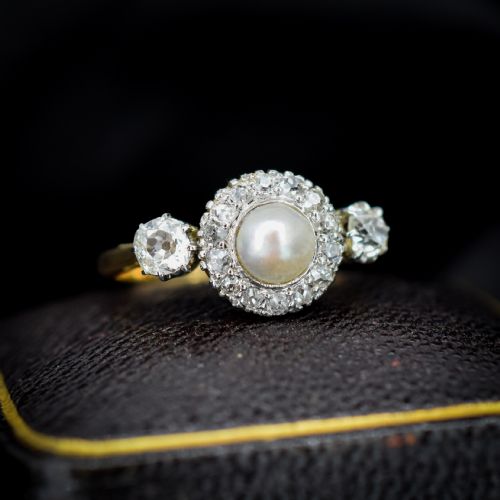
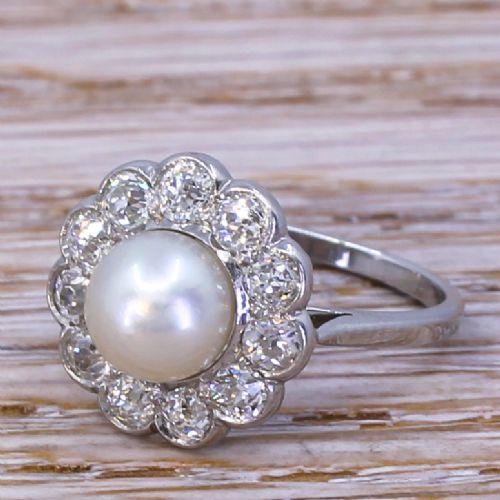
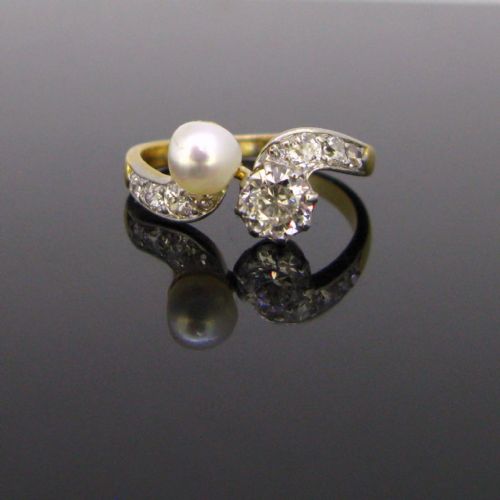
An edwardian natural pearl ring brings together organic ocean gems and old cut diamonds in delicate precious metal settings.
Edwardian Natural Pearl Ring
An edwardian natural pearl ring focuses on organic pearls paired with diamonds in rings dating from the early twentieth century. These pieces emerge from periods spanning the late Victorian era through Art Deco and Art Nouveau.
Originating from British and French workshops, these rings reflect the refined tastes of the Belle Epoque. The forms balance lightness of metalwork with prominent placement of natural pearls.
Materials and Construction
Goldsmiths utilise platinum and white gold alongside traditional yellow gold to form the mountings. Platinum allows for intricate openwork settings that hold diamonds securely without heavy metal borders.
Natural saltwater and freshwater pearls are combined with old cut and rose cut diamonds. Coloured stones such as sapphires, rubies, and jadeite occasionally accent the central pearl.
Listings feature platinum, yellow gold, and white gold alongside natural pearls, diamonds, sapphires, rubies, and jadeite.
Evaluating Quality
The lustre and orient of the natural pearl dictate the visual weight of the ring. Pearls with smooth skin and deep, shimmering iridescence elevate the piece above flat or dull specimens.
The cut and clarity of accompanying diamonds contribute significantly to the overall brilliance. Hand-cut old European and rose cut stones should display crisp facets that catch candlelight effectively.
The delicacy of the metalwork demonstrates the skill of the original maker. Fine millegrain edges and balanced proportions show superior craftsmanship compared to rigid or heavy settings.
The Edwardian Natural Pearl Ring Glossary
- Natural pearl
- A pearl formed entirely by nature in a mollusc without human intervention. These contrast with cultured pearls grown with a bead nucleus inserted by humans.
- Old cut diamond
- A hand-faceted diamond cut before modern machine precision methods were invented. These stones typically exhibit smaller tables and higher crowns.
- Millegrain
- A decorative jewellery technique featuring a line of tiny raised metal beads along an edge. This detail softens harsh metal lines and adds a textural border.
- Cluster ring
- A ring design featuring a central stone surrounded by a grouping of smaller gems. This layout maximises visual impact and sparkle.
- Crossover ring
- A ring where the shank splits or wraps around the finger in an overlapping motif. Styles like Toi et Moi utilise this format to display two principal gems side by side.
Edwardian Natural Pearl Ring: Frequently Asked Questions
How do I care for natural pearls?
Natural pearls require gentle handling because they are organic and softer than gemstones. Wipe them clean with a soft cloth after wearing and keep them away from harsh chemicals and perfumes.
Store pearls separately from harder jewellery to prevent scratching. Periodic stringing checks ensure the silk thread remains strong and secure.
Are these pearls certified natural?
Many period pieces feature pearls formed organically in saltwater or freshwater environments before cultured varieties dominated the market. Laboratory testing can confirm natural origin through x-ray radiography.
Documentation from gemological institutions often accompanies pieces to verify the natural formation of the pearl. Collectors look for these certificates to confirm authenticity.
What metals were used in this era?
Yellow gold served as the primary metal base during the early part of the period. Platinum emerged as a preferred choice for its strength and bright white finish.
Combinations of yellow gold bands with platinum settings appeared frequently to contrast warm tones with bright diamond sparkle. White gold also entered use as platinum grew scarce.
How do I identify an Edwardian ring?
Edwardian jewellery is marked by light, airy metalwork often constructed in platinum or yellow gold. Designs frequently incorporate garland motifs, bows, and openwork lace patterns.
Stones are typically old cut diamonds and natural pearls arranged in symmetrical clusters or crossover lines. The overall aesthetic feels graceful and refined rather than heavy.