



Vintage Wheel Back Chairs
These vintage wheel back chairs bring sturdy British craftsmanship and timeless country character straight to the kitchen or dining room.
Vintage Wheel Back Chairs
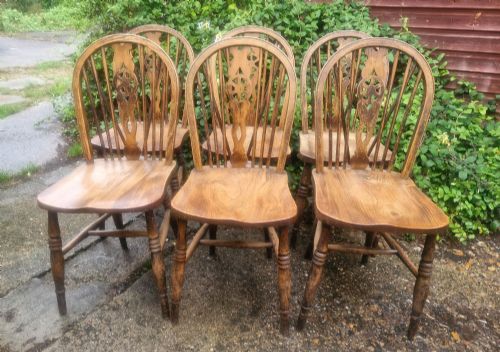
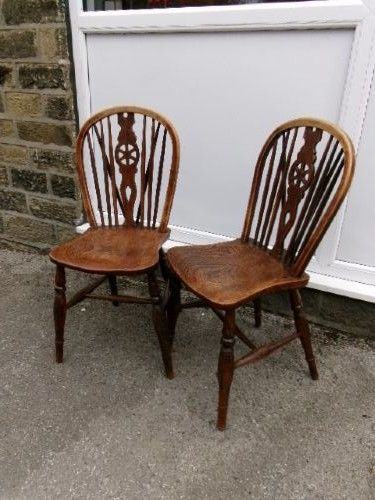
Vintage wheel back chairs are traditional wooden seating forms defined by the distinctive pierced wheel motif incorporated into the central splat of the backrest. Buyers searching this phrase will find a robust selection of Windsor-style seating rooted in domestic and farmhouse traditions. The versions most commonly met on this page span the nineteenth century and the Georgian era, frequently taking the form of kitchen dining chairs or low armchairs.
The evidence shows these sturdy seats appearing in various configurations, from matched sets of six to pairs and individual armchairs. Alongside standard kitchen and dining chairs, the listings include side chairs, desk chairs, and occasional pieces featuring English country and rustic farmhouse styling. Construction frequently bridges the nineteenth century and earlier Georgian vernacular periods.
Materials and construction methods
Makers relied on contrasting British hardwoods to build durable frames, pairing sturdy elm for shaped seats with bent beech or ash for spindles and bows. Selected examples utilise rich yew wood for distinct grain patterns, while occasional pieces incorporate leather and brass details.
The Windsor method of construction involved shaving and turning individual components before inserting them directly into a thick wooden seat. This stick-built technique ensured remarkable structural integrity without requiring complex joinery.
Vintage Wheel Back Chairs Retail Price Guide 2026
Typical asking prices for vintage wheel back chairs among the pieces listed under this phrase on Sellingantiques today, from the lower quarter to the upper quarter. They describe what is for sale here now, not the wider market.
One unexpected variant included here is an eighteen-eighty spinning chair on wheels, proving that Victorians loved mobility even while sitting still.
Distinctions in quality
Quality rests upon the selection of timbers and the grace with which the maker turned the spindles and carved the wheel motif. Finer examples display a cohesive balance between the solid elm saddle seat and the tapered legs, whereas lesser items rely on heavy, unyielding proportions.
The distinction between standard utility seating and superior vernacular craftsmanship lies in the depth of the turning work and the harmonious integration of the hooped backrest. Age-related patination on the wooden surfaces also marks the difference between honest service and excessive restoration.
S&H Jewell
The Vintage Wheel Back Chairs Glossary
- Splatted back
- The vertical central board within a chair back that houses the carved wheel motif. This structural element provides both lower back support and decorative focus.
- Saddle seat
- A thick wooden seat base scooped out to resemble a horse saddle for comfort. Elm was frequently chosen for this component due to its resistance to splitting.
- Windsor chair
- A chair built with stick-frame construction where all components are driven into a solid wooden seat. These forms were widely produced across English rural workshops.
- Thames Valley
- A recognised regional style of English Windsor chairmaking associated with the counties along the river. Pieces originating from this tradition often feature yew wood and refined turning.
- Vernacular
- Everyday objects made by regional craftsmen following local traditions rather than high-style metropolitan fashions. These pieces prioritize utilitarian strength and honest materials.
Vintage Wheel Back Chairs: Frequently Asked Questions
What defines a wheel back chair?
A wheel back chair is a traditional wooden seat featuring a pierced wooden disk carved to resemble a cartwheel set into the centre of the backrest. This decorative splat is typically framed by steam-bent spindles.
Such chairs belong to the broader Windsor family, where individual turned legs and back posts are secured directly into a thick wooden seat rather than a continuous frame.
Are these chairs suitable for daily dining?
These pieces were originally built for heavy domestic use in kitchens and farmhouses, making them naturally suited for daily dining around a sturdy table. Their robust stick-built construction handles regular sitting without losing structural integrity.
Buyers often select matched sets or harlequin groupings of nineteenth-century chairs to create a functional and characterful dining space.
How do I date a vintage wheel back?
Dating relies on examining the timber species, tool marks left underneath the solid seat, and the turning style of the spindles and legs. Georgian examples typically show softer hand-carved contours, while later nineteenth-century versions often display standardised machine turning.
Regional traits, such as the use of yew wood in Thames Valley pieces, also help narrow down the period of origin.
Can I mix different wheel back chairs?
Mixing different chairs is historically authentic, as rural households frequently accumulated seating over generations rather than purchasing uniform suites. Harlequin sets combine chairs of similar age and proportion while introducing subtle variations in timber grain and wheel carving.
Keeping the seat height and general scale consistent ensures the arrangement remains balanced around the table.