






Vintage Whatnot Stand
These vintage whatnot stands offer tiered open shelving for display, uniting practical utility with decorative grace.
Vintage Whatnot Stand
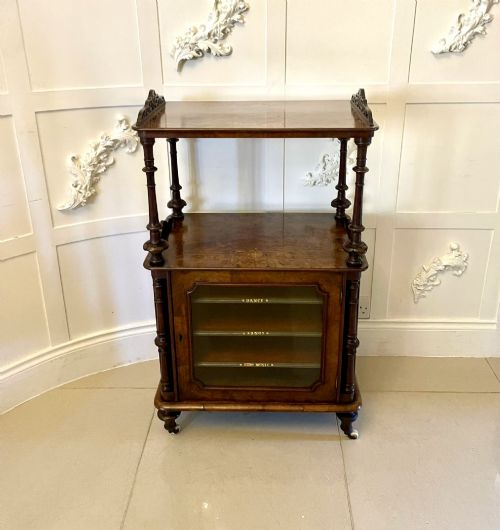
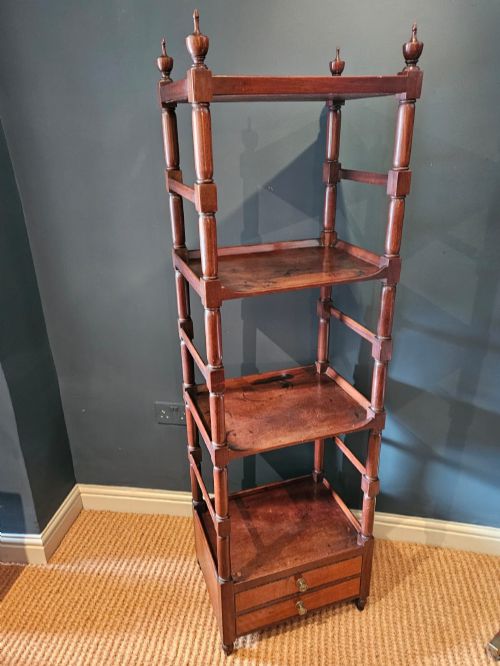
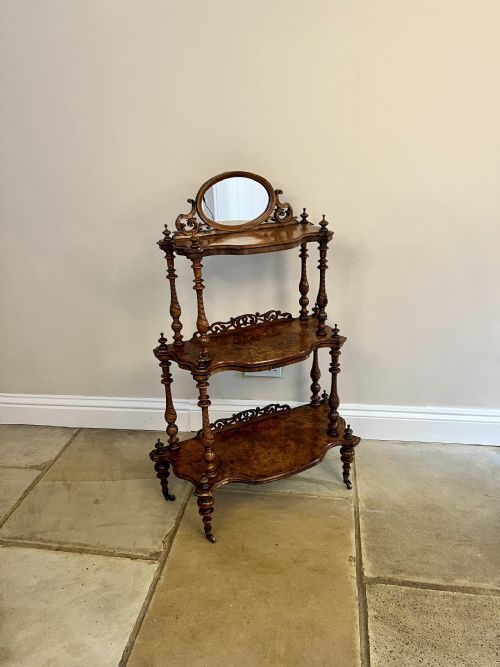
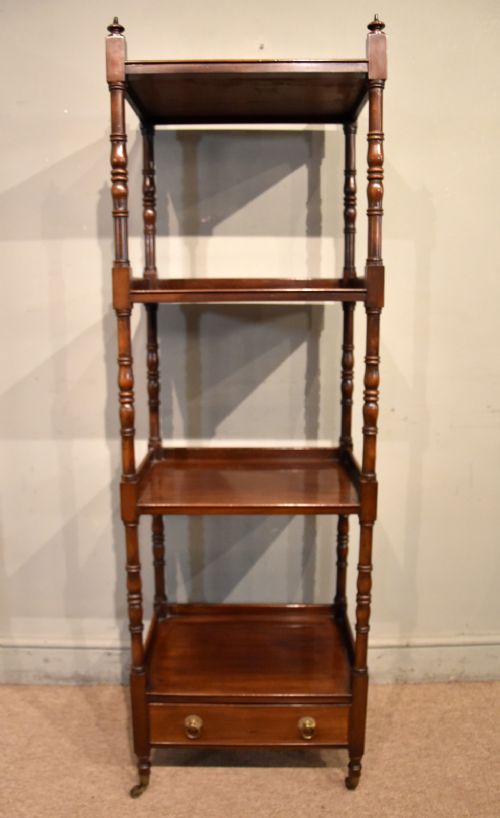
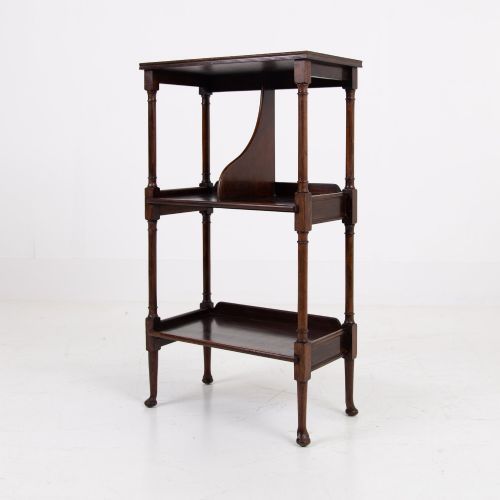
A vintage whatnot stand provides multiple tiers of open shelving designed to display ornaments, books and small domestic objects. These pieces emerge chiefly from the Victorian, Regency and Georgian periods, taking forms such as multi-tiered bookcases, corner units, and music cabinets.
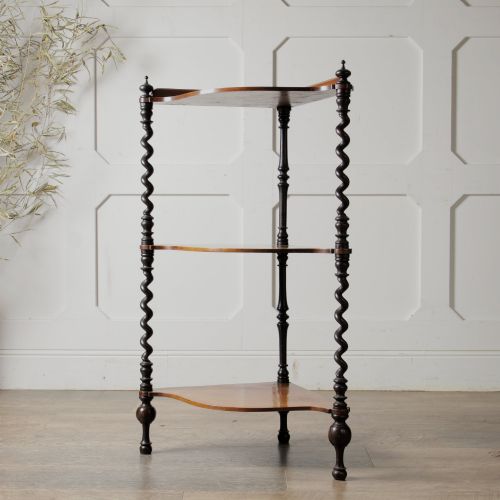
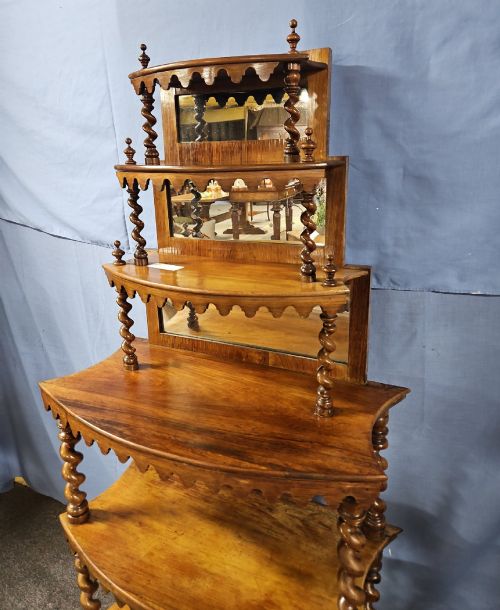
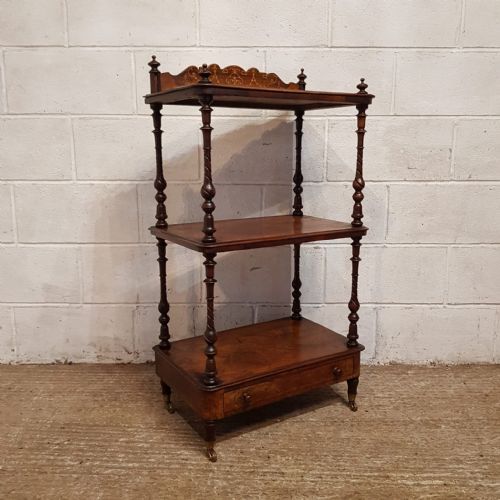
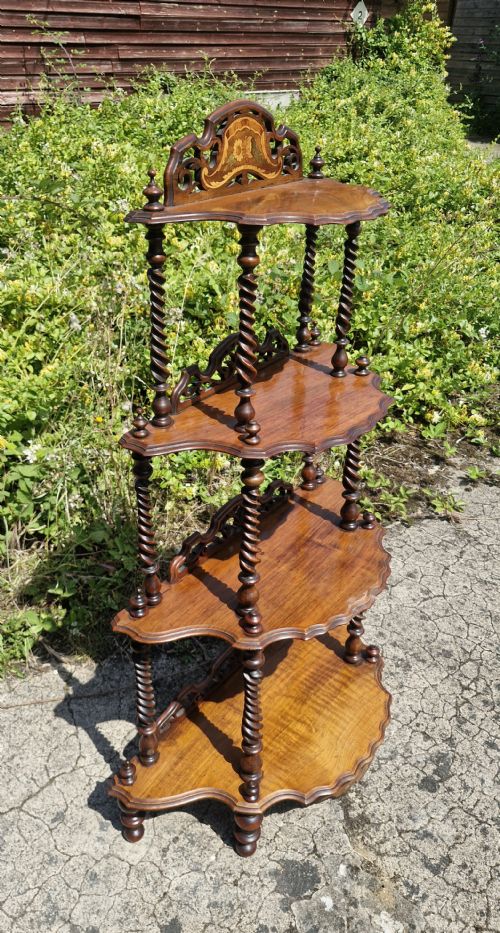
The version most commonly met on this page is the Victorian mahogany or burr walnut tiered stand, often featuring turned supports or barley twist columns. Alongside these, buyers find related forms like etageres, dumb waiters and display shelves sharing the same vertical tiered architecture.
Materials and construction
Cabinetmakers constructed these stands predominantly from timbers such as mahogany, walnut, rosewood and burr walnut, sometimes employing ebonised wood or painted finishes. Workshops incorporated brass details, glass elements, marble tops and ormolu mounts on finer examples.
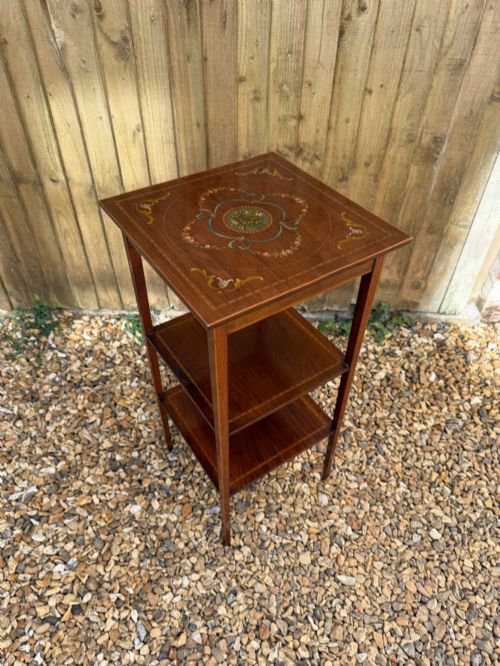
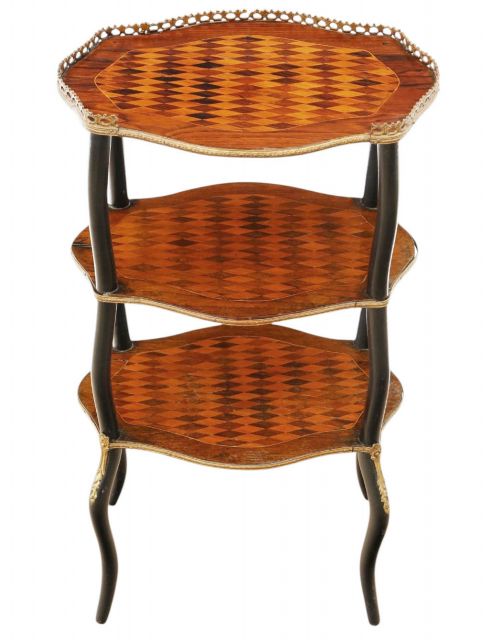
Structural support relied on turned uprights, barley twist columns, or A-frame designs to hold multiple tiers securely. Decorative flourishes included pierced fretwork, inlaid parquetry, and marquetry work across the shelves and cupboard bases.
Vintage Whatnot Stand Retail Price Guide 2026
Typical asking prices for vintage whatnot stand among the pieces listed under this phrase on Sellingantiques today, from the lower quarter to the upper quarter. They describe what is for sale here now, not the wider market.
Some sturdy Victorian stands double as kitchen helpers or butler's trolleys, proving that even ornamental shelves enjoyed doing the heavy lifting.
Distinctions in quality
The division between standard examples and superior pieces rests on the choice of timber and the ambition of the joinery. Figured burr walnut, rich rosewood, and dense mahogany denote higher standing than plain painted surfaces.
Refinement in secondary details elevates a piece further, seen in delicate fretwork, intricate marquetry inlay, and cast brass mounts. The precision of the turned supports and the structural integrity of the stacked tiers determine the overall standard.
Samson & Son London
The Vintage Whatnot Stand Glossary
- Whatnot
- A piece of furniture consisting of a set of open shelves for displaying small objects, popular from the late eighteenth century onwards.
- Etagere
- A French term for a piece of furniture with a sequence of open shelves for displaying ornaments, closely related to the English whatnot.
- Canterbury
- A low stand with partitioned sections, often incorporated into the base of a whatnot to hold sheet music or books.
- Dumb waiter
- A tiered stand or shelving unit traditionally used for serving food or holding tableware, sharing the vertical multi-shelf form of the whatnot.
- Fretwork
- Ornamental design worked in wood with a fretsaw, frequently seen as pierced panels on the sides or galleries of better whatnot stands.
Vintage Whatnot Stand: Frequently Asked Questions
What is a vintage whatnot stand used for?
These stands serve primarily to display ornaments, ceramics, books and small decorative collections across their multiple open tiers.
Historically placed in parlours and drawing rooms, they lift collections off standard surfaces and utilise vertical space efficiently.
How do I identify a Regency whatnot?
Regency pieces often display classical proportions, utilising rich rosewood or flame mahogany with neat turned uprights and brass details.
They frequently align with the architectural tastes of the early nineteenth century, showing cleaner lines than later Victorian iterations.
Where should I place a corner whatnot?
A corner whatnot fits directly into a room angle, making use of otherwise overlooked space while providing functional display tiers.
Victorian walnut and mahogany corner units often feature shaped shelves and pierced fretwork suited to domestic corners.
What is the difference between a whatnot and an etagere?
An etagere is typically of French origin and leans towards decorative display with marquetry, ormolu mounts and inlaid finishes.
Whatnots encompass both English and continental designs, ranging from simple tiered shelving units to those combined with cupboards or music cabinets.