


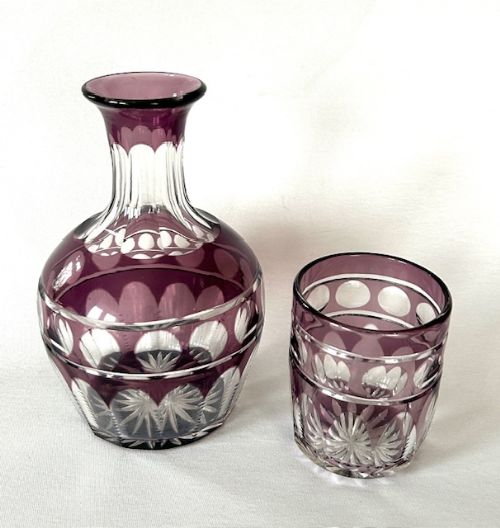


Vintage Water Decanter
A vintage water decanter brings genuine weight to the table, combining heavy cut glass with precious metal mounts.
Vintage Water Decanter
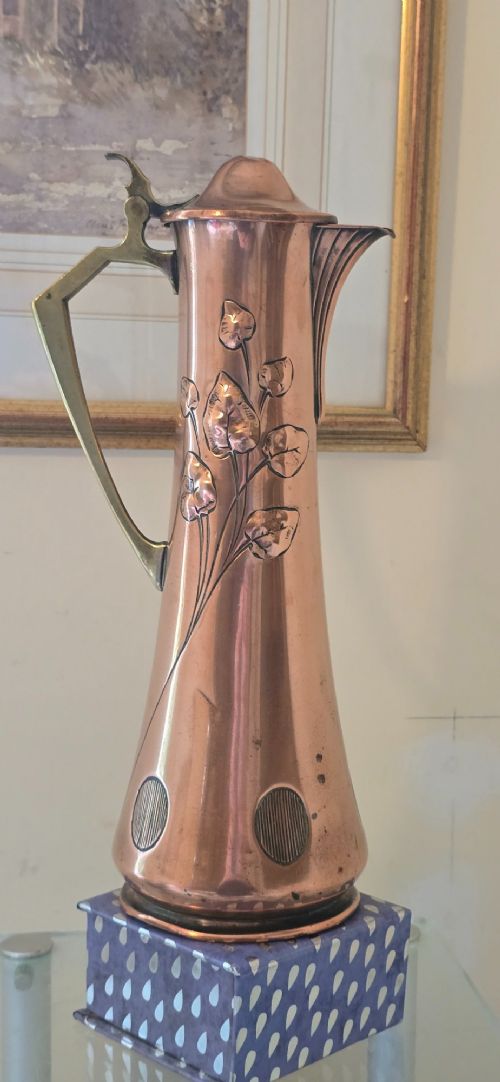
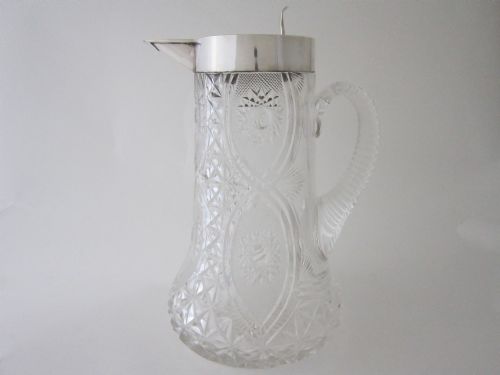
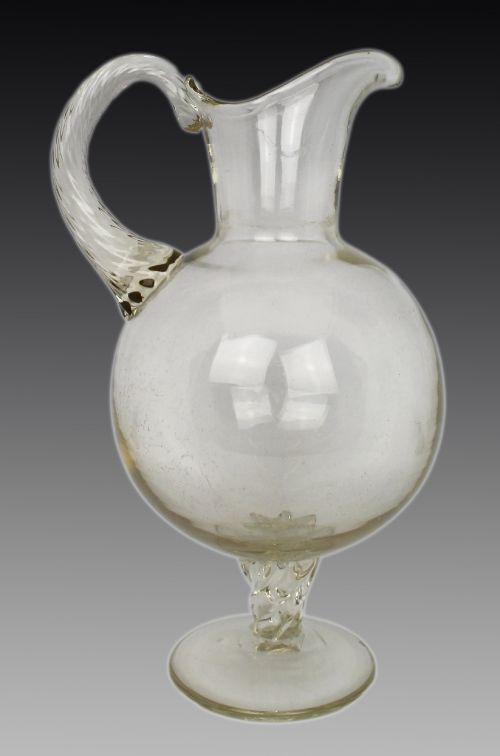
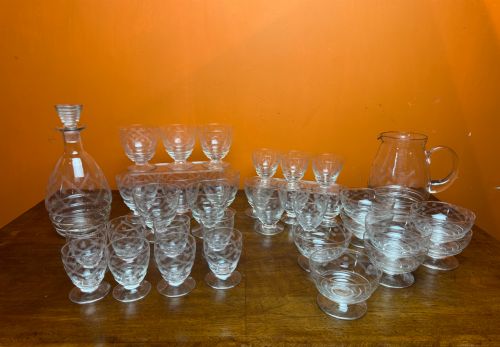
A vintage water decanter encompasses practical vessels designed for serving water, wine, and lemonade at the dining table. When looking for a vintage water decanter, buyers encounter forms ranging from heavy cut glass ewers to tall carafes and pitchers fitted with silver plate or sterling silver mounts.
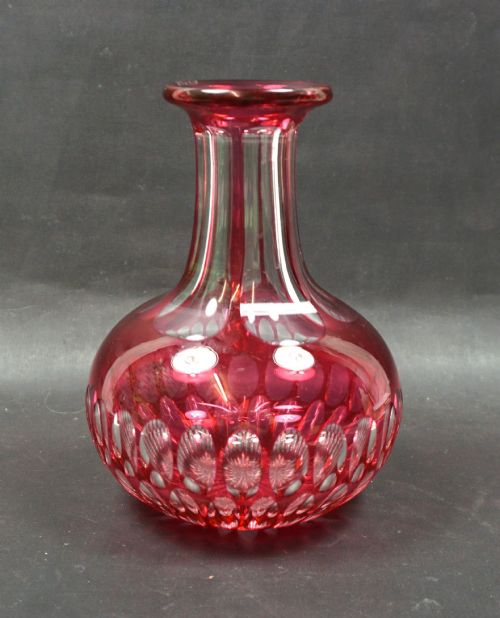
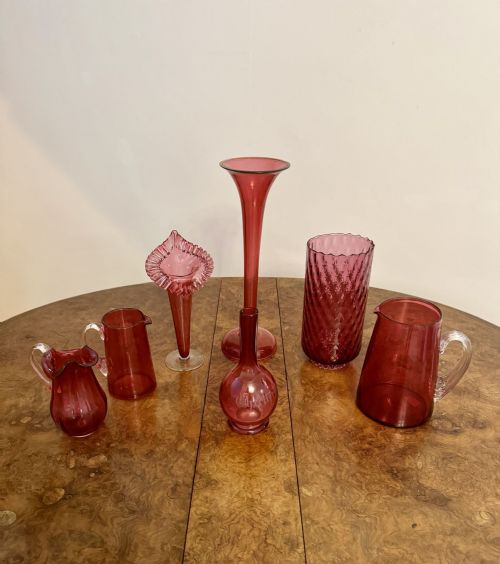
The selection includes Victorian, Edwardian, and Art Nouveau examples alongside mid-century pieces, reflecting shifts in dining habits over the decades. Most pieces originate from British, French, and Continental workshops, spanning clear glass, cranberry glass, and amethyst glass.
Makers often paired blown or cut glass bodies with cast metal handles and hinged lids, creating dual-purpose vessels for formal dining and sideboard display.
How they were made
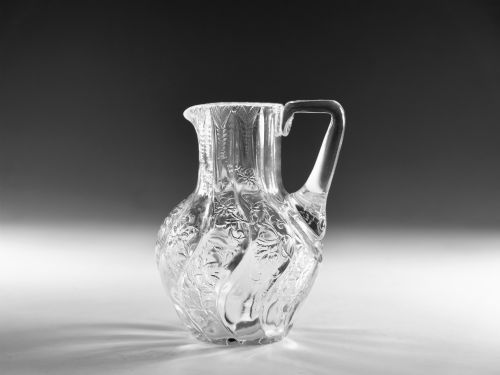
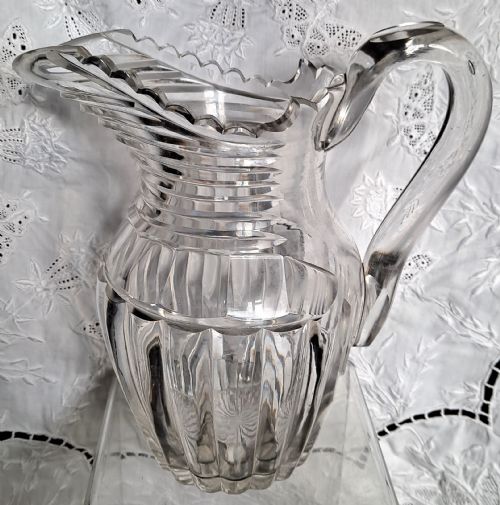
Craftsmen shaped these vessels using hot glass techniques, blowing molten metal into moulds or free-handing ewers and carafes before applying decorative handles. Many surfaces feature deep wheel-cutting, intaglio engraving, or delicate etching with floral and animal motifs.
Metal components, whether sterling silver, silver plate, copper, brass, or pewter, were cast, chased, and mounted securely around the glass necks and rims. Some specialised lemonade jugs incorporated internal ice tubes to keep liquids chilled without dilution.
Several Victorian jugs feature playful frosted glass figures of children peering out from beneath painted grapevines.
What varies in quality
The caliber of a piece depends heavily on the crispness of the glass cutting and the weight of the lead crystal used. Superior examples display sharp, clean facets that catch the light, combined with heavy, well-balanced bases.
Metal mounts also dictate standard, with substantial sterling silver or intricate pewter and copper castings elevating a vessel far above standard silver-plated wares. The integration between glass body and metal collar reveals the skill of the original workshop.
WMF·Stevens and Williams·Mappin and Webb·Webb Corbett·Richardsons·Tiffany·Valenti
The Vintage Water Decanter Glossary
- Ewer
- A large jug with a wide spout and a decorative handle, historically used for pouring water. Ewers often feature tall, slender necks and heavy footed bases.
- Claret jug
- A specialised pouring vessel designed specifically for serving red wine at the table. These incorporate glass bodies paired with hinged metal lids and spouts.
- Intaglio
- A technique where glass is engraved by sinking the design beneath the surface, leaving frosted or polished recessed motifs.
- Cranberry glass
- A rich red-pink glass coloured with gold chloride during the manufacturing process. It appears frequently in Victorian and Edwardian tableware.
- Silver plate
- A layer of silver fused to a base metal such as copper or Britannia metal. This technique provided the appearance of solid silver at a lower cost.
Vintage Water Decanter: Frequently Asked Questions
How do I clean an antique water jug?
Wash glass vessels gently by hand using warm water and a mild detergent, avoiding harsh abrasives that might scratch the surface.
Keep metal mounts dry and polish them only with a soft cloth to preserve the original finish.
Were these vessels used only for water?
While many served as water ewers, several designs accommodated claret, lemonade, wine, and cordials.
Specialist forms included ice tubes for cooling and stoppered carafes for keeping liquids fresh.
How can I tell the period of a glass jug?
Examine the cutting style, handle attachment, and mount hallmarks if silver is present. Victorian and Edwardian pieces often display heavy hobnail cutting or flash colours.
Later mid-century designs favor cleaner profiles and alternative materials like stoneware.
Are silver mounts marked with hallmarks?
Sterling silver mounts usually bear standard assay office hallmarks indicating the town, date letter, and maker's mark. Silver-plated examples typically show maker's stamps denoting plate quality rather than official hallmarks.