



Vintage Wash Set
A vintage wash set brings the washstand customs of the Victorian and Edwardian bedroom into modern homes as decorative ceramic centrepieces.
Vintage Wash Set
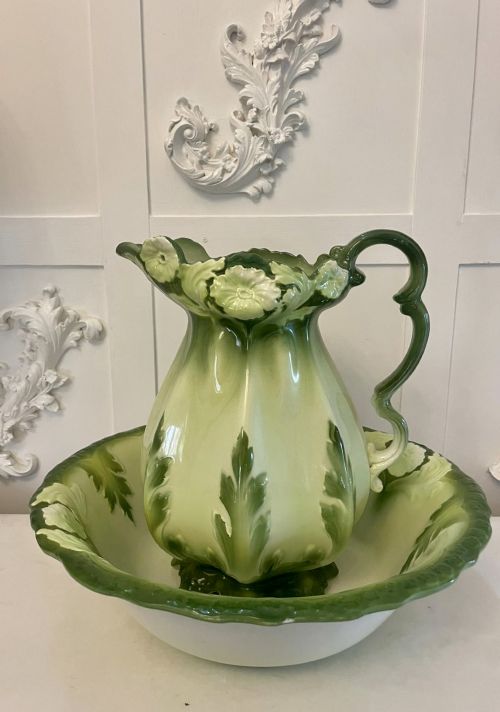
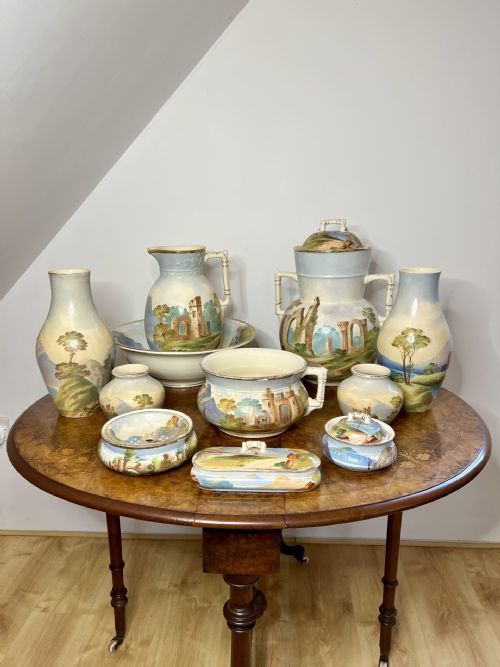
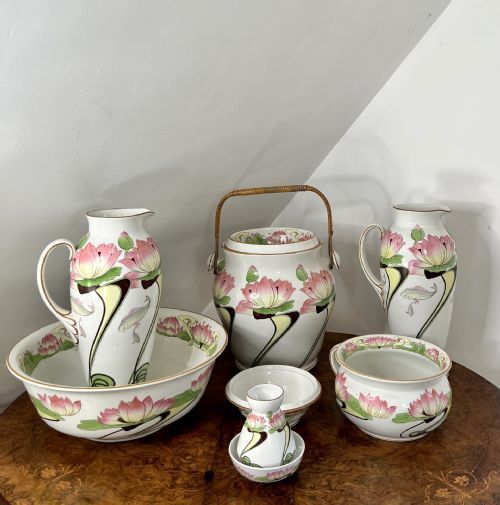
A vintage wash set typically consists of a matching ceramic jug and basin, designed for the bedroom before plumbed indoor bathrooms became common. These collections span the Victorian and Edwardian periods, stretching from the late nineteenth century into the early decades of the twentieth century.
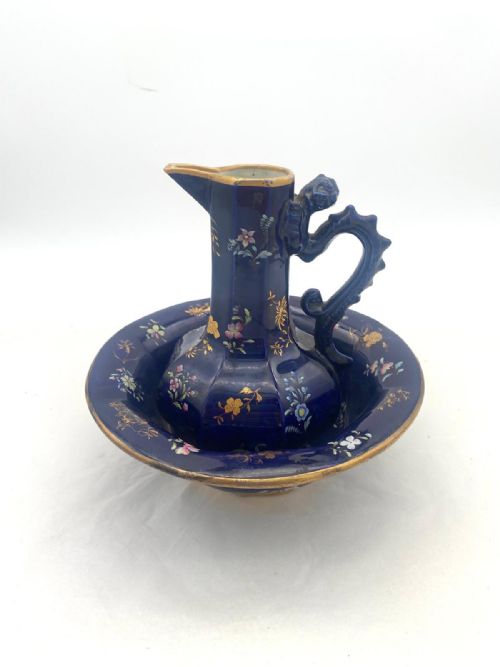
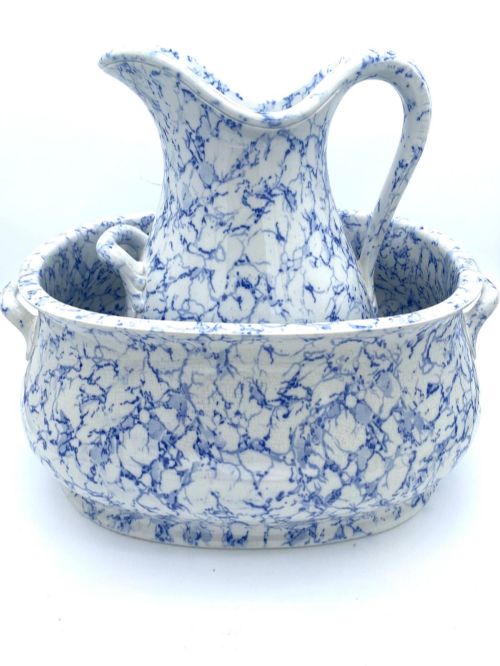
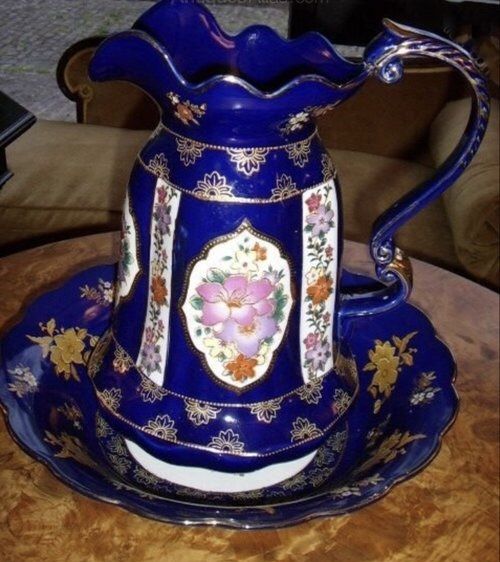
The most common configurations on this page are earthenware and ironstone wash stands and basin sets, often featuring floral patterns or transfer prints. Forms range from standard washstand sets to specialised pieces like footbaths and shaving stands.
Materials and manufacture
Potters shaped these vessels primarily from earthenware, ironstone, and porcelain, applying a protective glaze to seal the porous clay body. Ironstone provided a heavier, more robust body suited to daily domestic demands, while porcelain offered a finer, more delicate alternative.
Decoration relied heavily on underglaze blue printing, hand-painted floral motifs, and occasional applications of gold leaf highlights. Firing in traditional kilns created the hard-wearing surfaces that survive on these jugs and basins today.
Vintage Wash Set Retail Price Guide 2026
Typical asking prices for vintage wash set among the pieces listed under this phrase on Sellingantiques today, from the lower quarter to the upper quarter. They describe what is for sale here now, not the wider market.
Distinguishing quality across pieces
The distinction between standard utility ware and finer examples lies in the crispness of the transfer printing and the precision of the hand-painted detailing on the ceramic body. Superior pieces exhibit well-balanced proportions and harmonious glaze colours without firing blemishes.
Maker attribution elevates certain sets, particularly when bearing the marks of established English factories and potteries from the nineteenth and early twentieth centuries. The complexity of the mould work, such as octagonal or panelled basin rims, also signals higher manufacturing ambition.
Minton·Masons Ironstone·Doulton Burslem·Mark Jones And Sons·Shelley
The Vintage Wash Set Glossary
- Ironstone
- A dense, durable type of earthenware patented in the nineteenth century. It resists chipping better than standard pottery and forms the body of many heavy jugs and basins.
- Flow blue
- A nineteenth-century transfer printing technique where cobalt blue bled slightly into the glaze during firing. This produced a misty, soft-edged pattern highly characteristic of period ceramics.
- Earthenware
- Porous pottery fired at lower temperatures than stoneware or porcelain. It requires an impermeable glaze to hold water effectively.
- Washstand
- A wooden or metal piece of furniture built to hold a jug and basin set. It often included marble tops and towel rails for bedroom hygiene.
- Transfer printing
- A method of applying detailed designs to ceramic ware using a paper template inked from an engraved copper plate. It allowed complex pictorial scenes to be replicated quickly before glazing.
Vintage Wash Set: Frequently Asked Questions
How were wash sets used originally?
Before plumbed indoor plumbing reached bedrooms, people used these sets for morning washing and grooming. Water was warmed in the kitchen, brought up in the tall jug, and poured into the large basin.
Used alongside soap dishes and chamber pots, the set formed the centrepiece of the bedroom washstand routine. Towels hung nearby on rails while the basin caught the spent water.
Where should I display a wash set?
These sets suit large sideboards, hallway tables, or traditional wooden washstands where the jug and basin can sit together securely. Their scale demands a sturdy surface with enough depth to accommodate the wide rim of the bowl.
Many owners also separate the pieces, placing dried flowers or greenery inside the tall jug while using the basin independently as a decorative bowl.
Are these ceramic sets waterproof?
Most glazed ceramic and ironstone pieces remain fully waterproof and can hold fresh water for floral arrangements. The original glaze seals the porous clay body underneath effectively.
However, antique pieces with fine hairline cracks or historical repairs require gentle handling and are best kept dry to preserve the material.
How do I date a wash set?
Dating relies on maker marks stamped or printed on the base, stylistic clues like Art Nouveau curves or Victorian borders, and the weight of the ceramic body. Heavier ironstone often points to the mid-nineteenth century, while lighter earthenware forms typically align with Edwardian production.
Comparing the floral patterns and colour palettes against known factory registration dates helps narrow the period further.