
Vintage Wardrobe
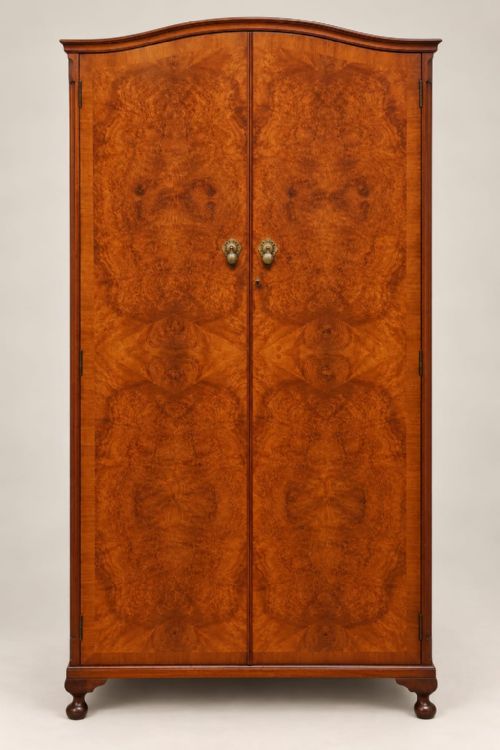
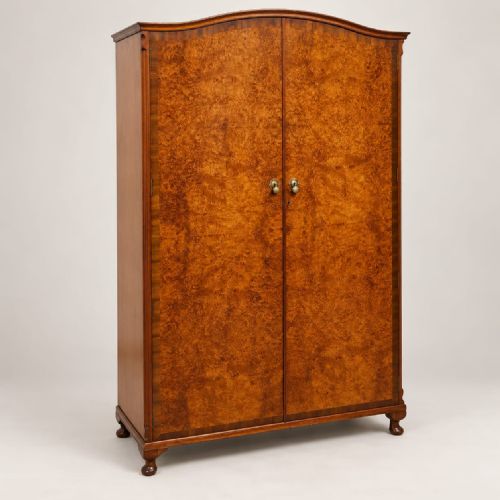
A vintage wardrobe brings character and generous capacity to a bedroom, ranging from compact 1920s burr walnut pieces to expansive Victorian mahogany linen presses.
Vintage Wardrobe
A vintage wardrobe serves as a large freestanding storage piece for garments and linens, appearing in forms such as single, double, and triple doors, compactums, tallboys, and linen presses. When searching for a vintage wardrobe, buyers encounter diverse regional and period interpretations spanning the eighteenth century through the 1930s.
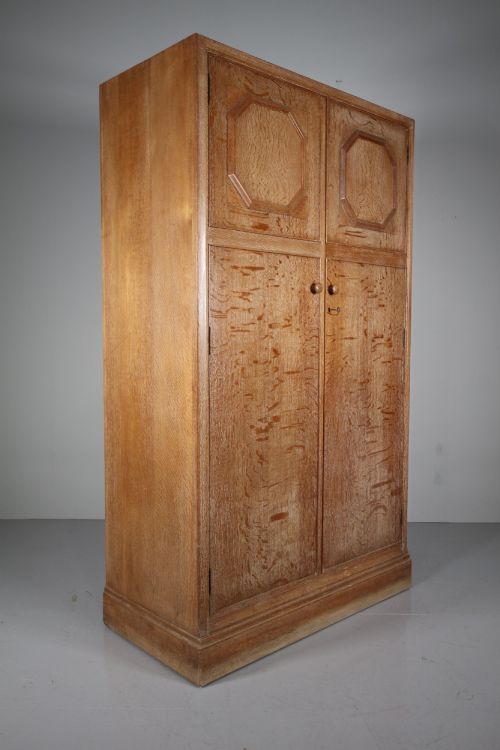
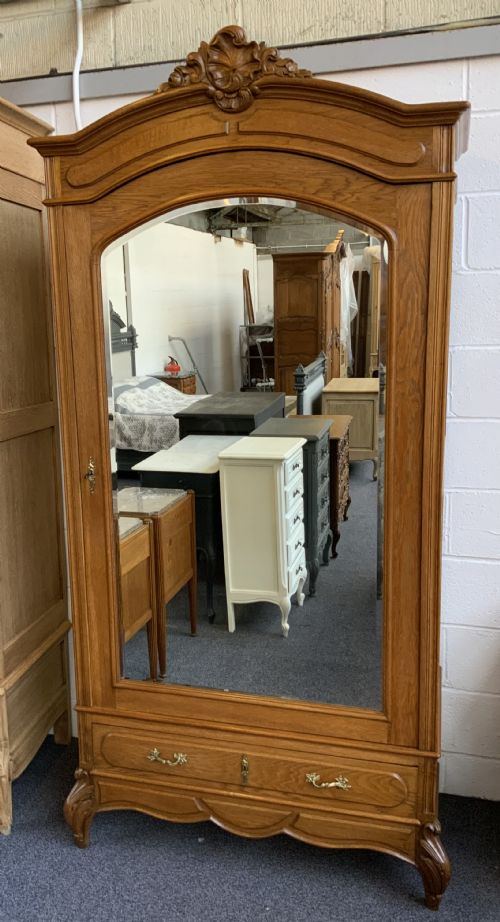
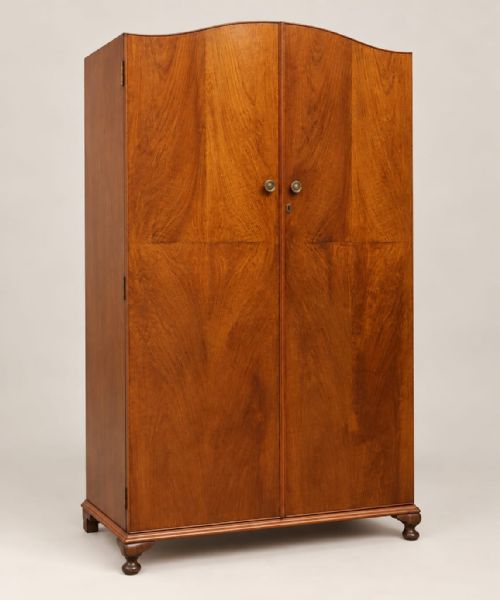
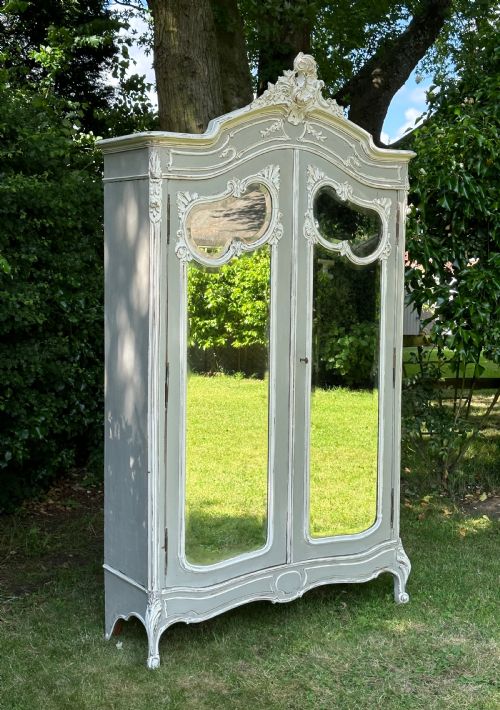
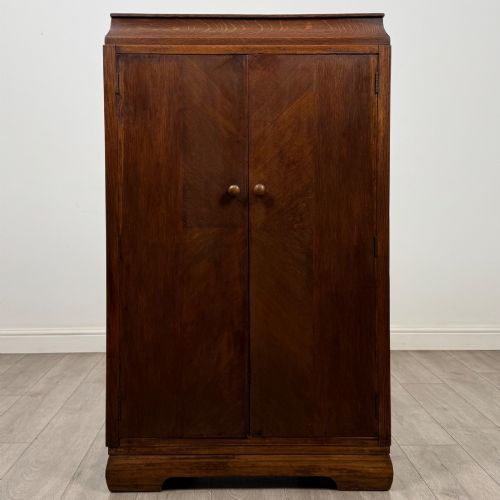
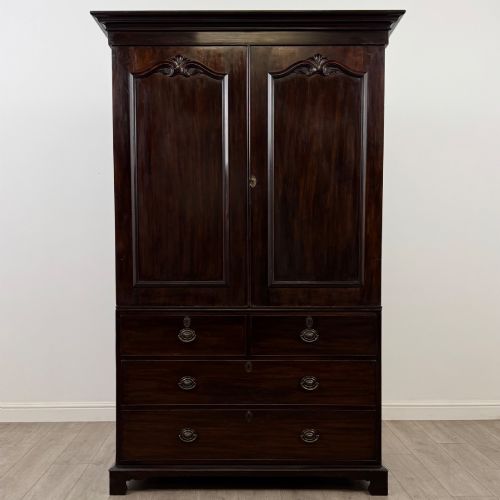
The selection on this page leans heavily toward early twentieth-century examples in oak and burr walnut, alongside robust Victorian and Edwardian mahogany designs. French armoires and Georgian linen presses also populate the grouping, offering varying internal arrangements from simple hanging space to fitted drawers and sliding shelves.
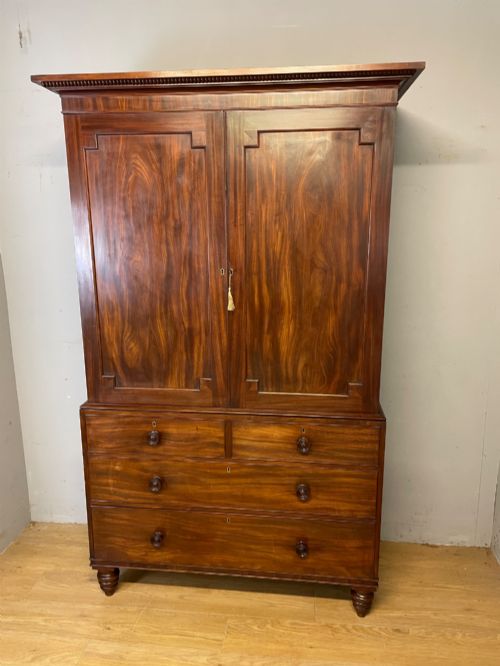
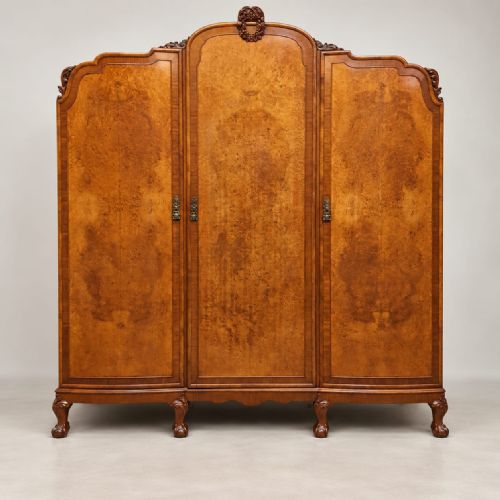
Tallboys and compactum wardrobes combine hanging compartments with banks of internal drawers, addressing the storage demands of different eras. Pieces range from modest single-door cupboards to breakfront triple wardrobes intended for large country houses.
Materials and construction
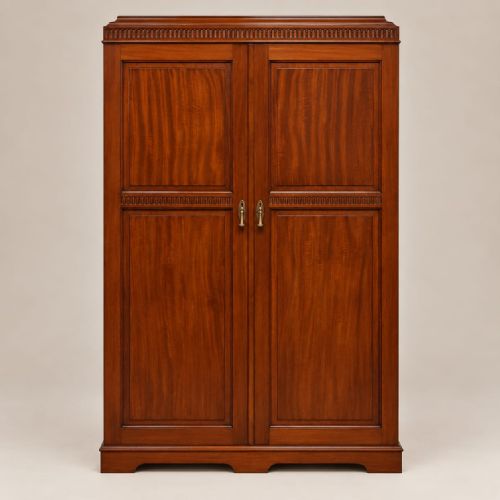
Cabinetmakers utilised hardwoods such as mahogany, oak, and walnut, often applying decorative veneers like burr walnut, birds eye maple, and satinwood to primary surfaces. Pine served frequently for carcases and internal components, while brass hardware provided structural support and decorative contrast.
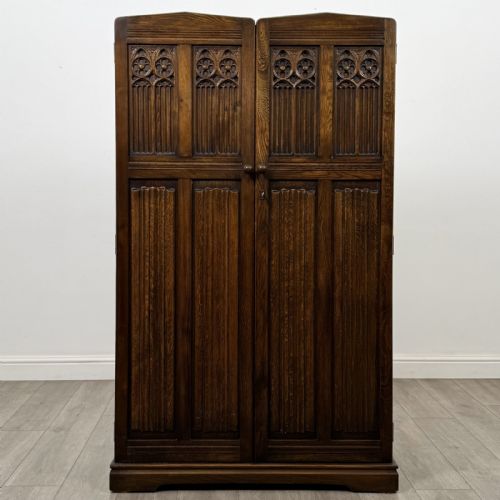
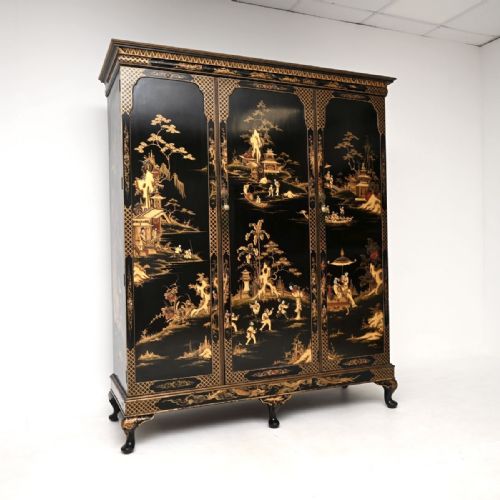
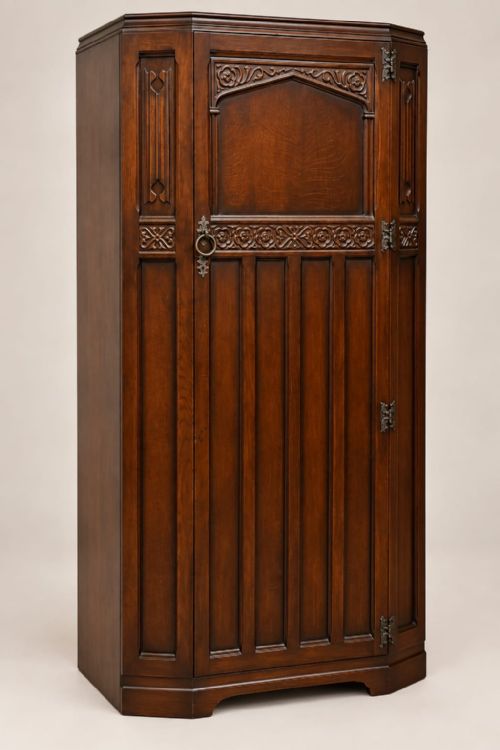
Construction methods rely on traditional joinery, incorporating panelled doors, bracket feet, and dental cornices. Carved detailing, linenfold panels, and lacquered chinoiserie finishes appear on specific pieces, demonstrating period stylistic preferences from Gothic Revival to Art Deco.
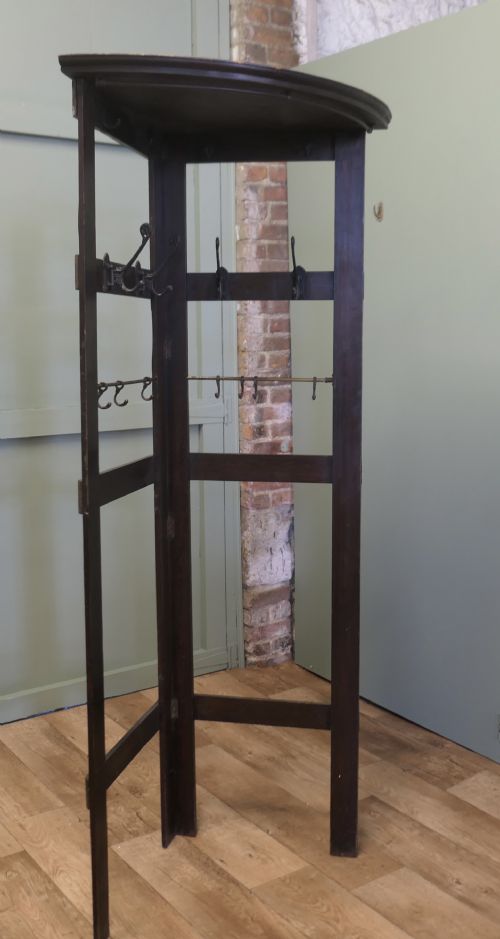
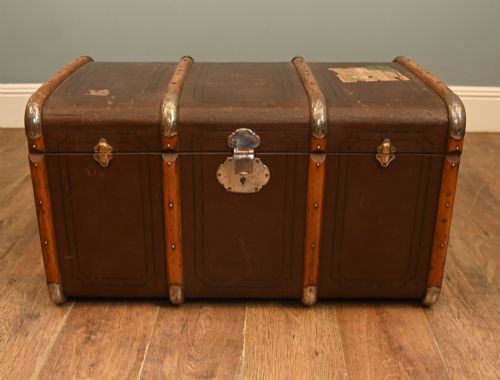
One portable folding sports wardrobe exists for the Edwardian traveller who refused to compromise on hanging space between matches.
Variations in quality
Quality reveals itself in the selection of timber figures, such as matched burr walnut or flame mahogany veneers, and the crispness of hand-carved detailing. Superior pieces demonstrate precise joinery in door frames and drawer linings, ensuring structural integrity over decades of daily use.
Internal fittings distinguish standard storage from superior examples, with purpose-built linen slides, velvet linings, and well-integrated drawer configurations commanding attention. The weight of the timber and the robustness of brass hinges indicate the original workshop standards.
Hille for Harrods·Crown Furniture·Edwards and Roberts
The Vintage Wardrobe Glossary
- Compactum
- A multi-functional wardrobe combining hanging space with internal drawers and linen shelves. This form emerged to maximise storage efficiency within a single footprint.
- Linen press
- A tall cabinet featuring upper sliding trays or shelves for textiles above a chest of lower drawers. Eighteenth and nineteenth-century examples often display fine mahogany or satinwood inlays.
- Breakfront
- A cabinet design where the central section projects forward from the flanking cupboards. This architectural arrangement creates depth and visual balance on large wardrobes.
- Linenfold
- A carved wood panel motif resembling folded cloth or parchment. This decorative technique appears frequently on early twentieth-century oak furniture.
- Cornice
- The moulded horizontal projection crowning the top of a wardrobe. Period pieces often feature dentil or stepped mouldings characteristic of Georgian and Victorian joinery.
Vintage Wardrobe: Frequently Asked Questions
What is a compactum wardrobe?
A compactum wardrobe combines traditional hanging space with banks of internal drawers and shelves within a single unit. This layout offered comprehensive clothing storage for a bedroom.
Such pieces often date from the Edwardian period or the 1930s and provide versatile internal organisation.
How do I fit a vintage wardrobe into a modern room?
Many vintage wardrobes arrive as single units, though larger double and triple versions often dismantle into component parts for transport and assembly. Checking the ceiling height and door clearance remains essential before placement.
Internal depths on older wardrobes can occasionally be shallower than modern standards, so checking clothes hanger orientation is recommended.
What is the difference between an armoire and a wardrobe?
An armoire originates from continental European traditions, frequently displaying heavier carved wooden details and French provincial styling. Wardrobes are generally associated with British cabinet-making from the Victorian and Edwardian eras.
Both terms describe large storage cupboards, though armoires often exhibit more ornamental exterior carving.