

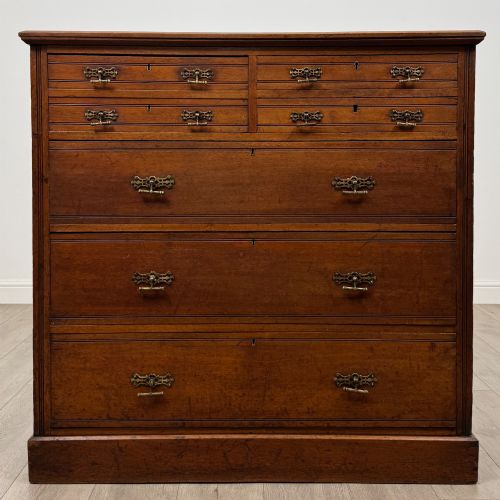
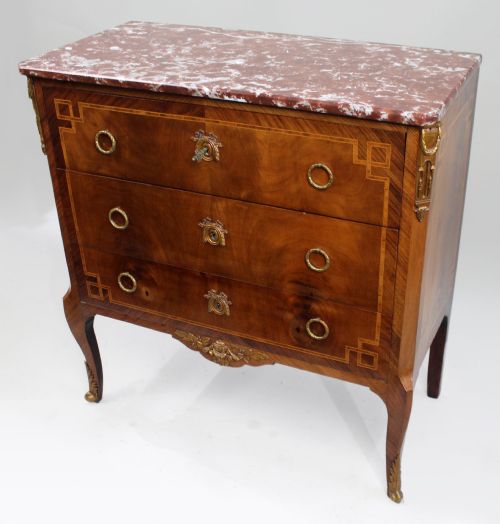
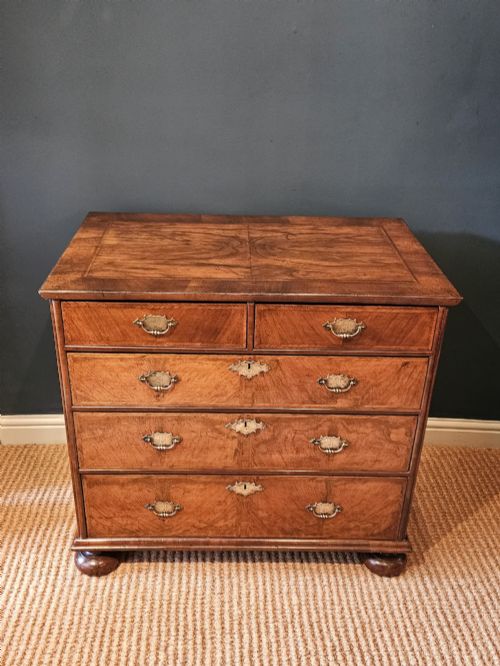
Vintage Walnut Storage Drawers
These vintage walnut storage drawers combine honest utility with rich timber, offering a practical home for belongings while anchoring a room with quiet presence.
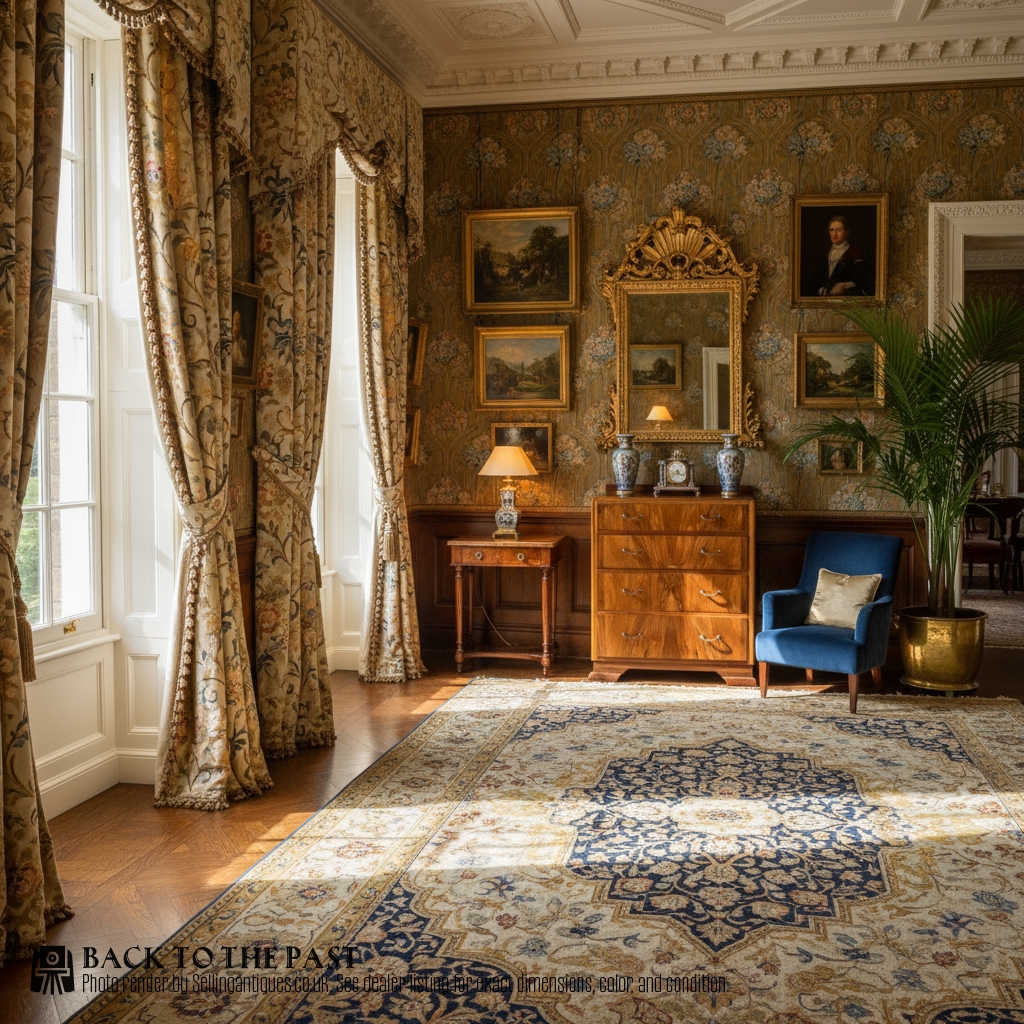
Vintage Walnut Storage Drawers
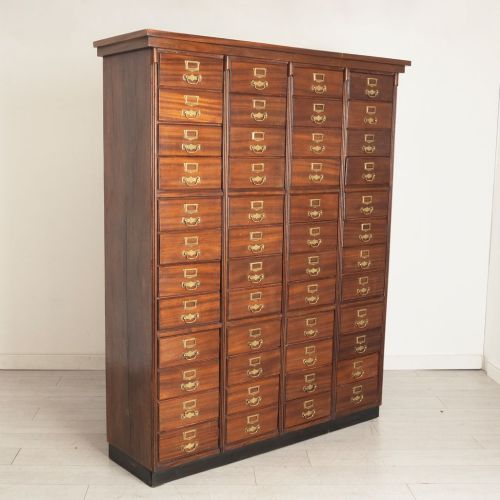
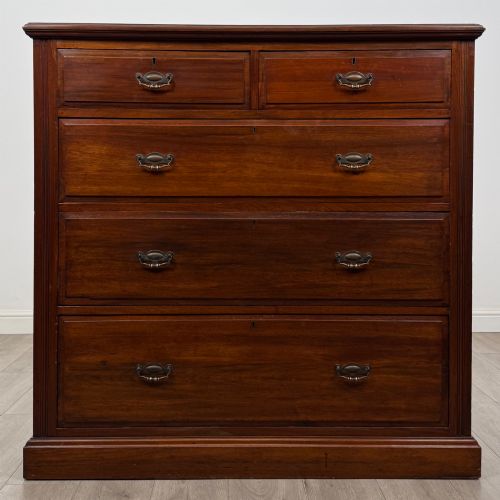
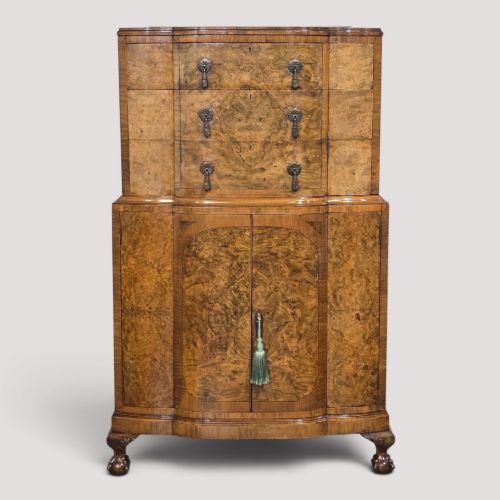
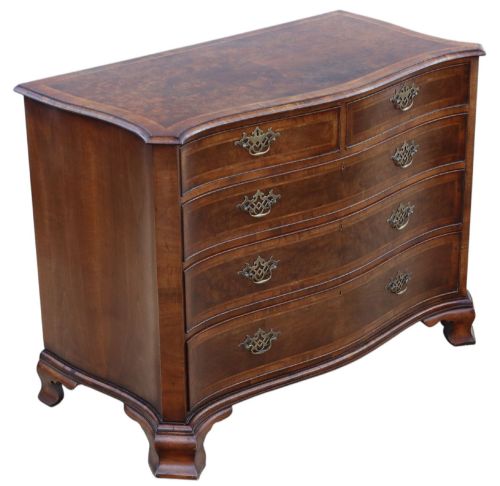
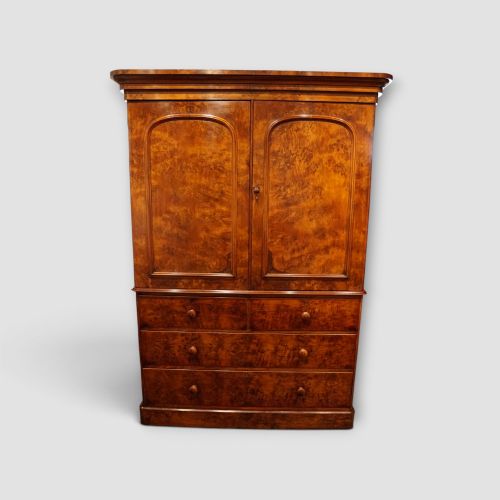
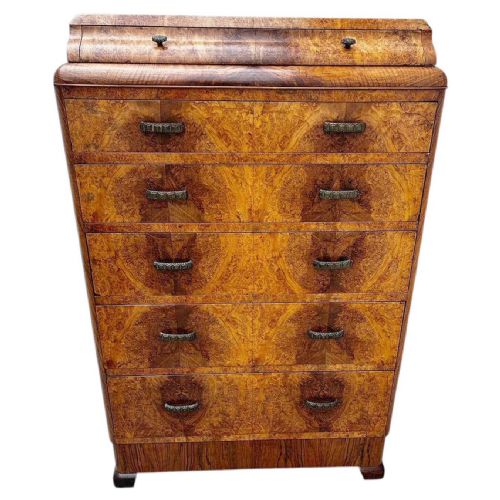
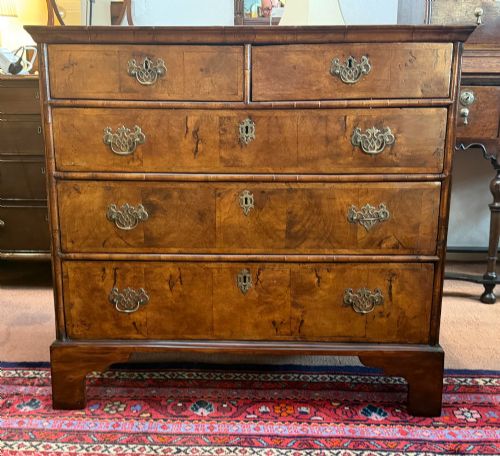
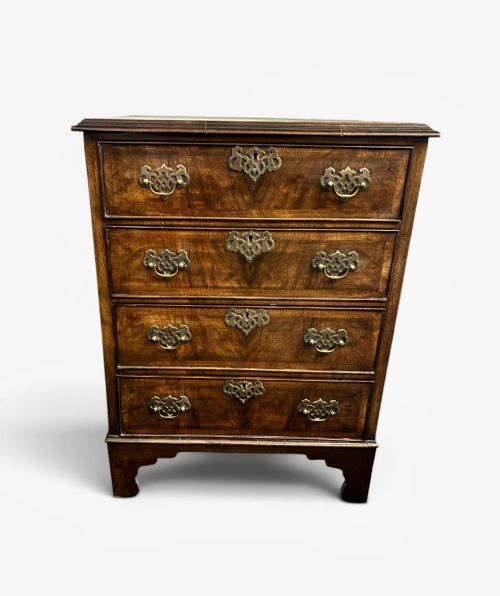
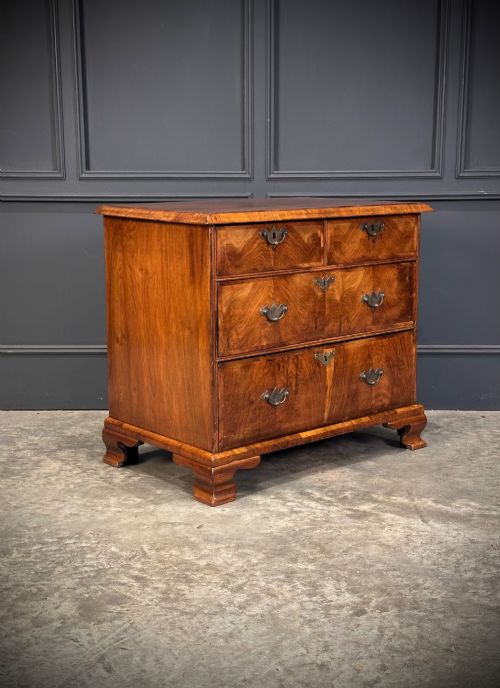
Vintage walnut storage drawers span compact bedside chests, tallboy cabinets, and serpentine commodes designed to hold linens, clothing, or smaller collections. You will frequently encounter twentieth-century examples alongside eighteenth-century forms and nineteenth-century commodes.
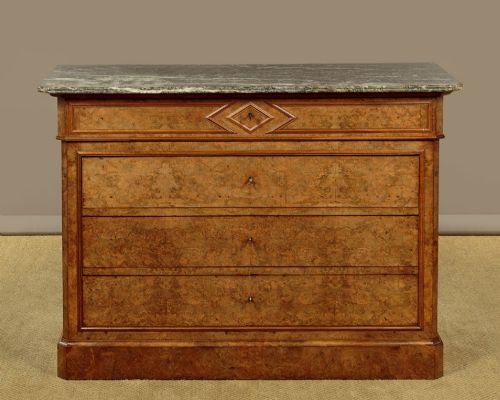
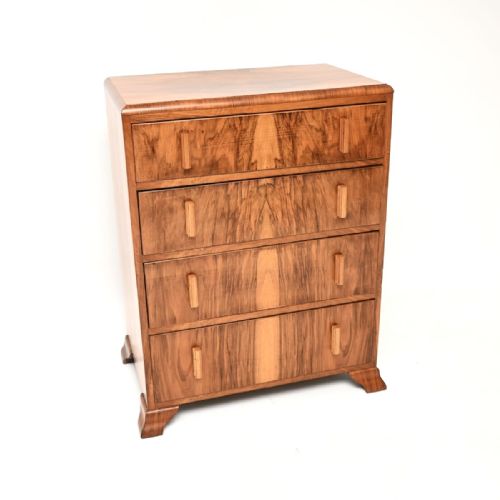
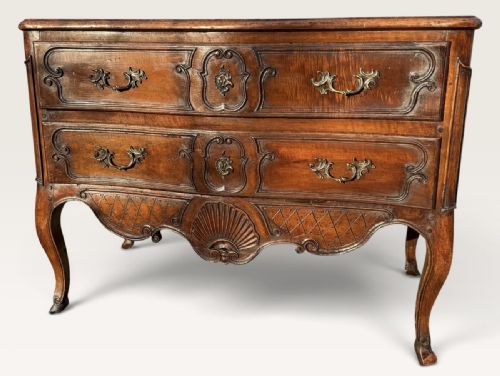
The selection ranges from restrained Georgian designs to Art Deco pieces with figured grain patterns and French provincial commodes topped with grey or rouge marble. These storage pieces appear in various configurations, including tall chests of drawers and lower bedside proportions.
Makers and periods represented run from early Georgian craftsmanship through Edwardian production to the bold geometric lines of the nineteen-thirties.
Materials and technique
Cabinetmakers utilised solid walnut and decorative walnut veneer, often selecting burr walnut to create striking, figured patterns across drawer fronts and top surfaces. Crossbanding and herringbone inlay frequently frame the primary timber panels.
Secondary structural elements incorporate oak, whilst hardware relies upon cast brass handles, escutcheons, and occasional ormolu mounts. Certain continental commodes integrate heavy marble slabs into their upper surfaces.
Joinery methods encompass traditional drawer linings, dovetailed construction, and curved serpentine shaping cut directly from solid stock or formed via layered veneers.
Listings span pieces from the eighteenth century to nineteen-thirty, uniting solid walnut, burr walnut veneers, oak, and marble.
What varies in quality
The distinction between ordinary and exceptional pieces rests upon the choice of veneer, the precision of the grain matching, and the subtlety of the timber's natural figure. Burr walnut with rich, swirling movement commands greater attention than plain, flat boards.
Construction details such as hand-cut dovetails, crisp crossbanding, and well-cast brass hardware elevate a cabinet. The integration of secondary woods like oak within internal drawer frames indicates careful workshop practices.
Proportion and form dictate the visual success of a commode or tallboy, with harmonious drawer heights and clean serpentine curves separating standard utilitarian chests from masterworks.
Jas Shoolbred
The Vintage Walnut Storage Drawers Glossary
- Burr walnut
- Timber taken from a tree growth where the grain has grown in a deformed, swirling pattern. This produces decorative figuring prized for drawer fronts.
- Serpentine
- A front profile characterised by a convex central section flanked by concave curves. It requires skilled shaping to execute smoothly.
- Commode
- A low chest of drawers, often referencing continental European designs from the eighteenth or nineteenth centuries. Many examples feature marble tops.
- Tallboy
- A tall storage unit comprising one chest of drawers stacked atop another, maximising vertical capacity. These pieces provide substantial storage in a modest floor footprint.
- Crossbanding
- A narrow strip of veneer laid across the grain of the primary panel to form a decorative border. It frames the central drawer face.
- Herringbone
- An inlay pattern composed of small diagonal veneer pieces meeting at an angle to resemble a fish skeleton. It is typical of early walnut furniture.
Vintage Walnut Storage Drawers: Frequently Asked Questions
How do I date a walnut chest?
Dating relies upon construction methods, hardware types, and overall architectural style. Earlier pieces utilise oak linings and hand-cut dovetails, whereas later twentieth-century items show machine production traits.
Secondary woods and veneer thickness also offer clear indicators of the period in which a cabinet was assembled in the workshop.
Are marble tops original to these commodes?
Continental commodes, particularly French nineteenth-century pieces, frequently incorporate fitted marble slabs in grey or rouge tones. These heavy tops protect the timber beneath and served a practical function in domestic interiors.
Replacement marble is common, so examining the seating and edge alignment helps confirm originality.
How should I maintain burr walnut?
Keep walnut furniture away from direct sunlight and steady heat sources to prevent timber shrinkage and veneer lifting. Regular dusting with a dry, soft cloth preserves the polished surface.
Applying a traditional beeswax polish occasionally feeds the grain without building up heavy residue.
What is the difference between a commode and a chest?
A commode typically refers to a low, decorative storage cabinet of French or continental influence, often finished with a marble top. A chest of drawers is a broader term encompassing British vernacular forms.
Both items provide enclosed storage, but commodes lean towards decorative reception spaces whilst chests suit bedrooms.