




Vintage Walnut Slope Desk
A vintage walnut slope desk brings warm timber grain and functional folding writing surfaces directly into a study or drawing room.
Vintage Walnut Slope Desk
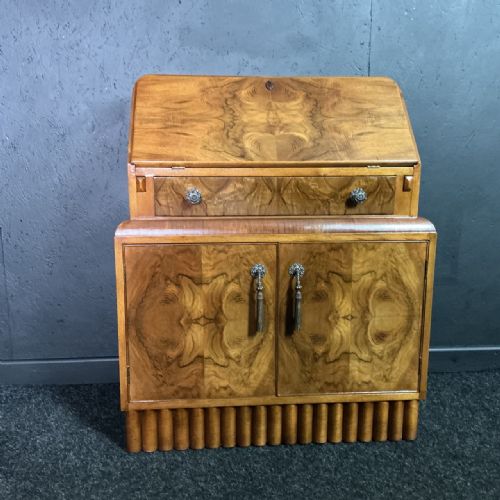
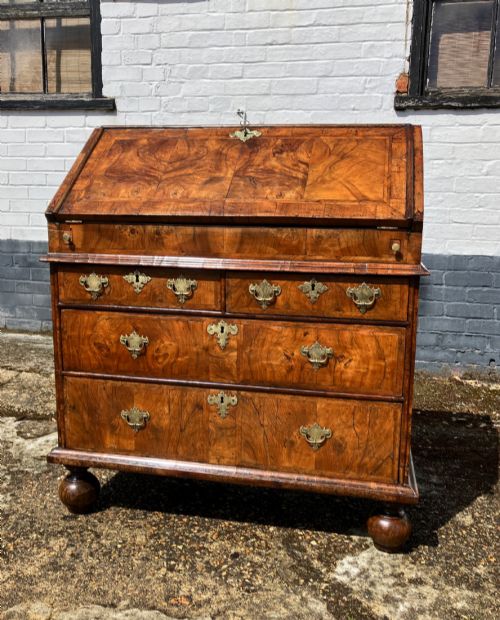
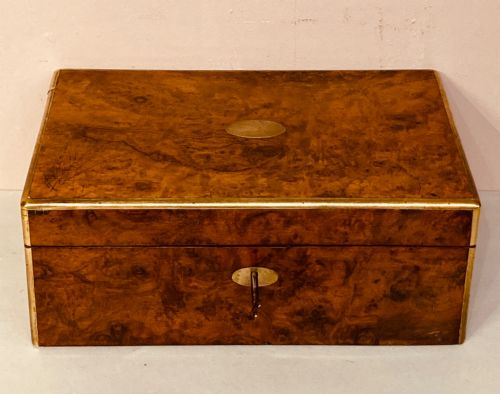
A vintage walnut slope desk encompasses folding portable writing boxes, standing bureau desks, and compact Davenport writing tables. These pieces emerge across periods spanning the early eighteenth century through the Edwardian era and the nineteen-twenties.
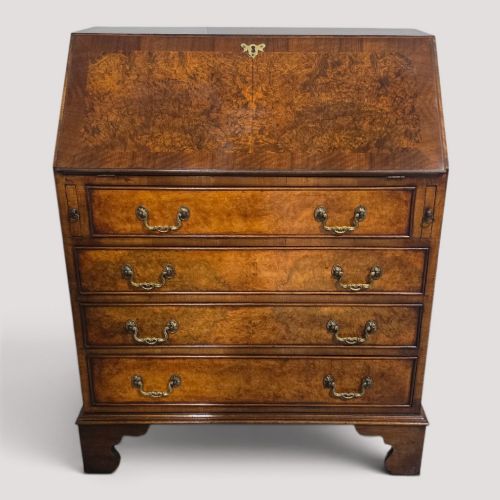
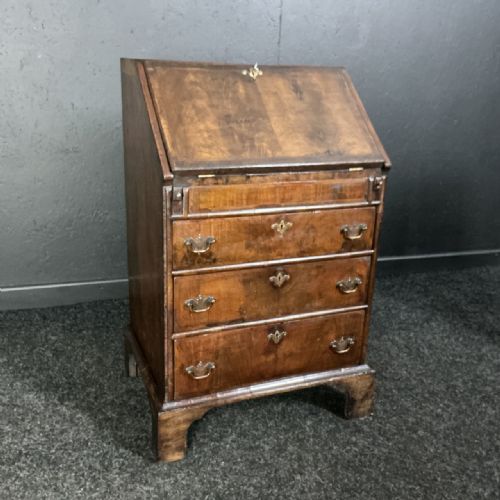
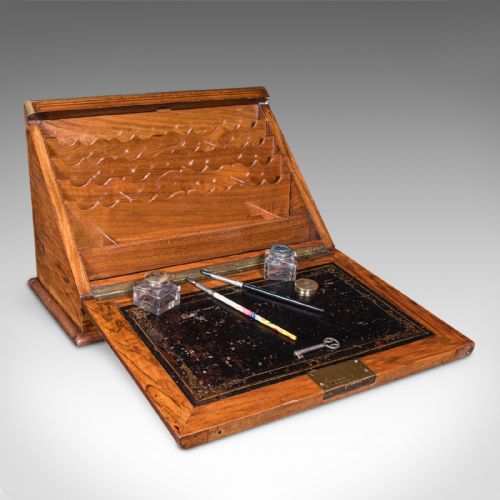
Writing slopes open on a hinged flap to reveal fitted interiors for stationery and ink, while larger bureau forms incorporate banks of drawers beneath a sloped writing surface. Examples frequently display matched timber grains on the primary writing flaps.
The selection ranges from portable campaign boxes bound in brass to grander writing cabinets styled after Queen Anne and Georgian antecedents. Walnut veneer and solid walnut dominate the construction across these varied writing forms.
Materials and construction methods
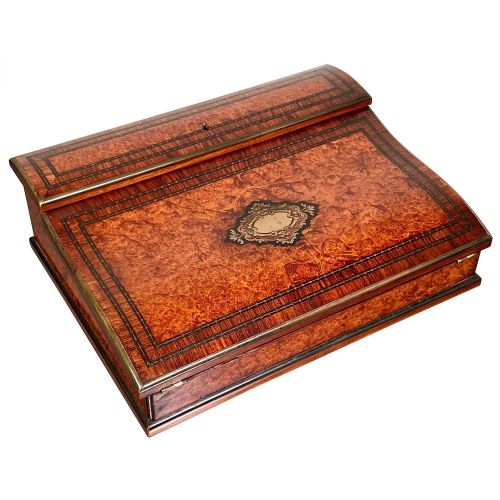
Cabinetmakers utilised both solid timber and decorative burr walnut veneers applied over secondary woods like oak. Selected highly figured veneers create swirling patterns across the main writing surfaces and drawer fronts.
Brass fittings including corner brackets, inset handles and locking mechanisms reinforce portable campaign boxes and heavy Victorian slopes. Interior compartments often integrate secret drawers, leather writing inserts, and small pigeonholes constructed with traditional joinery.
Vintage Walnut Slope Desk Retail Price Guide 2026
Typical asking prices for vintage walnut slope desk among the pieces listed under this phrase on Sellingantiques today, from the lower quarter to the upper quarter. They describe what is for sale here now, not the wider market.
Some Victorian writing slopes hide tiny spring-loaded secret compartments behind false pigeonhole partitions for stashing love letters.
Assessing quality and finish
Quality rests in the selection of the walnut timber and the symmetry of the veneer work across folding flaps and drawer fronts. Finely matched burr walnut displays depth and movement that elevates a simple bureau into an exceptional decorative object.
Internal complexity dictates the standing of a piece, separating basic utility writing boxes from sophisticated cabinets featuring secret compartments, pigeonholes and fitted stationery racks. Intricate brass binding and marquetry or parquetry details further separate standard production from superior craftsmanship.
The Vintage Walnut Slope Desk Glossary
- Writing slope
- A portable box with a slanted hinged lid designed for writing letters while travelling or sitting at a table. Interiors typically house inkwells, pens and paper compartments.
- Bureau
- A desk featuring a sloping lid that opens to form a writing surface above a chest of drawers. Early examples often rest on bracket feet or dedicated stands.
- Secret drawers
- Concealed compartments hidden behind false partitions within writing slopes and bureaux. These clever additions protect valuable documents and small personal items.
- Campaign desk
- Portable military furniture constructed for travel, featuring protective brass corners and recessed carrying handles. These pieces dismantle or fold compactly for transport.
Vintage Walnut Slope Desk: Frequently Asked Questions
How do I use a writing slope safely?
Open the folding hinges carefully and rest the writing flap flat upon its supports to avoid straining the wood. Avoid placing heavy books on the angled surface.
Keep the timber away from direct sunlight and radiator heat to prevent the walnut veneer from drying out or lifting over time.
What is the difference between a bureau and a slope?
A writing slope is typically a portable box designed to sit on a table, holding stationery and providing an angled writing surface when opened. It travels easily.
A bureau stands on its own legs or base as a complete piece of furniture, combining a sloping writing flap with a chest of drawers underneath.
Are secret drawers common in these desks?
Many Victorian and Georgian writing slopes and bureaux incorporate hidden compartments tucked behind pigeonholes or sliding panels. These ingenious spaces require removing a specific divider to release the spring or catch.
Finding these concealed spaces adds considerable charm and historical interest to daily use.