

Vintage Walnut Seating
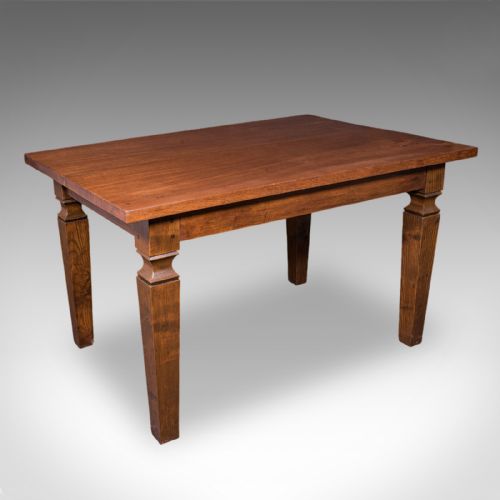
Vintage walnut seating brings rich timber frames and diverse period forms into domestic spaces.
Vintage Walnut Seating
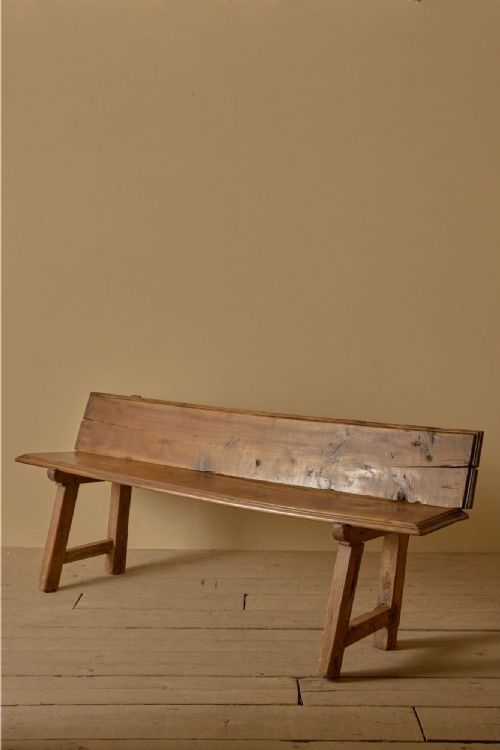
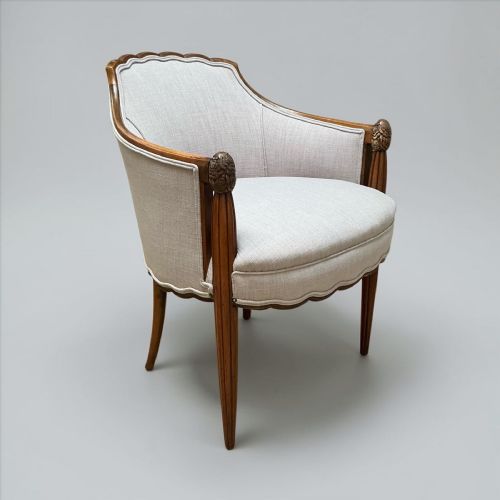
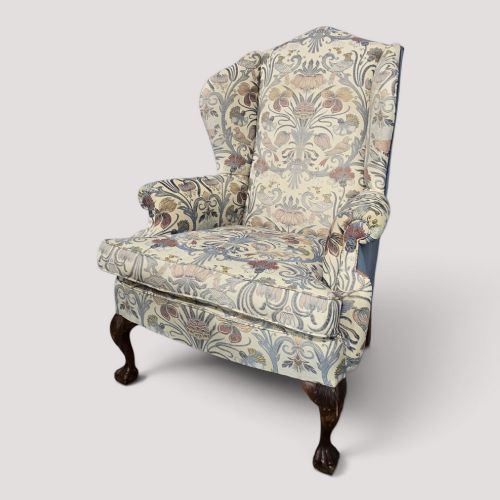
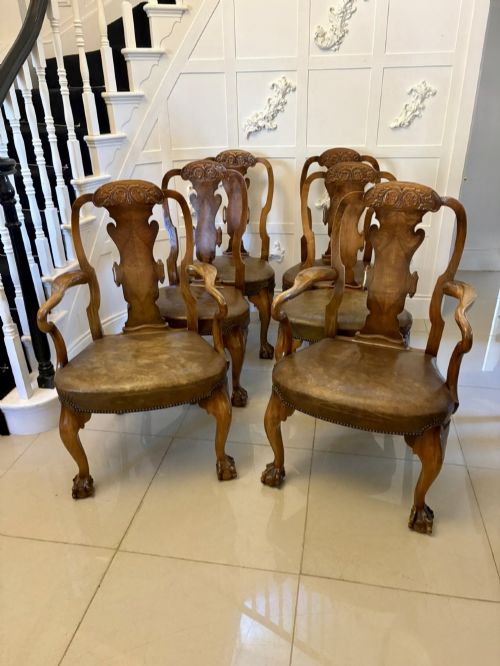
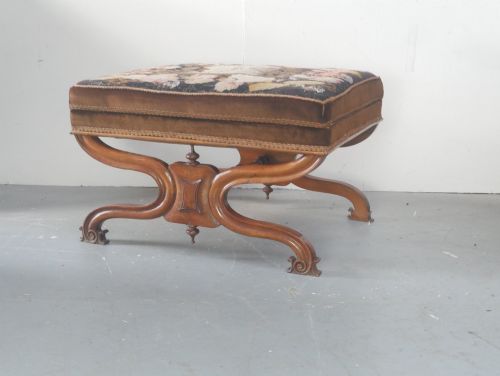
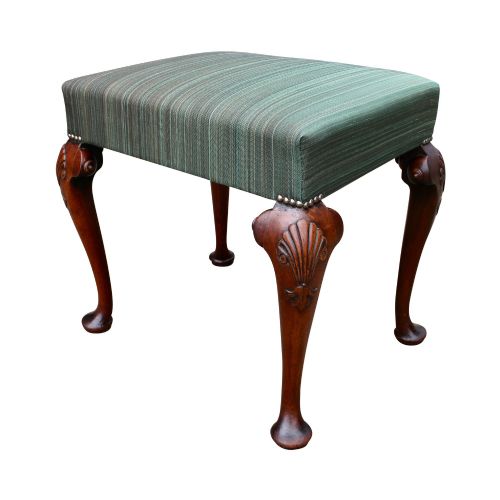
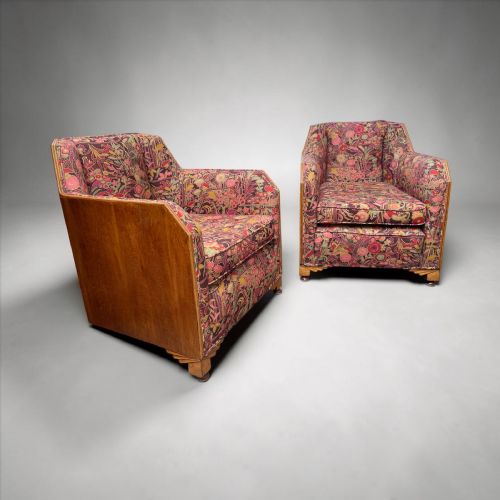
Vintage walnut seating spans functional chairs, benches, stools, and sofas constructed from hardwood timber. Pieces range from 18th-century Spanish hall benches and Scottish stools to 19th-century Victorian nursing chairs and 20th-century Art Deco club chairs.
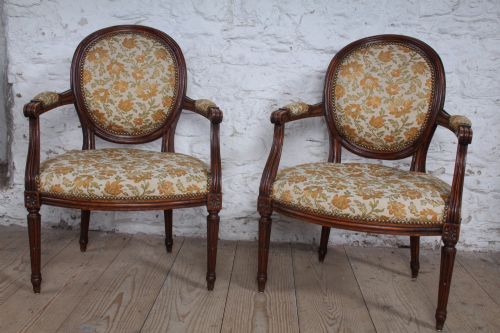
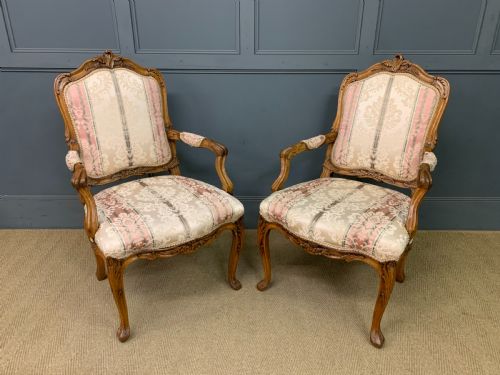
Armchairs, dining chairs, and occasional chairs dominate the selection alongside larger seating suites and footstools. Styles stretch from traditional Queen Anne, Louis XV, and Carolean to streamlined Art Deco designs.
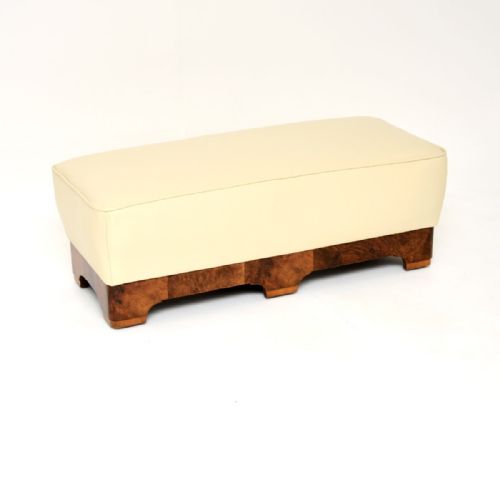
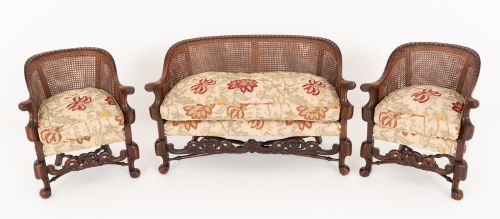
The material palette pairs solid timber and burr walnut veneers with upholstered surfaces in fabric, leather, velvet, and textile. Brass details and split cane panels appear across various formats from French and English workshops.
How they were made
Frames rely on solid walnut and burr walnut timber, shaped through traditional joinery and carved ornamentation. Wood surfaces are frequently paired with contrasting texturing like split cane panels.
Upholstery techniques incorporate sprung interiors, button backing, feather cushions, and tightly fitted coverings in leather, velvet, and woven fabric. Brass components secure joints and provide decorative accents on specific frames.
Cloud chairs offer a plump, voluminous embrace that makes even the sternest 1930s office worker look slightly mischievous.
What varies in quality
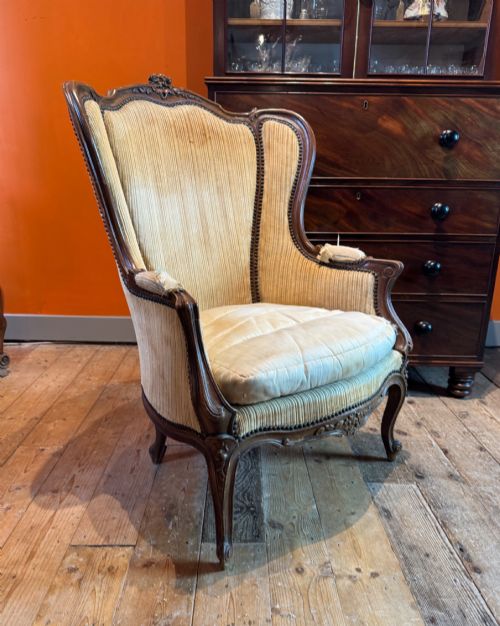
The definition and depth of carved detail separate standard production from superior pieces, particularly in Victorian and Louis XV style frames. Timber selection plays a role, with figured burr walnut veneers requiring expert matching across curved surfaces.
Structural integrity depends on the tightness of original joinery and the preservation of the wooden frame beneath modern or period upholstery. Cohesion between the structural walnut chassis and the applied textile finish determines overall success.
Hille·Harry and Lou Epstein
The Vintage Walnut Seating Glossary
- Burr walnut
- A prized timber veneer showing swirling, knotty grain patterns harvested from tree growths. It appears frequently on Art Deco occasional chairs and stools.
- Bergere
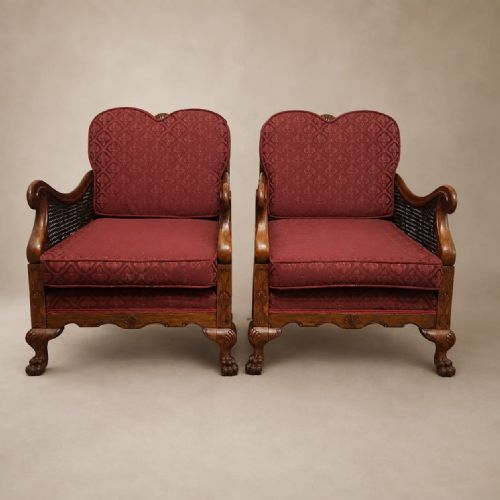
- An enclosed upholstered armchair with wooden framing and cane or upholstered sides. These often feature exposed carved walnut rails.
- Nursing chair
- A low-seated Victorian chair designed for comfort and ease near a hearth or nursery. They typically possess padded backs and upholstered frames.
- Cassapanca
- A large wooden bench with a high back and storage compartment beneath the seat. Italian examples in walnut display extensive carving.
- Club chair
- A heavy, deep-seated armchair upholstered in leather or fabric. Art Deco iterations pair curved walnut frames with thick cushions.
Vintage Walnut Seating: Frequently Asked Questions
How do I identify Art Deco walnut chairs?
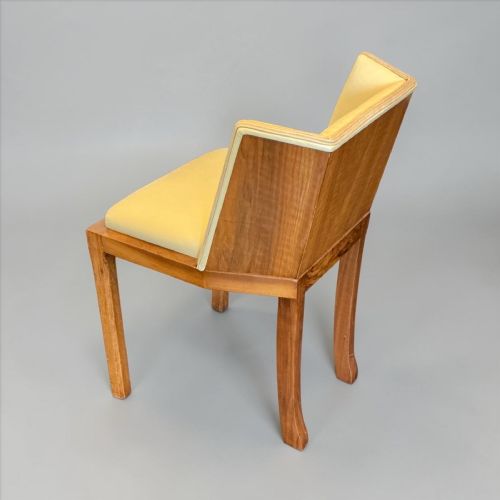
Art Deco walnut chairs display streamlined, rounded silhouettes such as the characteristic cloud design. They often utilise burr walnut veneers paired with leather or smooth fabric.
Makers like Hille and the Epstein brothers defined this aesthetic during the 1930s. Their work relies on volumetric forms rather than applied historical carving.
What is a bergere armchair?
A bergere is a French-style upholstered armchair featuring an exposed wooden frame, traditionally made of walnut. The sides often incorporate woven split cane panels.
These chairs frequently appear in Louis XV or later revival styles. They combine open wooden arms with deep upholstered seat cushions.
Where should I place a walnut hall bench?
Hall benches suit entranceways, corridors, or large living rooms as statement architectural pieces. Solid walnut construction provides the necessary durability for high-traffic zones.
Options range from 18th-century Spanish formats to 19th-century Italian cassapanca designs. Their substantial timber frames anchor open interior spaces effectively.