



Vintage Walnut Night Tables
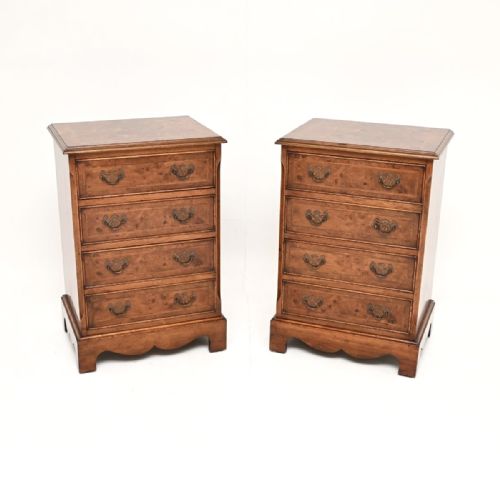
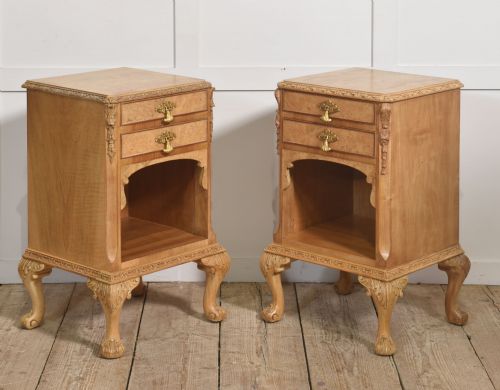
These vintage walnut night tables bring warmth and practical bedside storage, ranging from clean Art Deco lines to ornate period revivals.
Vintage Walnut Night Tables
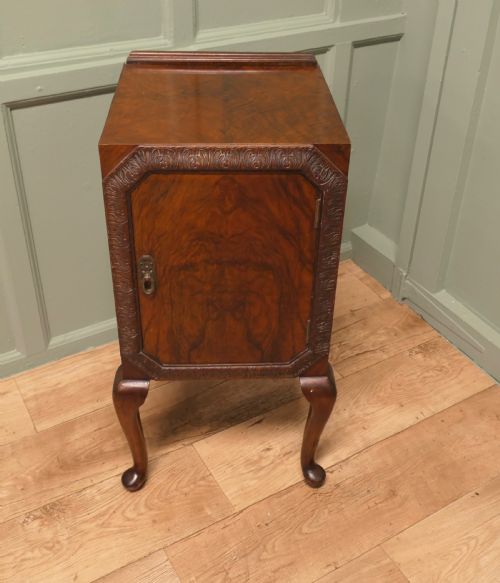
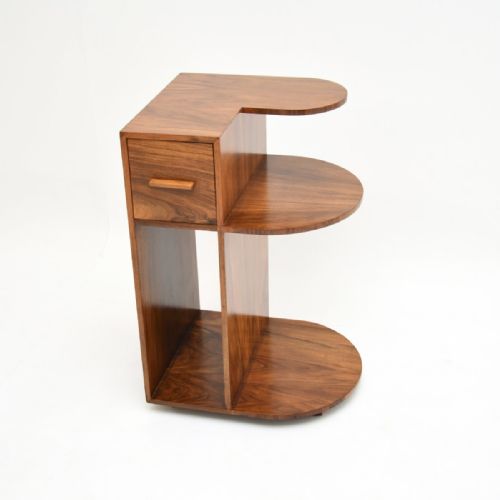
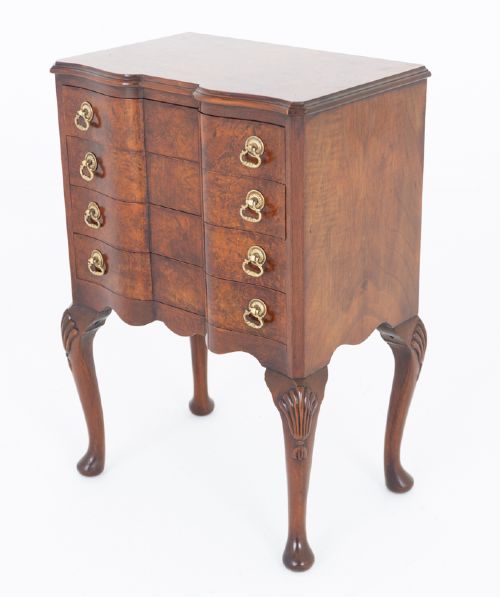
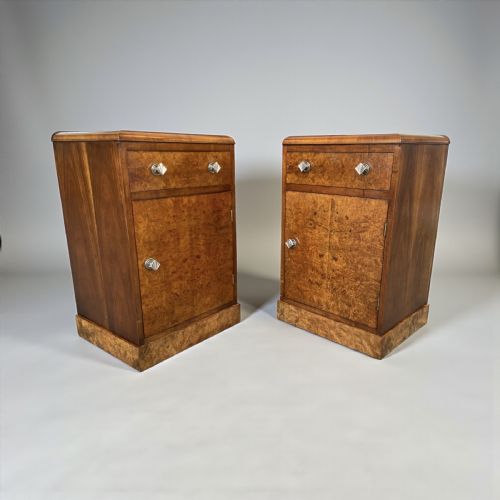
Vintage walnut night tables encompass bedside chests, cabinets, and side tables designed to sit beside a bed. When searching for vintage walnut night tables, buyers encounter forms ranging from 1930s Art Deco pieces to Edwardian and Victorian examples.
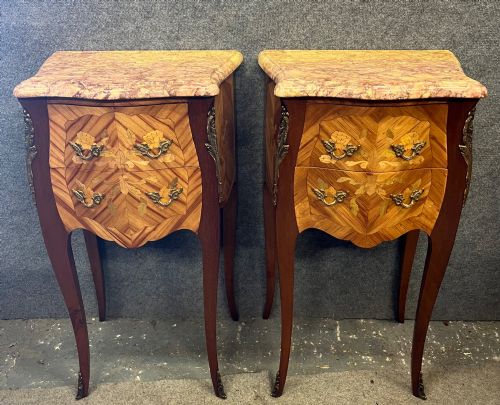
Origins span English workshops and French ateliers, showcasing styles from clean geometric modernism to Louis XV and Queen Anne revivals. These tables serve both functional bedside roles and decorative lamp table functions in a bedroom.
How they were made
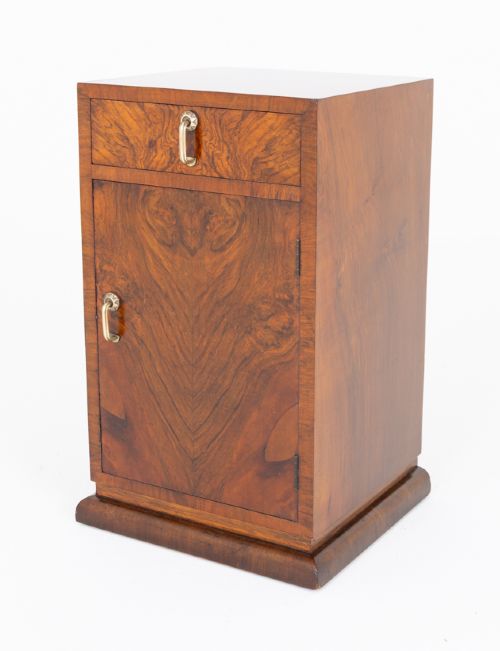
Cabinet makers utilised solid walnut and decorative veneers like burr walnut and tulipwood applied to sturdy timber carcases. Grain patterns were carefully matched across drawer fronts and cabinet doors to create striking visual symmetry.
Marble tops were integrated into French cabinets to provide durable, water-resistant surfaces for bedside use. Brass handles, hinges, and occasional marquetry or parquetry inlays completed the detailing on these pieces.
Listings span from the Victorian and Edwardian eras through the 1920s and 1930s, featuring walnut, brass, marble, and leather.
What varies in quality
Quality rests in the selection and matching of walnut veneers, particularly figured and burr varieties that exhibit rich grain movement. Superior cabinet work shows tight joinery, smooth drawer operation, and well-fitted marble slabs.
The refinement of the hardware, such as cast brass mounts and pulls, distinguishes standard production from finer workshop output. Stylistic execution also plays a part, from simple geometric Art Deco forms to intricate French marquetry.
The Vintage Walnut Night Tables Glossary
- Burr walnut
- A figured wood grain obtained from the warted growths on walnut trees, prized for its swirling patterns. It is frequently sliced into thin veneers for cabinet fronts.
- Art Deco
- A design style from the 1920s and 1930s characterised by sleek geometric shapes, clean lines, and streamlined forms. Pieces from this era often feature figured walnut veneers.
- Parquetry
- A geometric mosaic of wood pieces used for decorative surfaces on tables and cabinets. It creates patterned tabletops through the precise arrangement of contrasting wood veneers.
- Marble top
- A polished stone surface fitted to the top of a bedside cabinet. This provides a durable, heat-resistant shelf traditionally used in French bedroom furniture.
- Pot cupboard
- A traditional enclosed bedside cabinet originally designed to house a chamber pot. These practical pieces often feature a small drawer above a single door.
Vintage Walnut Night Tables: Frequently Asked Questions
What is the difference between a night table and a bedside cabinet?
Night tables generally refer to open or semi-open occasional tables placed beside a bed. Bedside cabinets usually feature enclosed storage such as doors or drawers.
Both serve the same primary function of holding bedside lamps and personal items. Cabinet versions hide clutter more effectively behind closed doors.
How do I identify Art Deco walnut tables?
Art Deco pieces from the 1930s typically feature straight lines, curved waterfall edges, and symmetrical figured walnut veneers. They lack the ornate carvings found in earlier revival styles.
Hardware is often minimal, relying on the natural grain of the wood for visual impact. Many examples utilise contrasting woods like satinwood or birch.
How do I care for walnut veneer surfaces?
Walnut veneer requires protection from direct sunlight and excessive moisture to prevent fading and lifting. Regular dusting with a soft, dry cloth maintains the finish.
Avoid placing damp glasses directly on the wood by using coasters. Wax polish can be applied periodically to nourish the timber.