



Vintage Walnut Nest
A vintage walnut nest offers a clever multi-tier arrangement of tables, bringing rich timber grain and compact utility to any sitting room.
Vintage Walnut Nest
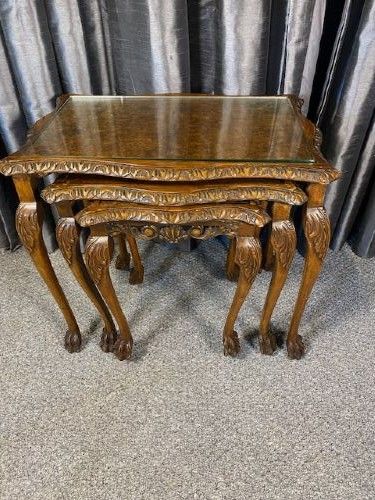
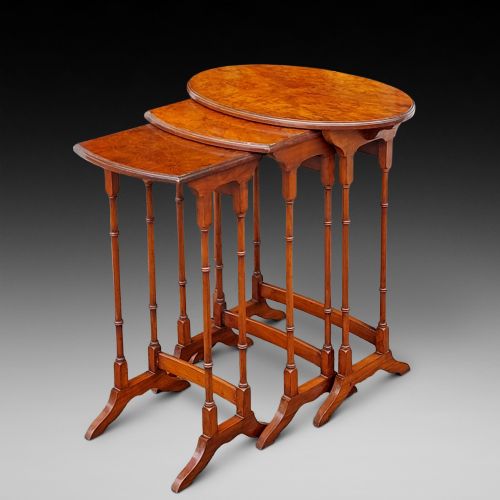
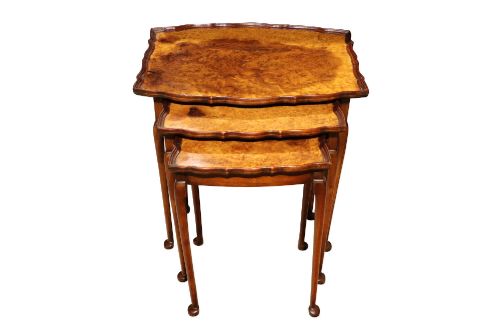
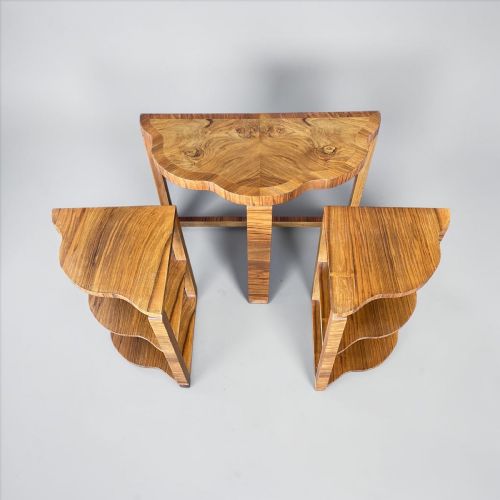
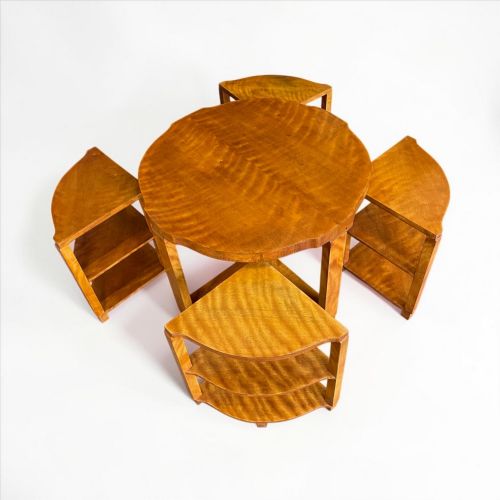
When you search for a vintage walnut nest, you are looking at sets of graduating tables designed to slide neatly beneath one another when floor space is at a premium. The forms range from simple sets of three up to larger quartetto and quintetto arrangements that provide five surfaces when fully deployed.
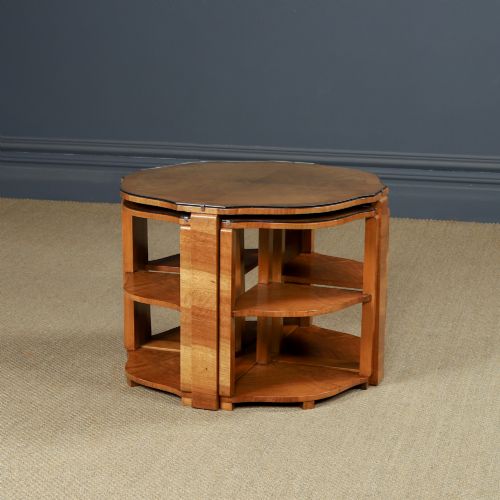
The pieces on this page span from late nineteenth-century examples through Edwardian designs to striking Art Deco iterations from the nineteen-thirties. You are most likely to meet sets of three or four tables constructed during the early decades of the twentieth century, often featuring rich figured timber tops.
How they were made
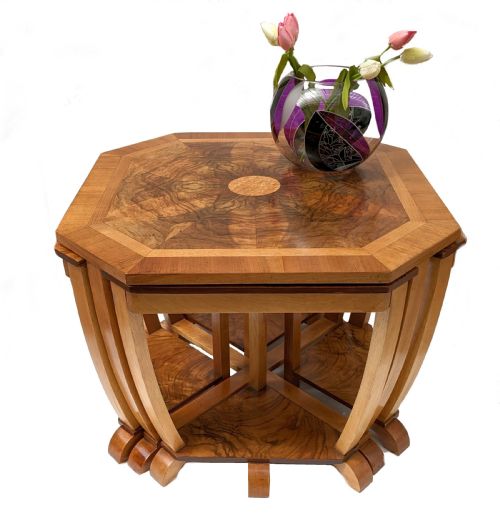
Cabinet makers utilised solid hardwoods for the structural frames and legs while applying decorative walnut and burr walnut veneer to the table tops. This technique allowed workshops to display dramatic swirling grain patterns that would be unstable or prohibitively expensive if carved from a single solid block.
Many examples incorporate intricate parquetry or floral inlay work across the surfaces, contrasting different tones of timber. Finished pieces relied on polished surfaces to protect the delicate veneer and highlight the natural figure of the wood.
Listings feature periods spanning from the nineteenth century through Edwardian craftsmanship to Art Deco designs of the nineteen-thirties.
What varies in quality
The distinction between ordinary production and finer manufacture lies in the choice of timber and the precision of the nesting mechanism. Superior sets employ highly figured burr walnut with matching grain patterns that flow logically from one table to the next when viewed together.
Construction methods also dictate longevity, particularly the joints where the slender legs meet the aprons. Finer examples maintain structural rigidity without bulky reinforcement, allowing the smaller tables to slide smoothly into their designated slots under the main surface.
Harry and Lou Epstein·Heal's
The Vintage Walnut Nest Glossary
- Quartetto
- A matched set of four small tables designed to nest together. The term often appears in Edwardian and late nineteenth-century cataloguing.
- Parquetry
- A geometric mosaic of wood pieces used for decorative inlay on furniture tops. It creates patterned surfaces using contrasting tones of timber.
- Veneer
- A thin slice of decorative wood adhered to a sturdier base timber. This method prevents warping while showcasing expensive or exotic grain patterns.
Vintage Walnut Nest: Frequently Asked Questions
How do I care for burr walnut veneer?
Keep walnut furniture away from direct sunlight and radiators to prevent the delicate veneer from drying out and lifting. Dust regularly with a soft, dry cloth and apply a quality beeswax polish sparingly to nourish the timber.
Avoid placing wet glasses or hot cups directly onto the polished surface. Using coasters and trivets protects the traditional finish from water rings and heat damage.
Where were nest tables placed historically?
These versatile tables lived primarily in drawing rooms and parlours where hosts served tea to guests. Individual tables could be pulled out easily to hold cups, books or writing materials without cluttering the room.
As domestic spaces evolved through the twentieth century, they moved into sitting rooms to serve as lamp or coffee tables. Their space-saving nature made them ideal for smaller urban properties.
How can I tell an Edwardian set from Art Deco?
Edwardian versions often draw inspiration from earlier historical periods, featuring slender cabriole legs, Queen Anne styling, or delicate stringing and inlay. They lean towards traditional elegance and decorative woodwork.
Art Deco sets from the nineteen-thirties embrace clean geometric lines, bold proportions, and minimalist frames that showcase the natural figure of the walnut without fussy ornamentation.
What does quartetto mean on a listing?
A quartetto simply designates a matching set of four tables built to scale so they fit sequentially beneath the largest top. This specific term appears frequently in Edwardian descriptions.
Such sets represent a specific Victorian and Edwardian passion for specialised, multi-functional furniture. They offer maximum utility while occupying the floor space of a single small table.