

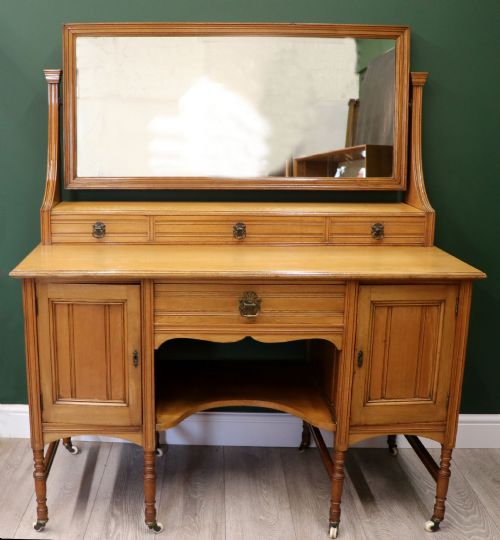


Vintage Walnut Mirror Desk
A vintage walnut mirror desk brings warmth and practical elegance to a room, offering rich timber grain alongside a functional dressing surface.
Vintage Walnut Mirror Desk
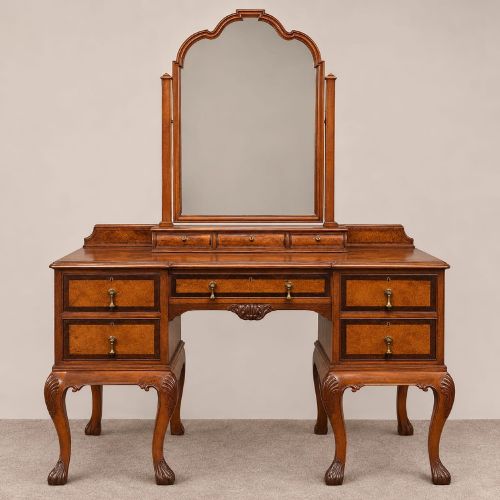
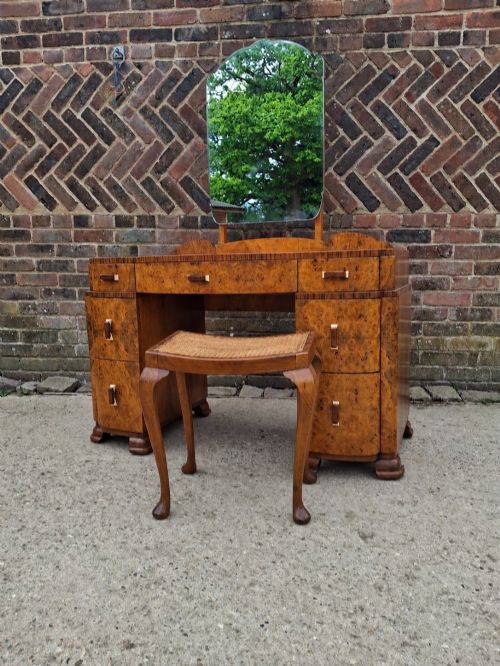
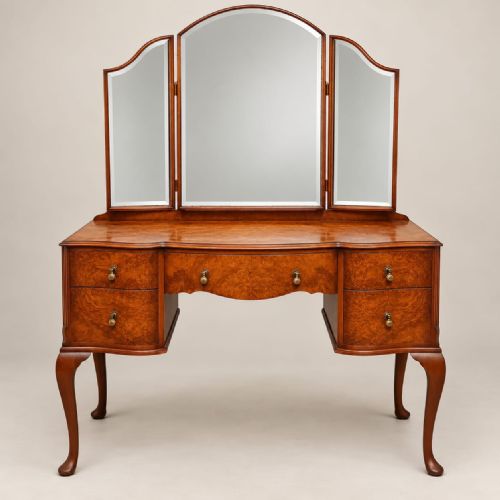
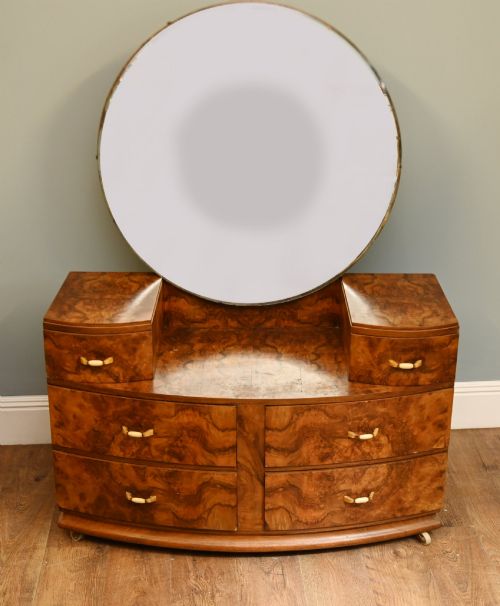
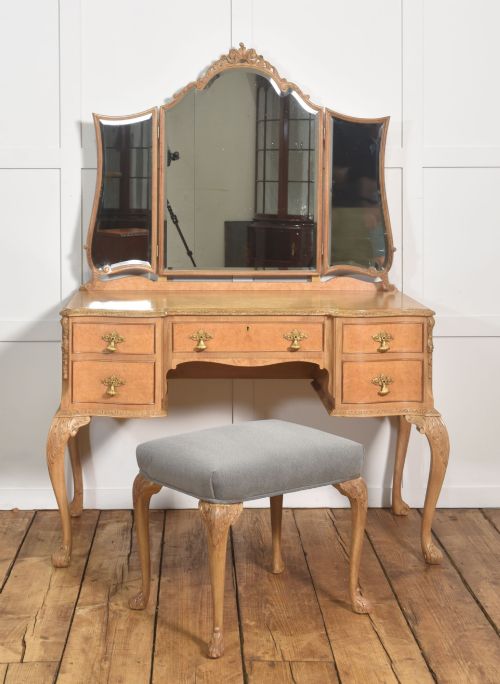
When you search for a vintage walnut mirror desk, you encounter dressing tables, bureau cabinets, and toilet mirrors spanning periods from the eighteenth century to the nineteen-thirties. The pieces most commonly met on this page are twentieth-century dressing tables featuring burr walnut veneers, curved kidney or serpentine shapes, and integrated mirrors.
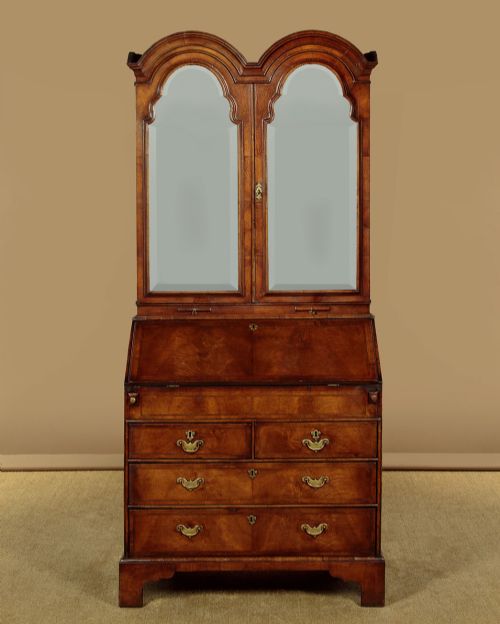
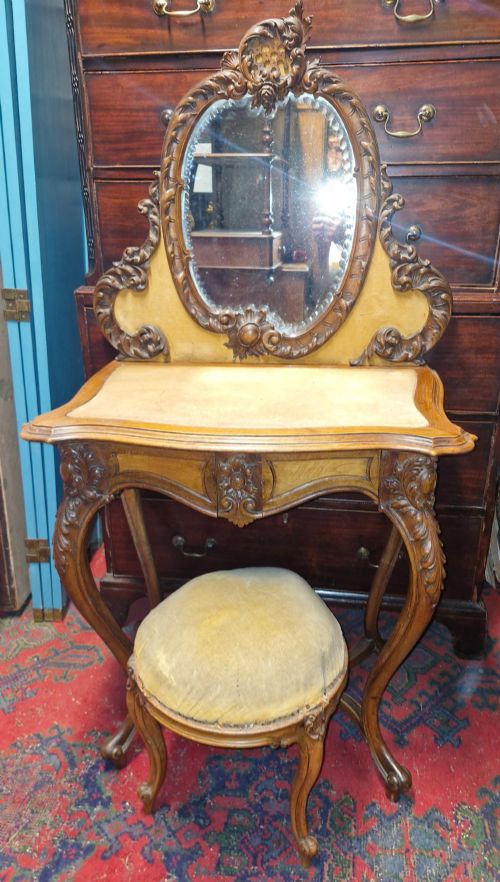
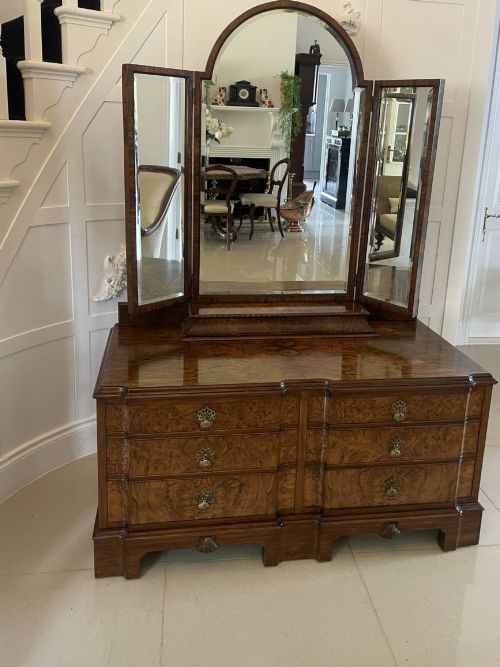
Earlier examples include Victorian burr walnut dressing tables and Queen Anne style bureau bookcases dating back to seventeen-fifty. These forms combine compartments, writing surfaces, and pivoting or triple mirror glass into a single piece of furniture.
How they were made
Cabinet makers utilised solid walnut and decorative burr walnut veneers applied over secondary timbers to create rich, figured surfaces. Brass hardware, such as handles and pivoting mirror brackets, provides functional detail alongside bevelled mirror glass.
Constructive techniques range from traditional cabinet making seen in Edwardian and Victorian pieces to the streamlined curved silhouettes characteristic of Art Deco design from nineteen-thirty.
Vintage Walnut Mirror Desk Retail Price Guide 2026
Typical asking prices for vintage walnut mirror desk among the pieces listed under this phrase on Sellingantiques today, from the lower quarter to the upper quarter. They describe what is for sale here now, not the wider market.
Listings incorporate items from the Victorian, Edwardian, and Art Deco eras, alongside mid-eighteenth-century walnut pieces.
What varies in quality
The choice of timber veneer dictates much of the visual appeal, with richly figured burr walnut commanding greater attention than plain grain. The handling of curved forms, such as kidney or serpentine shapes, demonstrates the maker's skill in shaping timber.
Original hardware, intact mirror glass, and matching components like stools separate well-preserved examples from those that have undergone extensive replacement or alteration over time.
Harry and Lou Epstein·Maples
The Vintage Walnut Mirror Desk Glossary
- Burr walnut
- A veneer sliced from the knotty growth of a walnut tree, prized for its swirling, highly decorative grain patterns. It frequently appears on the drawer fronts of Art Deco and Victorian dressing tables.
- Kidney shaped
- A curved furniture profile resembling a kidney bean, often utilised on the tops of nineteen-twenties dressing tables. This contour allows a user to sit comfortably close to the mirror.
- Bureau bookcase
- A combination of a sloping desk flap that opens for writing and upper shelving enclosed by doors. Examples date back to the mid-eighteenth century in walnut.
- Serpentine shaped
- A furniture front characterised by a wavy outline featuring a convex centre flanked by concave curves. This sophisticated shaping appears on twentieth-century walnut dressing tables.
Vintage Walnut Mirror Desk: Frequently Asked Questions
What periods do these pieces date from?
The listings span several centuries, starting from mid-eighteenth century pieces up through Victorian, Edwardian, and nineteen-thirties Art Deco designs.
Twentieth-century examples dominate the selection, particularly pieces from the nineteen-twenties and nineteen-thirties featuring burr walnut veneers.
How do I care for walnut veneer?
Walnut benefits from being kept away from direct sunlight and excessive heat sources to prevent the timber and veneer from drying out.
Regular dusting with a soft cloth helps maintain the polished surface without the need for heavy chemical polishes.
Are the mirrors original?
Mirror glass on older pieces can sometimes show signs of age or may have been replaced during the lifetime of the furniture.
Examining the backing and the mounting brackets helps determine whether the glass matches the age of the base cabinet.
Where were these pieces used?
Dressing tables and toilet mirrors typically served in bedrooms and dressing rooms for daily grooming and personal preparation.
Bureau cabinets and bookcase variants functioned as writing and storage furniture in studies or reception rooms.