



Vintage Walnut Hallway Table
A vintage walnut hallway table brings rich timber grain and practical surface area to a narrow entrance space.
Vintage Walnut Hallway Table
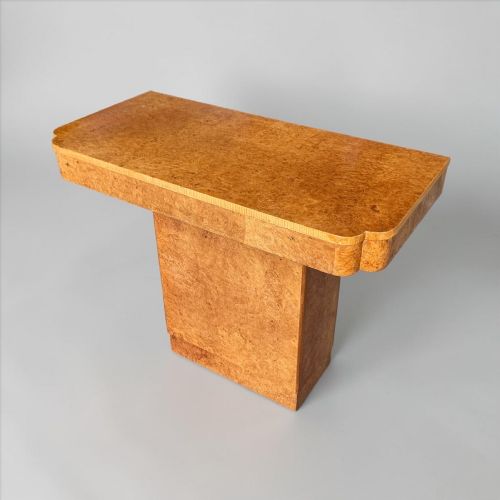
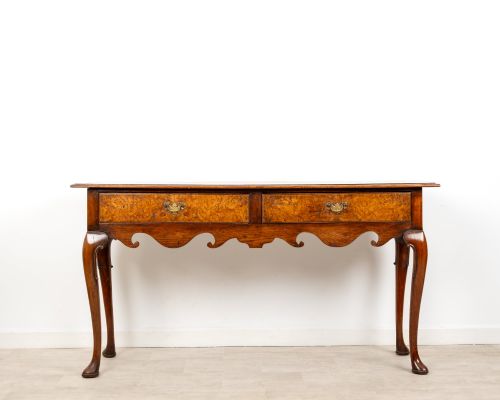
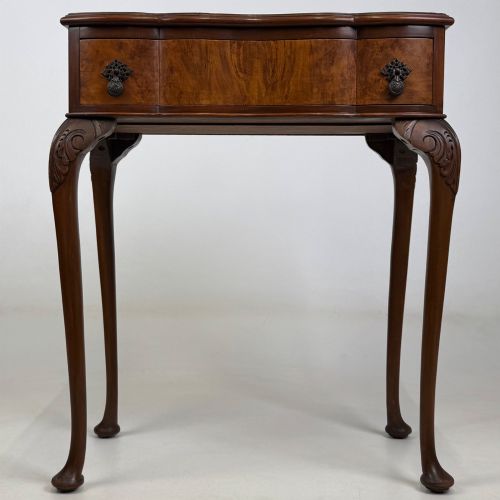
When you search for a vintage walnut hallway table, you encounter console tables, side tables, side cabinets, and occasional tables designed for slim spaces. The selection spans distinct periods from the eighteenth century through the Edwardian era to the nineteen-thirties, with nineteen-thirties Art Deco and nineteen-twenties pieces appearing most frequently.
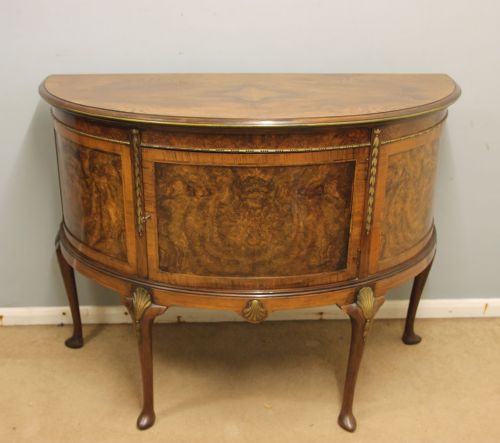
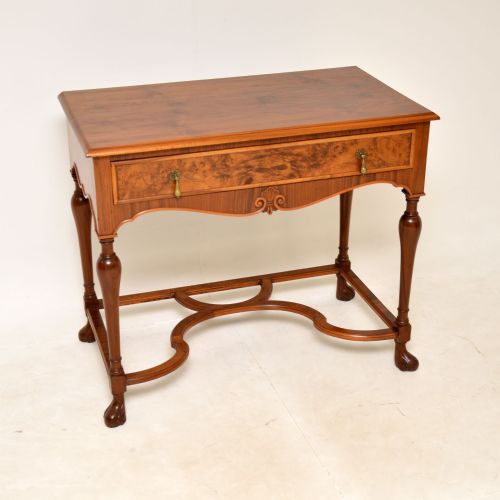
Forms vary from demi-lune shapes and bow fronts to lowboys and server tables, often reflecting Revival movements or modernist lines. These pieces serve as functional hallway furniture that anchors an entrance while offering a useful surface for daily items.
Makers such as Hille and Maple and Co represent the higher end of these domestic furnishings. Continental and French origins also feature alongside British examples, introducing diverse regional interpretations of walnut furniture.
Materials and construction
Craftsmen utilised walnut and burr walnut timber, frequently applying figured veneer over wood to showcase dramatic natural grain patterns. Brass hardware and marble tops appear on select Continental and period pieces, adding tactile contrast to the wooden structures.
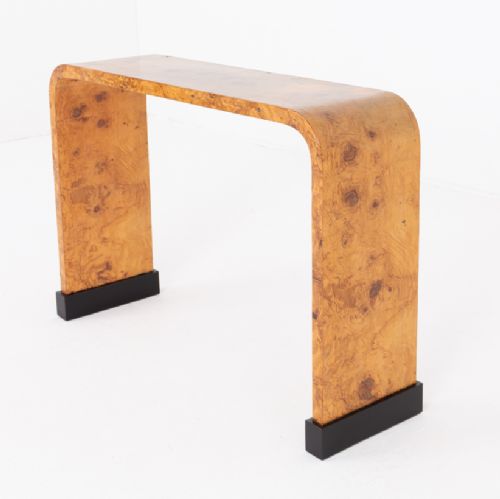
Construction methods range from traditional joinery on eighteenth-century and nineteenth-century items to sleek modernist framing on nineteen-thirties Art Deco tables. Timber selection dictates the visual impact, with burr walnut yielding intricate swirling figures across console tops.
Telephone tables from the thirties prove that past generations also needed a dedicated spot to linger while tethered to a wall.
Assessing quality in walnut tables
Quality rests in the choice of timber veneer and the precision of its placement across the surface of the table. Matched burr walnut grain patterns running symmetrically across a console top distinguish superior examples from plain timber builds.
The integrity of the underlying woodwork and the pedigree of workshops like Maple and Co or Hille elevate certain items above standard production. Period execution, from Georgian Revival proportions to French Art Deco modernist lines, determines the refinement of the finished form.
Hille·Maple and Co
The Vintage Walnut Hallway Table Glossary
- Demi-lune
- A half-moon shape characteristic of tables designed to sit flush against a hallway wall. This profile minimises floor intrusion in narrow spaces.
- Console table
- A narrow table supported against a wall, often by two or four legs, serving functional and decorative roles in entrance halls.
- Lowboy
- A small seventeenth or eighteenth-century style table with drawers, adapted in later revival periods as a compact side or hallway piece.
- Veneer
- A thin layer of superior walnut applied over a secondary wood base to provide rich visual surface grain without solid timber weight.
Vintage Walnut Hallway Table: Frequently Asked Questions
What is a hallway table?
A hallway table is a narrow piece of furniture designed to fit into entranceways and corridors without obstructing movement. These tables provide a surface for post, keys, and decorative items while making efficient use of limited floor space.
Most examples in this category take the form of console tables, side tables, or demi-lune cabinets. They range from compact nineteen-thirties Art Deco designs to earlier nineteenth-century revival pieces.
How do I style a walnut table?
Styling a walnut table involves balancing practical drop zones with decorative focal points suited to an entrance. Placing a mirror or artwork above the table anchors the arrangement visually.
Keep surface clutter to a minimum to let the figured walnut or burr walnut grain remain visible. Small bowls for keys or a slim lamp work well without overwhelming the narrow proportions.
How do I identify Art Deco tables?
Art Deco tables from the nineteen-thirties typically feature streamlined geometric forms, smooth polished surfaces, and modernist walnut or burr walnut veneers. These pieces embrace clean lines rather than the ornate carving of earlier revival styles.
Look for symmetrical grain matching and simplified architectural silhouettes. Workshops such as Hille produced distinctive examples during this period.