


Vintage Walnut Games Table
A vintage walnut games table brings versatile folding surfaces and rich grain figures into a room.
Vintage Walnut Games Table
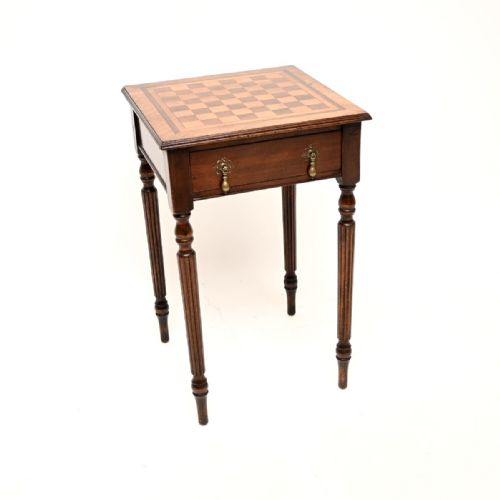
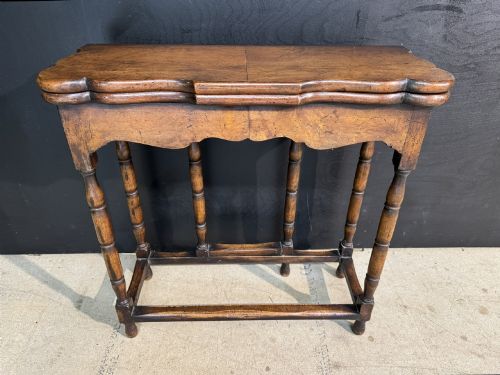
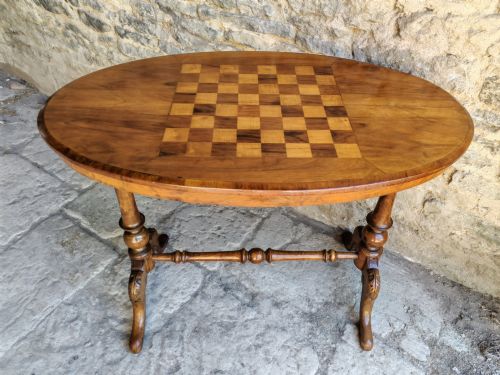
A vintage walnut games table serves multiple functions as a fold-over card table, a chess top piece, or a side table. These items emerge primarily from the nineteenth century and the early twentieth century.
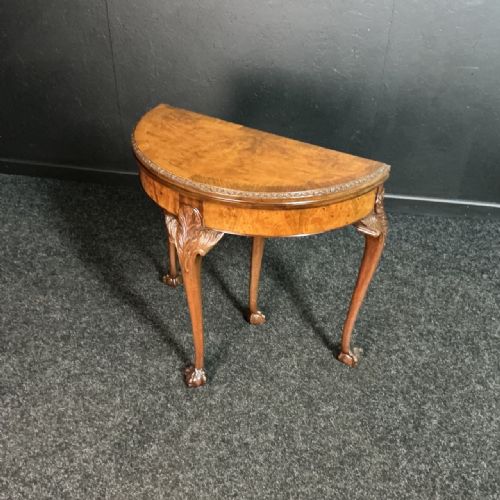
The Queen Anne style dominates the selection alongside Victorian, Art Deco, and French Louis XV designs. Buyers frequently encounter demi-lune folding card tables and console card side tables among the current pieces.
Makers utilised timber and burr walnut veneer to shape games compendiums, side tables, and occasional tables. Each piece combines domestic utility with decorative cabinet work from past eras.
Assessing quality in walnut tables
Quality rests on the depth of the burr walnut figure and the precision of the cabinet work in the folding mechanisms. Superior examples maintain smooth operation in their hinges and retain crisp inlaid details without warping.
The harmony of the proportions and the fidelity of the period style, such as Queen Anne Revival cabriole legs, distinguish finer pieces. Honest patination across the timber surfaces elevates the standing of an individual table.
Some Victorian combination pieces hid tobacco storage alongside the gaming counters for the ultimate parlor convenience.
Epstein and Co·Thurston·A British Chess Company
The Vintage Walnut Games Table Glossary
- Burr walnut
- A figured wood veneer taken from the growth excrescences of walnut trees. It creates complex, swirling patterns highly prized for table tops.
- Demi-lune
- A half-moon shape characteristic of console and folding tables designed to sit flat against a wall.
- Metamorphic
- A descriptive term for furniture that transforms from one form, such as a table, into another function entirely.
- Crossbanded
- A border technique where veneer strips are applied perpendicularly to the main grain of the panel for decorative contrast.
Vintage Walnut Games Table: Frequently Asked Questions
How do folding mechanisms work?
Folding mechanisms usually rely on a swivel top or a swing-out rear leg that supports the opened leaf. This design distributes weight evenly across the framework.
Buyers should test the movement gently to ensure the hinges operate without binding against the wood.
Where should I place my table?
These tables fit well against a hallway or living room wall in their closed console position. Opening the leaf provides a compact surface for cards or board games.
Keep the timber away from direct heat sources to prevent the burr walnut veneer from drying out.
How do I identify Queen Anne style?
Queen Anne style pieces feature characteristic cabriole legs that curve outward and taper down to pad feet. The woodwork often emphasises clean walnut surfaces over heavy carving.
Revival versions from later decades reproduced these graceful silhouettes with precise cabinet work.
What games were played on them?
Surfaces accommodated chess, draughts, and card games through inlaid boards or plain baize-lined folding leaves. Dedicated compendiums also stored multiple gaming pieces inside.
These versatile tops allowed a formal parlor to transition into an evening gaming room quickly.